TLDR: Living through a major renovation with kids in the house is a health hazard, a scheduling nightmare, and almost always costs families more in stress than it saves in rent. At BVM Contracting, we don't allow clients to do it — and here's exactly why.
The Sales Pitch vs. The Reality
Every contractor who tells you "don't worry, you can stay in the house during the reno" is doing one of two things: they've never actually lived through a project themselves, or they're saying whatever it takes to get you to sign.
We know this because we used to say it too.
Early on, when BVM was smaller and every project mattered, we made it work. We squeezed families into corners of their own homes and called it manageable. Every single time, it wasn't. The projects ran longer. The clients were exhausted. The relationships got strained. When it was done, nobody looked back and said, "Glad we did that."
So we stopped.
Now, when a family calls us about a kitchen gut, a whole-home reno, or a second-storey addition in their East York semi, the conversation starts the same way: where are you going to stay while we work?
That's not us being difficult. That's us being honest about what a real renovation actually looks like from the inside.
What "Living Through a Renovation" Actually Looks Like
People imagine it like a minor inconvenience — dusty countertops, a little noise before 7 p.m., maybe one bathroom out of commission for a week. That's not what you're signing up for.
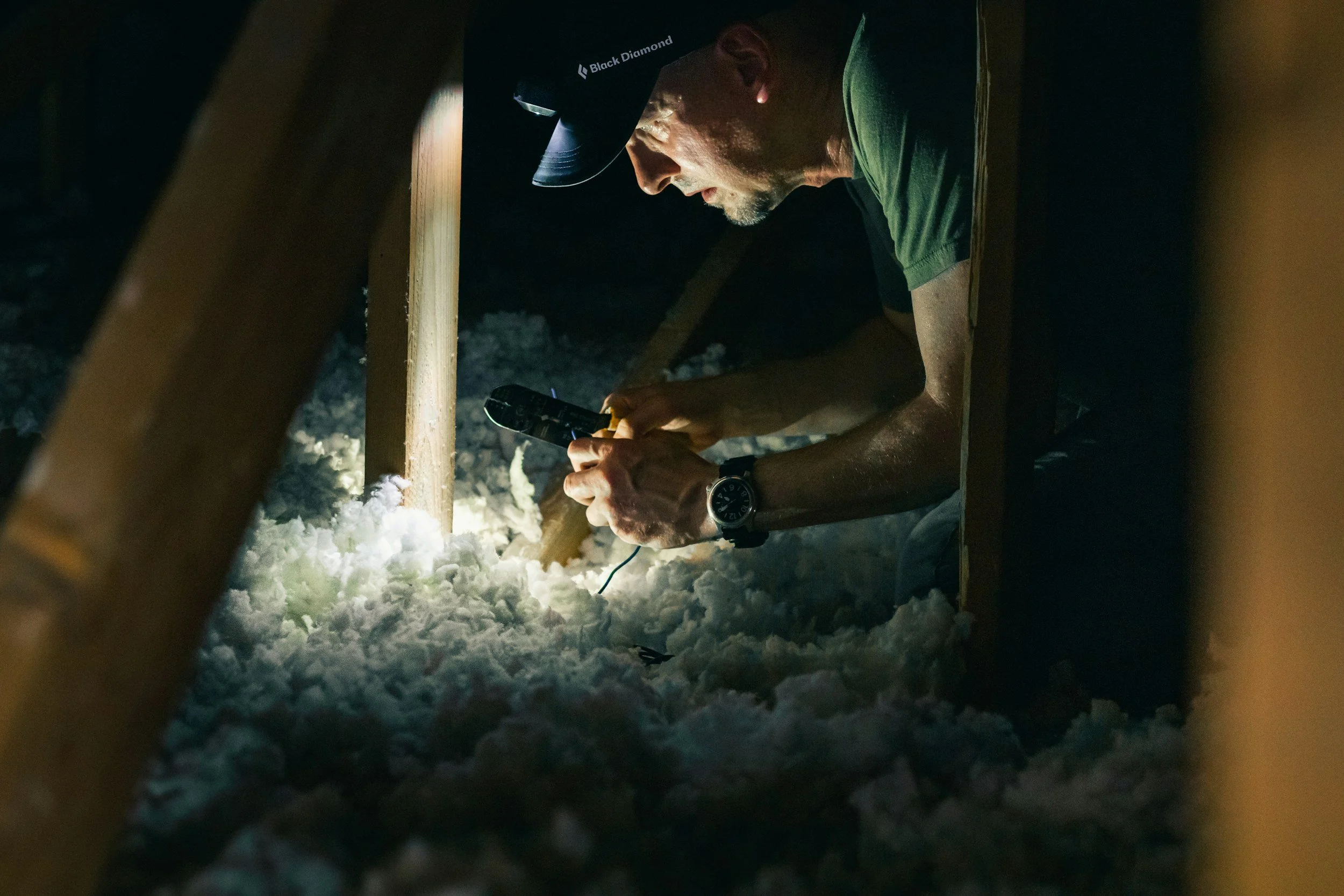
When we're doing a full renovation, we're talking about exposed framing, open electrical, missing subfloors, no working kitchen for weeks. The dust isn't just a nuisance — it's silica, fibreglass, whatever was in your 1960s plaster walls. The site isn't just messy. It's a hazard. Tools, fasteners, cords, and material everywhere.
Now put a five-year-old in that house.
When a kid steps on a screw or touches exposed wiring, the answer to "whose fault is this?" gets complicated fast — even if they were supposed to stay out of the project area. Kids don't follow job site rules. That's not a knock on parents. That's just how kids work.
And it isn't just physical safety. Renovation is a massive pattern interruption for young children. No consistent kitchen routine, no quiet space for homework or naps, strangers in and out of the house at 7 a.m. — the disruption goes deeper than most families anticipate before they're living it.
The Math Doesn't Work the Way You Think
Here's the argument most families make: if we move out for three months, that's $6,000–$9,000 in rent or an Airbnb. That's real money. So staying home seems like the obvious call.
The math breaks down the moment you actually live it.
Every night you're camping out in a construction zone, your decision-making gets worse. You stop being a homeowner making thoughtful choices about your project. You start reacting to whatever's right in front of you — rushing selections, second-guessing finishes, snapping at the site supervisor because you haven't slept in two weeks. Decision fatigue is real, and it costs money. People change their minds mid-project when they're exhausted. Change orders aren't free.
On top of that: we move faster in an empty house. Full stop. When we don't have to schedule around a family's morning routine, school pickups, or bedtimes, we can bring in bigger crews, work longer hours when it makes sense, and sequence trades without worrying about who's sleeping in the back bedroom. An empty house is a faster project. A faster project saves money.
The savings you think you're generating by not relocating? They get made up in stress, anxiety, and a longer project. We've watched it happen to clients who came to us after doing it with other contractors. They didn't come out ahead.
What Most Homeowners Get Wrong About This Decision
The biggest mistake isn't deciding to live through a renovation. It's convincing yourself the decision is really about money.
It isn't. It's about risk tolerance — and most families massively underestimate what they're actually risking: their kids' safety, their own mental health, their relationship with the contractor managing the project, and ultimately the quality of the finished product.
There's an industry pattern worth naming directly. Contractors who actively encourage clients to stay in the home during a major renovation are often doing it because it's easier to close the deal that way. It sounds accommodating. "Don't worry, we'll work around you." What that actually means is the project will be slower, more complicated, and the family will absorb all the friction that a well-managed job site would normally contain. Any contractor who tells you it's fine has obviously not lived through renovations themselves and is trying to make things work to get you to sign their contract.
We've been in this business long enough to know what a properly run renovation site looks like. It is not compatible with family life.
A Note From BVM Clients Who Have Done It
We've had clients who lived through renovations before they found us. Some did it with other contractors. Some did it with us, years ago, when we were still forming our own policies on this.
The feedback doesn't vary much. One client in Leslieville who gutted her whole home with a previous contractor while her two kids were in the house: it was a mistake. Not just hard. A mistake. The savings she expected from not moving out evaporated — in stress, in four months of daily takeout, in a project that ran two months longer than quoted because the crew couldn't work at full capacity around her family's schedule.
We've heard versions of that story over and over. The clients who push to stay home because of budget, and then spend the last six weeks of a project grinding through a relationship with their contractor that's been battered by months of shared misery.
Build in the cost of relocating before you commit to a project. Not after. Before.
The BVM Approach to This Conversation
Before we put a number on any project, we have a direct conversation about logistics. Not just the scope of work — where the family will be while we do it.
That means getting clear on temporary accommodation before anything is signed. It means treating relocation as a line item in the budget, not an afterthought. And it means being straight with families who are tempted to "make it work" at home — we'll tell them honestly what the project requires and what their family's life will look like inside it.
The clients who go in clear on this — who accept that relocation is part of the cost of a real renovation — have a fundamentally different experience. They're not in the middle of the chaos every night. They get to come by and see progress. They make better decisions on finishes and specs. And they move back into a finished home instead of crawling back into a job site that never really felt done.
Give us your home and you'll be back in it faster than if you'd stayed. That's not a promise — it's just what we've watched happen on project after project.
Key Takeaways
Living through a renovation with kids isn't just hard — it's a genuine health and safety risk that most families underestimate
The money you "save" by not relocating almost always comes back in stress, decision fatigue, and a slower project
A contractor who says "don't worry, you can stay" is either inexperienced or telling you what you want to hear
An empty house moves faster — which means less time and less total cost
Build relocation into your renovation budget before you commit, not as an afterthought after demo day
Clients who have lived through renovations with kids rarely look back and think it was the right call
Frequently Asked Questions
Q: Is it ever okay to stay in the house during a renovation?
A: For minor work — a single bathroom, basement finishing where you're not losing essential functions — it's possible to manage. But for anything that touches your kitchen, your HVAC, your electrical, or the majority of your living space? Move out. The disruption is too significant, and the safety risks with young kids on site are real.
Q: How do we afford to move out if it wasn't in the original budget?
A: This is exactly why we talk about it before anything is signed. Temporary accommodations — family, a rental, short-term Airbnb — need to be part of the project budget from day one. A good contractor will tell you this upfront. If you're already signed and hadn't planned for it, have that honest conversation before demo day, not after.
Q: Will our project actually finish faster if we move out?
A: Every time, without exception, in our experience. Crews can start earlier, run longer when needed, and sequence trades without working around a family's schedule. Projects in occupied homes consistently run longer than vacant ones.
Ready to Talk About Your Project?
If you're planning a renovation in Toronto and trying to figure out the real logistics, that's exactly the conversation we want to have early — before you've committed to anything. We'll tell you what the project actually requires, what it costs to do it right, and what your family's life will look like while it's happening. Book a call with our team directly at bvmcontracting.com.
Related Reading: