Home Builder Warranties in Toronto: Forget Price — Ask This Instead
TLDR: Every contractor in the GTA claims to offer a warranty. Very few actually honor it when the time comes. Here's why the way a contractor handles warranty issues tells you more about their true value than any quote, portfolio, or reference ever could — and the one question you should ask before signing anything.
Key Takeaways
A contractor warranty means nothing without consistent, timely execution — ask for proof, not promises
Evaluate builders on their worst-case performance, not their best-case portfolio
BVM's 2-year warranty covers all labour and workmanship, but our commitment to clients extends well beyond any document
The Leslieville project: we took full ownership of a plumbing issue that wasn't ours — and resolved it when 10 other professionals couldn't
Before you sign: ask every contractor for a reference from a warranty or problem situation, not just a completed project
Every Home Builder Has a Warranty. Very Few Actually Honour Them.
Here's something most people don't realize before they sign a contract: having a warranty and honouring a warranty are two completely different things.
In Ontario, the industry standard is a 2-year warranty on labour and workmanship. Nearly every contractor in the GTA will tell you they offer one. What they won't tell you is what happens when you actually try to use it.
We've seen the pattern too many times. A homeowner calls their builder about an issue. The builder goes quiet. Emails get dodged. Visits get rescheduled into oblivion. And eventually, the homeowner hires someone else to fix what should have been covered — and pays for it all over again.
At BVM Contracting, our warranty document isn't the differentiator. Our execution of it is.
What BVM's Warranty Actually Covers — And What Goes Beyond It
Our standard warranty is 2 years on all labour and workmanship across every aspect of the project we touched. That's in line with industry standards.
But here's where things get different.
We're a family company. That sounds like a tagline — we know. But it actually shapes every decision we make on the job and after it. We treat our clients like family. And family doesn't get the runaround when something goes wrong.
We've gone well past our 2-year warranty window to help clients who needed us. Not because we were legally obligated to. Because it was the right thing to do, and because we're proud of the work we put our name on. We’ve even gone out of our way to help with problems that had nothing to do with our work.
Our recent Leslieville home renovation project is a perfect example. We'd wrapped up a full renovation for their main floor and moved on to the next project. Months later, the clients started dealing with a persistent sewer gas smell. They brought in over 10 different plumbers. Nobody could pin it down. Eventually, they came back to us — not because the issue was ours to solve, but because they trusted us.
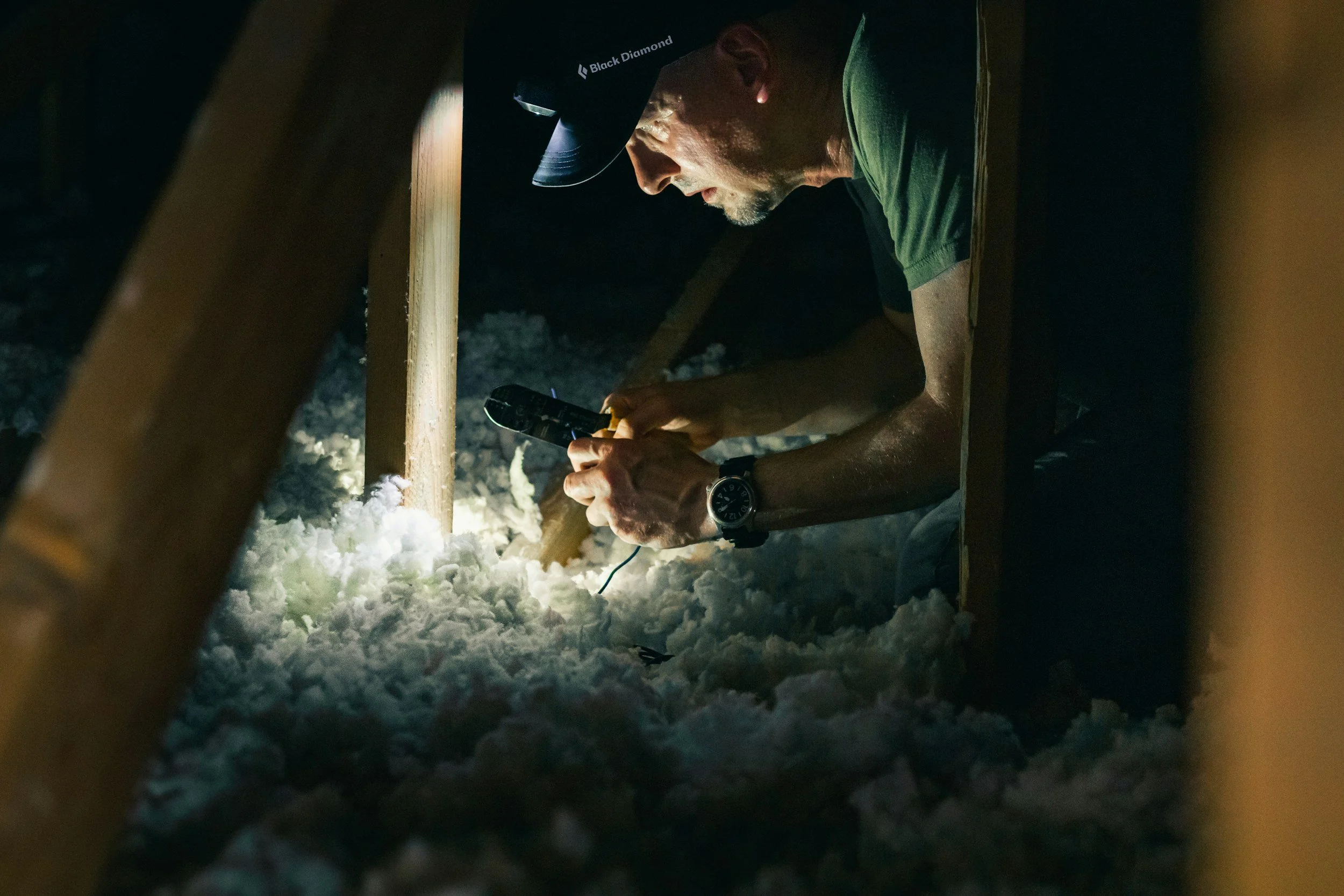
We could have said "that's not our problem." Instead, we made it our problem. We brought in our plumber, diagnosed it properly, and resolved the issue at a fraction of what those other plumbers would had cost — with zero displacement of their basement apartment tenant in the process.
That's not written into any warranty document. That's just who we are.
You're Evaluating the Wrong Projects
Most homeowners walk into contractor meetings looking for the highlight reel. Stunning before-and-after photos. Glowing references from the dream clients. The $2M custom build that wrapped on time and on budget.
That's exactly the wrong approach.
No builder is batting 1000. Problems come up on every job — material delays, unforeseen structural conditions, subcontractor issues, weather, supply chain gaps. The question isn't whether your builder has had problems. It's how they handled them when they did.
Ask the hard questions. Ask for references from projects that didn't go smoothly. Ask a builder to walk you through a job where something went wrong and explain specifically what they did about it.
Most contractors will pivot, get vague, or promise to follow up and never do. A contractor who answers that question clearly and confidently — who can point you directly to a client who experienced a warranty issue and came out of it satisfied — is showing you exactly what kind of partner they'll be when your project hits a rough patch.
That's the real evaluation. Not the best case. The worst case.
What Most Homeowners Get Wrong About Contractor "Value"
When homeowners come to us and say "your quote is the highest — why should we pay more?", we don't flinch.
Our pricing is accurate. That's the answer.
We know exactly what it costs to run a professional home building operation — the skilled manpower, the expertise, the project management systems, the long-term relationships with quality subtrades who actually show up when we call. Our margins aren't padded for profit games. They're built to support our past clients, our current clients, and our future clients.
When a contractor's quote is suspiciously low, you're usually looking at one of three things: an inexperienced team that doesn't know their real costs yet, a company planning to cut corners to stay within the number they quoted, or a business that won't be around — financially or professionally — to honor a warranty two years down the road.
The contractors who underquote to win work aren't necessarily bad people. But they often can't afford to show up for warranty items. Because showing up costs time and money, and if the margins weren't built correctly from day one, neither is the capacity to do right by you later.
The Biggest Warranty Failure We've Ever Cleaned Up
We've repaired a lot of other contractors' work over the years. Too many jobs to count.
But one stands out.
We were called in to assess a foundation wall on a Toronto property. What we found was genuinely alarming: an exterior foundation wall constructed with CMU block — no mortar. Just stacked CMU block.
A structural repair. Significant cost. A homeowner left holding the bill because someone either didn't know what they were doing or cut corners so aggressively that basic structural integrity got sacrificed somewhere along the way.
That's the extreme end of the spectrum. But whether it's a mortar-free foundation or a sewer problem that 10 plumbers couldn't diagnose, the common thread is a builder who wasn't there when it mattered most.
Warranty work is inevitable. That's not pessimism — it's just construction reality. The question you need answered before you sign anything is: when that time comes, will your builder actually show up?
What Most Homeowners Get Wrong About Contractor Warranty
The mistake we see constantly: homeowners ask for references, get the highlight reel, and think they've done their due diligence.
Here's the shift that changes everything.
Tell every contractor you're evaluating: "Can you give me a reference from a client who experienced a problem during or after their project — and can you tell me what you did about it?"
Watch what happens.
Some will get uncomfortable. Some will pivot to their best project stories. Some will genuinely not have the answer ready.
And some — the ones worth working with — will have that answer immediately. Because they're proud of how they handled it. Because client care isn't a policy for them; it's a reflex.
That single question reveals more about a builder than five portfolios, three testimonials, and a polished sales deck ever could.
The BVM Approach to Warranty Work
Here's how we operate when warranty items come up:
We respond. When a client reaches out about an issue, we're not dodging calls or letting emails pile up.
We show up. Even when an issue isn't technically within our scope, we assess it, stay involved, and help find the most cost-effective path forward.
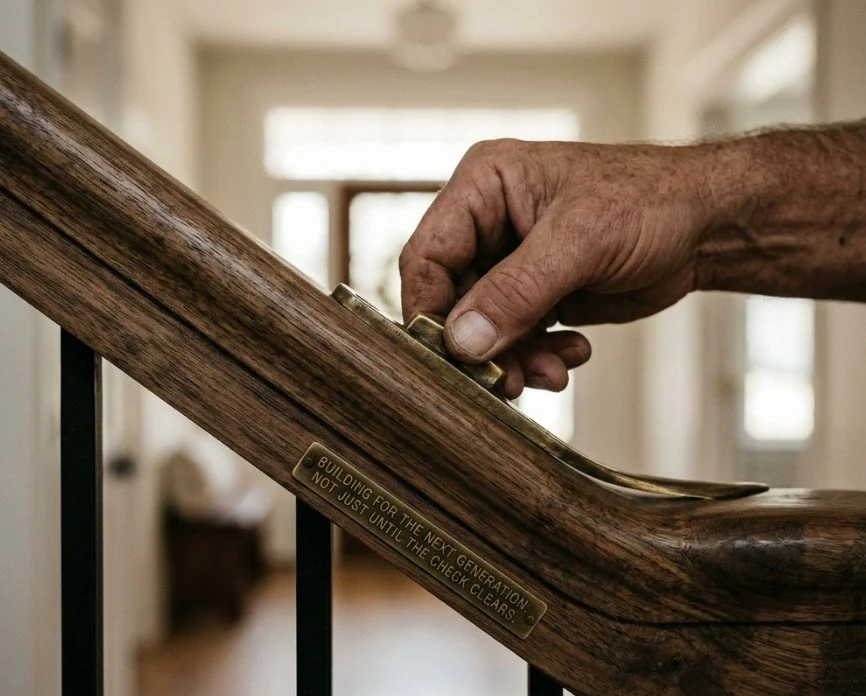
We go beyond the expiry. Our 2-year window is a legal standard. Our commitment to our clients isn't.
We own the problem. If it's our work, it's our responsibility — period. We don't play the blame game or pass homeowners around between subtrades. We take ownership and we solve it.
That's what "standing behind your work" actually looks like in practice. Not a clause in a contract. A track record.
Frequently Asked Questions
Q: How long is BVM Contracting's warranty?
A: Our standard warranty is 2 years on all labour and workmanship for every aspect of the project we completed. In practice, we support our clients well beyond that window. If something comes up and we can help, we do.
Q: What should I ask a Home Builder about their warranty before signing a contract?
A: Ask them specifically for references from clients who experienced a warranty or workmanship issue. Ask them to walk you through a project that hit a problem and explain what they did about it. How confident and detailed their answer is will tell you everything about the kind of partner they'll be.
Q: Why does BVM sometimes quote higher than other Home Builders?
A: Because our numbers are accurate. Our pricing reflects the real cost of running a professional operation — the staff, expertise, and systems that allow us to deliver great work and stand behind it. A lower quote often means something gets cut somewhere, and that cut typically shows up at warranty time.
Q: Is it normal for construction projects to experience issues?
A: Completely normal. No builder has a perfect record across every project. What separates great builders from average ones is how quickly and completely they respond when issues arise. Don't evaluate a contractor by whether problems have ever occurred — evaluate them by how they handled it when they did.
Ready to Talk About Your Project?
If you're evaluating contractors for a renovation or custom home build in Toronto, we'd welcome the real conversation — including the uncomfortable questions. We'll give you references from the highlight reel and from the jobs that got messy, because we're proud of how we showed up in both.
Book a call with our team directly at bvmcontracting.com. Let's talk about your project, your concerns, and what a builder who actually stands behind their work looks like in practice.