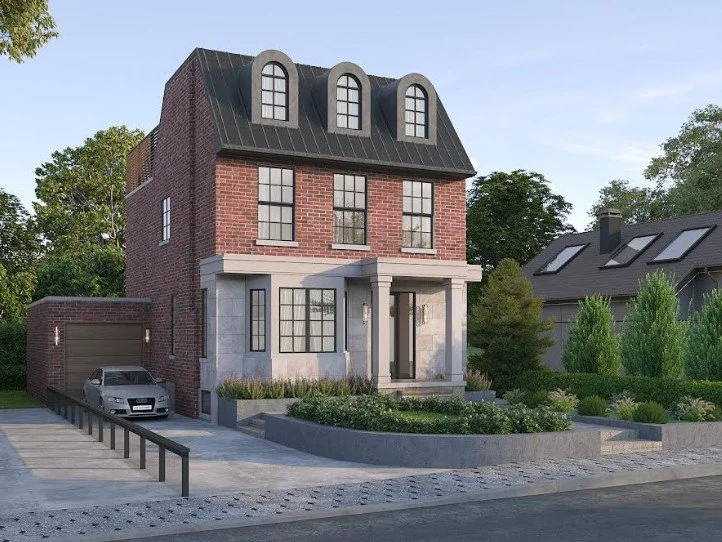
Quick Answer: Rosedale home additions require three approval layers: standard building permits, Committee of Adjustment variances (2-4 months, $2,228.98+), and Heritage Conservation District review with NRRA input (2+ months, $4,000+). Most properties need Committee of Adjustment because of restrictive Floor Space Index zoning (35% for ravine properties, 60% interior). Total planning timeline: 12+ months before construction. Get heritage and NRRA involved before architectural design begins.
What You Need to Know:
Rosedale's small lots and restrictive Floor Space Index zoning force most additions to Committee of Adjustment, adding 2-4 months and $2,228.98+ to your timeline
The North Rosedale Resident's Association functions as an unofficial gatekeeper. Heritage approval waits for NRRA sign-off before moving forward
Approval sequence matters: NRRA review, then heritage approval, then Committee of Adjustment, then building permits. You cannot skip steps
Total approval costs: $4,000+ for renderings, $2,228.98 Committee of Adjustment application, $2,800-$3,000 survey, a few thousand dollars in representation, plus tens of thousands in architectural design and revisions
Involve a General Contractor during design phase ($1,500-$4,000 + HST pre-construction consulting) to prevent approved designs from exceeding your budget by 30-40%
How to properly plan for your Rosedale home addition project
Most Rosedale homeowners discover the regulatory complexity three months into design.
By then, you've paid for architectural drawings that need revision. You've committed to timelines that aren't realistic. You're learning about approval processes that should have shaped your budget from day one.
We're working through a Rosedale home addition right now that will take over a year from concept to construction permit. The timeline is typical for the area. Our client knew this before signing with an architect.
Here's what you need to understand about building in Rosedale before spending money on design.
Why Do Rosedale Properties Need Committee of Adjustment More Than Other Toronto Neighborhoods?
Lot size relative to existing home footprint.
Rosedale has restrictive Floor Space Index (FSI) zoning:
Ravine properties: 35% FSI maximum
Interior properties: 60% FSI maximum
Pre-1953 homes with rear extensions: 69% FSI maximum
When you want to maximize your property and build three levels above grade on a small lot, you hit FSI limits quickly. This triggers Committee of Adjustment.
Committee of Adjustment adds 2-4 months to planning and costs $2,228.98 in Toronto. Representation fees range but can be a few thousand dollars.
You need to know if your project requires Committee of Adjustment before engaging an architectural partner. This determines your timeline and budget baseline. BVM Contracting, in partnership with The Constructible Design Co. can review your property and determine with a high degree of accuracy if your proposed home addition will require C of A.
Bottom line: Small Rosedale lots combined with restrictive FSI zoning push most additions into Committee of Adjustment territory before you start design.
What Are the Three Minimum Approval Layers for Rosedale Home Additions?
Toronto neighborhoods require two approvals for home additions: zoning compliance and building code approval and permit. Rosedale adds a third layer most homeowners discover after investing in designs.
Layer 1: Standard Building Permits
Every construction project in Toronto requires building permits. This is baseline.
The permit process in Toronto is more involved than surrounding municipalities, but it's predictable.
Layer 2: Committee of Adjustment Variances
When your project doesn't comply with zoning regulations, you need variances approved by Committee of Adjustment. Most Rosedale projects land here because of FSI constraints.
Committee of Adjustment operates as a quasi-judicial body. Your neighbors have input. The process takes 2-4 months minimum.
You need:
Survey: $2,800-$3,000
Updated architectural drawings
Professional representation (usually)
Layer 3: Heritage and NRRA Review
This is the layer most homeowners miss.
Most Rosedale properties fall under Part V of the North Rosedale Heritage Conservation District (enacted by City Council on September 30, 2004). Even if your property has no individual designation, the Heritage Conservation District designation means you need City of Toronto heritage approval for exterior changes.
The North Rosedale Resident's Association (NRRA) functions as an unofficial fourth approval layer. Heritage won't move forward until the NRRA is satisfied with your design. The mechanism is informal. The requirement is real.
On our current Rosedale project, getting approval through heritage and the NRRA took 2 months. This held up the zoning review and Committee of Adjustment application. The project fit well with the neighborhood character. We still went through extensive back and forth.
Key insight: Rosedale requires three sequential approval layers. Each one depends on the previous layer's completion. You cannot skip ahead. And there might even be a fourth and fifth layer, TRCA and Urban Forestry!
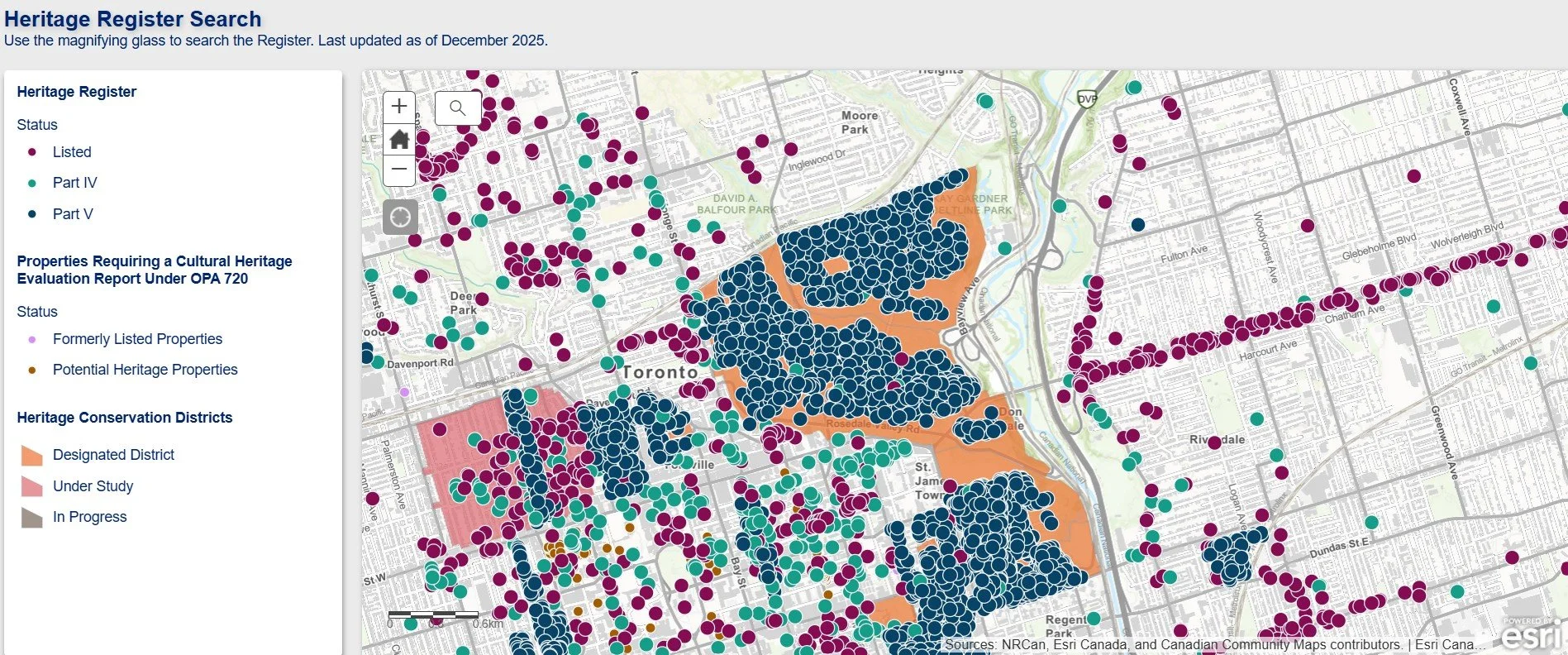
Map showing Rosedale and all of the properties that are heritage-registered
How Does the NRRA Influence Your Design Before Committee of Adjustment?
The NRRA has more power to adjust designs than most people expect.
On our current project, the NRRA told our client to redesign the roof system from dormers to a mansard roof. The change gave the third level more space. It required architectural revisions and delayed the timeline.
Here's the sequencing issue most homeowners miss:
NRRA approval comes first
Heritage review happens after NRRA approval
Committee of Adjustment submission requires heritage approval
Building permits require Committee of Adjustment approval
If you design without considering NRRA guidelines, you're building revision costs and timeline delays into your project from the start.
The NRRA reviews projects for neighborhood character compatibility. They look at:
Rooflines
Materials
Setbacks
How your addition relates to surrounding properties
Their feedback is required if you want to move forward.
Critical point: NRRA sits at the beginning of your approval sequence. Heritage waits for NRRA. Committee of Adjustment waits for heritage. Design with NRRA guidelines in mind or pay for revisions later.
What Are the Actual Costs and Timelines for Each Approval Pathway?
Here's what you'll spend and how long each stage takes.
Heritage and NRRA Review
Timeline: 2 months
Cost: $4,000+ in renderings and revisions
You need exterior renderings that show your proposed finish. The NRRA wants to see how your addition looks from the street and how it relates to neighboring properties.
Budget $4,000 for quality renderings. Expect at least one round of revisions.
Heritage application fees vary. The real cost is in the design work required to satisfy NRRA feedback before heritage will review.
Committee of Adjustment
Timeline: 2-4 months
Cost: $2,228.98 application fee + a few thousand in representation
You need a current topographic survey ($2,800-$3,000) and updated architectural drawings reflecting any changes from heritage review.
Most homeowners hire representation to present their case. The hearing date alone takes 2-3 months to schedule.
Building Permits
Timeline: Varies
Cost: Standard permit fees apply
Once you have Committee of Adjustment approval, you submit for building permits. Toronto's permit process takes longer than surrounding municipalities. This stage is more predictable than variance and heritage pathways.
Architectural Design
Timeline: Depends on revision cycles
Cost: Tens of thousands
Design fees vary based on project scope. The real expense comes from revision cycles triggered by NRRA feedback and Committee of Adjustment requirements you didn't anticipate upfront.
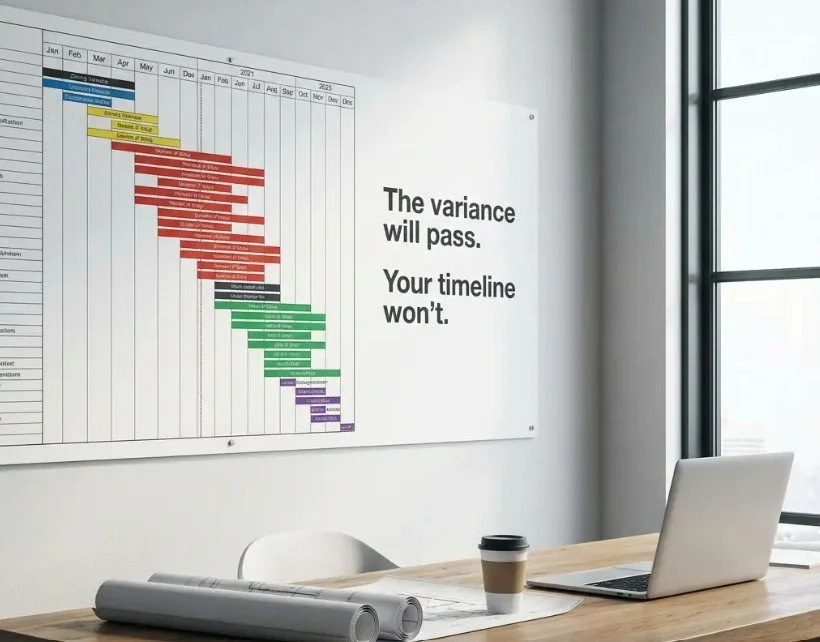
Total planning timeline: 12+ months from concept to construction permit for most Rosedale additions.
What this means for you: Budget at least $10,000-$15,000+ for approvals alone before construction begins. Factor in a year of planning before breaking ground.
When Should You Involve a General Contractor to Prevent Budget Blowouts?
The most expensive mistake Rosedale homeowners make is completing architectural designs before understanding what they can afford to build for their home addition.
You get through heritage review, NRRA approval, and Committee of Adjustment. You've spent months and thousands on approvals. Then you get construction quotes and discover the approved design exceeds your budget by 30-40%.
Now you're choosing between building less than you planned or starting the approval process over with revised designs.
Pre-Construction Consulting at the Beginning of Design
We engage with Rosedale clients through pre-construction consulting agreements at the beginning of the design process.
Cost: $1,500-$4,000 + HST
Value: Prevents approved designs from exceeding your budget by 30-40%
During pre-construction, we:
Review your property's zoning constraints
Calculate FSI limits
Identify variance requirements
Provide realistic cost ranges for what you're planning to build
This happens before your architect draws anything detailed.
The goal is to create informed homeowners who enter the design process knowing what's buildable, what's affordable, and what approval pathways their specific property will trigger.
Pre-construction consulting requires no long-term commitment. You get the information you need to make decisions, whether you build with us or not.
Why this matters: Spending $1,500-$4,000 + HST upfront prevents spending tens of thousands on architectural designs you cannot afford to build.
What Information Do You Need About Your Rosedale Property Before Starting Design?
You don't need to gather this yourself. We complete a comprehensive property review that identifies all of this information upfront.
Here's what determines your project's complexity:
Your Property's Specific Zoning Exception Number
Rosedale properties have site-specific zoning provisions that vary by location. These exceptions determine setback requirements, FSI limits, and what additions are permitted without variances.
One of our Rosedale projects has Exception RD 1281. This exception includes specific provisions about additions above the first story, rear extensions for homes built before 1953, and parking requirements. Your property will have its own exception with its own rules.
Your Lot's FSI Calculation
We determine in 10 minutes whether your planned addition will exceed FSI limits. This tells you immediately if you're heading to Committee of Adjustment.
Your Property's Heritage Status
Most Rosedale properties fall under the Heritage Conservation District. Some have individual designations that add extra requirements. We check this before you start design.
Your Lot Measurements and Constraints
Setbacks, easements, and lot dimensions shape what's physically buildable. A current survey reveals these constraints. We identify most issues from existing records before you pay for a new survey.
The practical approach: We complete the property review for you. You get a clear picture of what's buildable, what approvals you'll need, and what timeline to expect before spending money on design.
What Saves Rosedale Homeowners the Most Time and Money?
Get in contact with heritage and the NRRA as early in the design process as possible.
Start your planning at least a year before you want to build.
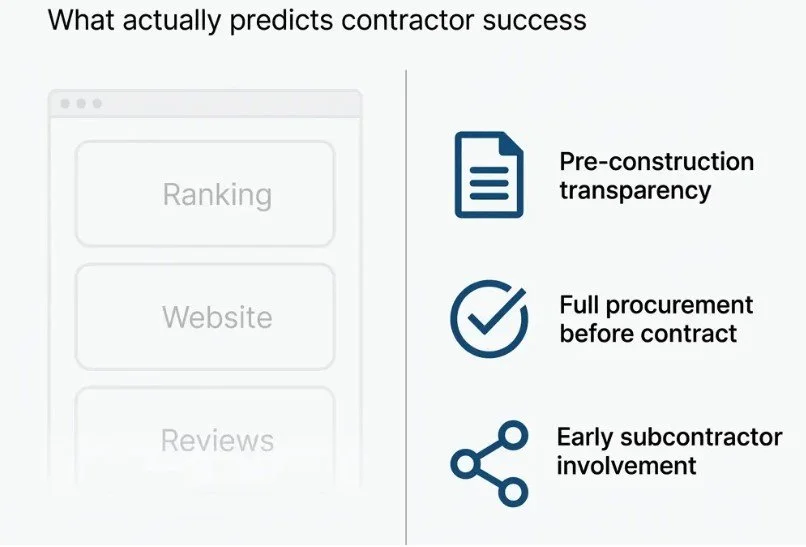
The homeowners who navigate Rosedale's approval process successfully understand the regulatory layers before committing to designs. They budget for the timeline. They factor in revision costs. They involve the right expertise at the beginning, not after problems show up.
We work with design and build teams who understand the Heritage Conservation District approval process and navigate from concept to completion. With our architectural partners at The Constructible Design Co., we create a comprehensive design process that sets expectations early in the planning phase.
The delays and approval requirements are clear before you enter the design process. The difference between a Rosedale addition that takes 12 months to permit and one that takes 18 months with unexpected costs at every stage comes down to planning upfront.
Next Steps for Rosedale Home Addition Planning
If you're planning a home addition in Rosedale, we complete a property review that identifies your specific zoning constraints, heritage requirements, and likely approval pathways. This happens before you spend money on architectural drawings.
The consultation is no-obligation. You get the information you need to make informed decisions about what to build, when to start, and what budget to set.
Final reminder: Contact heritage and the NRRA early. Budget for a 12+ month planning timeline. Involve a General Contractor during design, not after. These three steps prevent costly surprises.
Frequently Asked Questions About Rosedale Home Additions
Do all Rosedale properties need Committee of Adjustment approval?
Not all, but most do if you are completing a home addition. Rosedale's restrictive Floor Space Index zoning (35% for ravine properties, 60% for interior properties) pushes most homeowners past FSI limits when building additions. If your planned addition exceeds FSI limits or violates setback requirements, you need Committee of Adjustment approval. The good news is that there are many precedents for properties who have successfully been approved for FSI’s up to around 90% in Rosedale.
How long does the Committee of Adjustment process take in Toronto?
2-4 months minimum. The hearing date alone takes 2-3 months to schedule. You need a current survey ($2,800-$3,000), updated architectural drawings, and usually professional representation (budget a few thousand dollars). The application fee is $2,228.98.
What happens if the NRRA rejects my design?
Heritage approval waits for NRRA satisfaction before moving forward. If the NRRA wants design changes, you need to revise your plans and resubmit. This delays your timeline and adds architectural revision costs. The NRRA reviews for neighborhood character compatibility, including rooflines, materials, and setbacks.
Is heritage approval required for all Rosedale properties?
Most Rosedale properties fall under Part V of the North Rosedale Heritage Conservation District (enacted September 30, 2004). Even if your property has no individual designation, the Heritage Conservation District designation requires City of Toronto heritage approval for exterior changes.
How much should I budget for the approval process before construction begins?
Budget at least $10,000-$15,000+ for approvals alone. This includes $4,000+ for renderings, $2,228.98 for Committee of Adjustment application, $2,800-$3,000 for survey, $2,126.48-$6,187.36 for representation, plus tens of thousands in architectural design and revisions triggered by NRRA and heritage feedback.
When should I involve a General Contractor in the planning process?
At the beginning of the design process, before your architect draws detailed plans. Pre-construction consulting ($1,500-$4,000 + HST) identifies zoning constraints, calculates FSI limits, and provides realistic cost ranges. This prevents the scenario where approved designs exceed your budget by 30-40%.
What is Exception RD 1281 and how does it affect my property?
Exception RD 1281 is one example of site-specific zoning provisions in Rosedale. It includes rules about additions above the first story, rear extensions for pre-1953 homes, and parking requirements. Your property will have its own zoning exception number with its own specific rules that determine what's buildable without variances.
How far in advance should I start planning a Rosedale home addition?
At least a year before you want to build. The approval process takes 12+ months from concept to construction permit. Contact heritage and the NRRA as early in the design process as possible to prevent timeline delays and revision costs.
How long does it take to build a home addition in rosedale?
It depends! Depending on many different variables the time it takes to complete a home addition varies greatly. If you schedule a no-obligation with BVM Contracting or The Constructible Design Co. we can give you a more definitive timeline.
Key Takeaways
Rosedale home additions require three sequential approval layers: building permits, Committee of Adjustment variances, and Heritage Conservation District review with NRRA input. You cannot skip steps.
Most Rosedale properties trigger Committee of Adjustment because of restrictive Floor Space Index zoning (35% ravine, 60% interior). This adds 2-4 months and $2,228.98+ to your timeline.
The North Rosedale Resident's Association functions as an unofficial gatekeeper. Heritage approval waits for NRRA sign-off. Design with NRRA guidelines in mind or pay for revisions later.
Budget $10,000-$15,000+ for approvals alone before construction begins. Factor in 12+ months of planning before breaking ground.
Involve a General Contractor during the design phase ($1,500-$4,000 + HST pre-construction consulting) to prevent approved designs from exceeding your budget by 30-40%.
Contact heritage and the NRRA as early in the design process as possible. Start planning at least a year before you want to build.
Each Rosedale property has site-specific zoning exceptions that determine setbacks, FSI limits, and what additions are permitted without variances. Get a property review before spending money on architectural drawings.
More informative Home Addition Content








About BVM COntracting
BVM Contracting is a full-service General Contractor or Home Builder located in Toronto. We provide home renovation and building services for major home renovations and custom home builds (full interior renovations, home additions, lot severances, new home construction, garden suites, and laneway suites). Our goal is to help guide our clients through the process of building their home, from concept to completion.
Further than providing General Contracting and Project Management for major home renovations, we also offer value-added services such as renovation financing, renovation rebate consultations and services, building permit and design services, smart home installation services, and real estate investor services.
To learn more about our offering by visiting our services page. Learn more about our vision, mission, and values here.