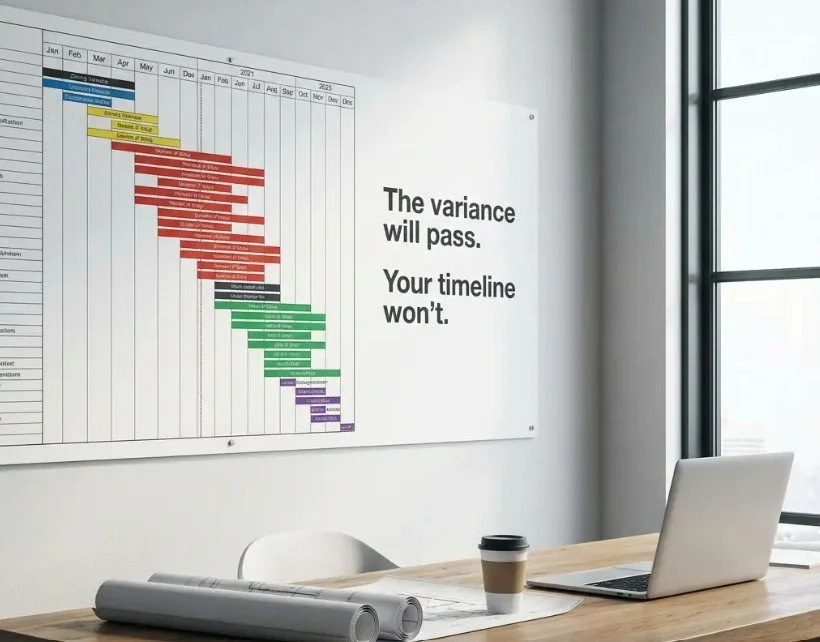
TLDR: Every home addition in Toronto requires a zoning review before you apply for a building permit. The process takes 3-6 months minimum if your project is zoning-compliant, or 3-6 months longer if you need a variance through Committee of Adjustment. Knowing which path your property requires before you invest in architectural design prevents costly redesigns and timeline delays.
Why a Zoning Review Comes Before Building Permits for Home additions in Toronto
Most homeowners think permits and zoning are the same thing. They're not.
Zoning review determines whether your proposed addition is allowed on your specific property based on lot coverage, setbacks, building height, and other municipal restrictions.
Building permits confirm that your finalized construction plans meet the Ontario Building Code and can proceed to construction.
You need zoning approval before the City of Toronto will even review your building permit application. This sequence matters because architectural design teams (like The Constructible Design Co.) sometimes skip the preliminary zoning step and design additions that trigger variances. We've seen projects delayed by 6-7 months because the design was complete before anyone checked if the design was permitted on that lot.
One of our clients moved into a rental, ready to start construction, only to discover their architectural plans required Committee of Adjustment approval. The rental costs alone added tens of thousands of dollars to their budget during the delay, on top of Committee of Adjustment fees and the stress that came with it. Learn how to evaluate your home addition project before committing to design work, and if nothing else sticks just remember this:
DO NOT DESIGN A PROJECT IN TORONTO WITHOUT A ZONING REVIEW
There are Two Permit Pathways in Toronto for home additions
Your project will follow one of two routes depending on whether your addition complies with existing zoning regulations.
Pathway 1: Zoning-Compliant Projects
Timeline: 3-6 months total
Cost: Building permit fees only. Cost is $18.56 per square meter (as of 2026) plus additional costs for HVAC permit ($260.53), and plumbing permit (pricing depends on number of fixtures and scope). There are potentially other charges depending on tree locations, if your property is in a TRCA-regulated area, and if you need to submit a damage deposit for your curb (which we know a work around for to pay $0).
If your addition fits within your property's zoning limits, you move directly from zoning review to building permit application. This is the faster, simpler path.
What happens:
Preliminary zoning review confirms your project is compliant (2-4 weeks)
Architectural and engineering plans are completed (4-6 weeks)
Building permit application is submitted (1-3 days)
City reviews and issues permit (4 weeks minimum)
Pathway 2: Projects Requiring Variances
Timeline: 6-12 months total
Cost: $2,228.98 Committee application + building permit fees + potential planning consultant fees ($2,000-$4,000)
If your addition exceeds zoning limits, you need approval from the Committee of Adjustment before you can apply for a building permit.
What happens:
Preliminary zoning review identifies variance requirements (2-4 weeks)
Architectural plans are prepared showing the variance request (2 weeks)
Committee of Adjustment application is submitted ($2,228.98, minimum)
Committee hearing is scheduled (2-4 months wait, depending on number of applications in your district)
Hearing occurs and decision is issued (or issued with conditions). There is a 20 day appeal period after the approval is granted before the approval becomes binding.
If approved, building permit application proceeds (6-8 weeks). The permit submission application can be submitted after the 20 day appeal period.
Committee of Adjustment hearings happen once per month in each Toronto district (Scarborough, Toronto-East York, North York, Etobicoke-York). Depending on application volume and when you submit, you might wait 2-4 months just to get a hearing date.
What Determines Committee of Adjustment Approval for Home addition projects
The Committee evaluates every variance request against four tests. All four must be satisfied for approval:
Official Plan compliance: Does the variance align with Toronto's Official Plan intent?
Zoning By-law intent: Does it maintain the general purpose of the zoning rules?
Appropriate development: Is the proposal suitable for the land and building?
Minor variance: Is the requested variance actually minor in nature?
Two factors heavily influence approval:
Neighborhood precedent: If similar variances have been approved on your street or in your area, your application has stronger standing. We research past Committee decisions in your neighborhood to assess approval likelihood before you invest in design.
Magnitude of the request: Asking for 10% more lot coverage than allowed is different from asking for 30% more. Larger variances face more scrutiny and may require hiring a private planning consultant to present your case at the hearing.
Toronto's Committee of Adjustment has a 96% approval rate across all districts. The issue isn't rejection risk. The issue is time. Even with near-certain approval, you're adding 2-4 months to your project timeline.
The Step-by-Step Building Permit Process for Home additions
Once zoning is confirmed (either through compliance or Committee approval), the building permit process follows a specific sequence.
Step 1: Complete Structural and HVAC Design
Timeline: 4-6 weeks
Who's involved: Structural engineer, HVAC designer, Home Addition Contractor, Architectural Partner
Your architectural drawings get translated into code-compliant construction plans. The structural engineer designs the foundation, framing, and load-bearing elements. The HVAC designer calculates heating and cooling requirements for the new space and integrates it with your existing system.
This step happens after zoning approval because there's no point paying for engineering if your design might need to change due to zoning constraints.
Step 2: Ontario Building Code Overlay
Timeline: Concurrent with Step 1
Who's involved: Architectural designer, Home Addition Contractor
Building Code overlays are added to your plans showing insulation values, fire separation requirements, window egress specifications, and other OBC compliance details. This documentation proves to the City that your addition meets all building code standards.
Step 3: Assemble and Submit Permit Package
Timeline: 1-3 days
Required documents:
Survey or site plan
As-built drawings of existing conditions
Proposed architectural plans with OBC overlays
Structural engineering plans
HVAC design plans (though this is a separate application that can be submitted after the main building permit)
Building permit application form
Your architectural partner typically submits the application on your behalf. Confirm this is included in their scope before you hire them. Some design firms don't handle permit submissions, leaving you to navigate the City's application portal yourself (which is crazy but we have seen it happen multiple times).
Important: Get your construction pricing finalized before you submit for permit. If you discover budget issues after submission and need to change the design, you'll pay resubmission fees and restart the review clock. Get a detailed home addition cost estimate to understand your full budget before permit submission to prevent this. BVM Contracting completes bottom-up scopes and estimates for all of our home addition projects and can help you expertly navigate the necessary planning and execution for your project.
Step 4: City Review and Permit Issuance
Timeline: 4 weeks minimum (often longer)
What happens: A building code examiner reviews your submission for compliance
The City has 10 business days to provide initial feedback. In Toronto, examiners rarely issue permits on first review, even with flawless plans. Expect at least one round of revisions and resubmission. Budget 4-6 weeks for this stage.
Simple projects may clear in 10-15 business days. Complex additions with multiple building code considerations take longer. The more detailed the drawings, the less of a chance your project will get flagged, but even with flawless plans they still put your application to the bottom of their pile (welcome to the Toronto Building Department!).
Which Home Additions Require building Permits in toronto
You need a building permit for any addition that:
Adds square footage to your home (rear additions, second-story additions, bump-outs)
Changes the building footprint (even small extensions)
Alters structural elements (removing walls, adding beams, foundation work)
Creates a separate dwelling unit (basement apartments, laneway suites, garden suites)
The rule of thumb is if you are adding addition square footage that is attached to your existing home, you will need a permit. This is different from ancillary structures less than 10 square meters, which do not require a permit so long as they do not contain plumbing.
The Real Cost of Toronto Home Addition Permits
Permit costs break into three categories: City fees, professional services, and potential variance expenses.
City Fees (Guaranteed Costs)
Main Building permit: $18.56 per square meter (2026 value)
HVAC Permit (required when you add any additional square footage): $270.95 (2026 value)
Plumbing Permit (required if your addition is adding additional plumbing or making significant adjustments to existing plumbing (i.e. backflow preventor, underground drainwork, etc.): Variable depending on number of fixtures and scope of work
Zoning certificate: 25% of building permit fee
Professional Services (Project-Dependent)
Survey: $2,800-$3,200 + HST (will be necessary for any home addition project)
Architectural plans: Variable, but to estimate your design costs please use The Constructible Design Co.’s Design Cost Calculator
Structural engineering: Usually included or estimated in architectural fees, but you can estimate around $1,200-$3,000 depending on size and complexity
HVAC design: Usually included or estimated in architectural design fees, but you can estimate between $1,200-$2,500 + HST depending on size and complexity
Variance Costs (If Required)
Committee of Adjustment application: $2,228.98
Planning consultant representation: $2,000-$4,000 (optional but recommended for complex variances)
Additional City searches: $170 for neighboring variance decisions, $135 for land use data
These costs are part of your overall project budget—see our complete cost breakdown guide to understand how permits fit into total home addition expenses.
Why Preliminary Zoning Review Protects Your Budget
Here's the chicken-and-egg problem most homeowners face: You need to know if your project requires a variance before you invest in architectural design. But most architects want to design first and check zoning later.
This sequence creates expensive problems.
We complete preliminary zoning reviews before design begins. Using Toronto's zoning maps and our database of hundreds of completed projects, we can identify variance triggers with 90% accuracy without a survey, or 100% accuracy with one.
What we assess:
Lot coverage limits (how much of your property can be covered by buildings)
Setback requirements (distance from property lines)
Building height restrictions (requires survey with topographic data)
Floor space index (total allowable building area)
Parking requirements (for multi-unit additions)
If we identify variance requirements, you have three options:
Adjust the design to stay within zoning limits (avoids Committee process, always our first option)
Proceed with variance application knowing the timeline and cost implications if we cannot get the design to fit within existing zoning. This takes you to Committee of Adjustment.
Reconsider the project if the variance process doesn't align with your timeline or budget
All three options are better than discovering variance requirements after you've paid for complete architectural plans. Discover other ways to save money on your home addition by making informed decisions early in the process.
Common Permit Complications in Toronto for home additions
Heritage District Properties
If your home is in a Heritage Conservation District, you need additional approval from the Toronto Preservation Board before building permits are issued. This adds 2-3 months to your timeline and requires design elements that match the heritage character of the area. There are also some neighbourhoods (like the North Rosedale Resident’s Association) that have a large say in the look of your project and have a surprising amount of influence. If you are in a heritage district of Toronto please proceed with caution!
Denser Neighborhoods
Properties in areas with smaller lots and tighter setbacks trigger Committee of Adjustment more frequently. If you're in the downtown core or established neighborhoods like Leslieville, Rosedale, Riverdale, or High Park, expect higher variance likelihood.
Multi-Unit Additions
Creating a second or third dwelling unit (basement apartment, laneway suite) involves additional permit requirements beyond standard building permits. You may need site plan approval, parking variance, or fire separation upgrades depending on your property and the unit configuration.
Permit Expiration
Ontario building permits require construction to begin within six months of approval. If you can't meet this timeline, you can apply for an extension. If the permit expires before work is complete, you need a new application and pay fees again.
What Happens If You Build Without Permits
The City of Toronto charges a penalty equal to 50% of the permit fees for work completed without permits. Beyond the financial penalty:
Insurance claims may be denied if fire or structural issues occur in unpermitted space
Home sales get delayed or derailed when buyer inspections uncover unpermitted work
You still need to get permits retroactively and may be required to open walls for inspection or make corrections to bring work up to code
If your project needs to go through Committee of Adjustment, your fees will be doubled for not going through the correct process the first time.
Permits aren't bureaucratic obstacles (even though they feel like it sometimes in Toronto). They're documentation that your addition is structurally sound, meets fire safety standards, and won't create problems when you sell.
Key Takeaways
Zoning review always comes first. Don't finalize architectural plans until you know if your project requires a variance.
Committee of Adjustment adds 2-4 months to your timeline even with a 96% approval rate.
Building permits take 4-6 weeks minimum in Toronto after all design work is complete.
Preliminary zoning reviews cost $2,800-$3,000 with a survey, or can be completed with 90% accuracy using existing zoning maps.
Total permit-related costs range from $4,000-$15,000+ depending on project complexity and variance requirements.
Get construction pricing before permit submission to avoid costly redesigns mid-process. Request a cost estimate for your home addition project.
Frequently Asked Questions about Home Addition Building Permits
Can I do my own permit application?
Yes, but it's time-consuming if you're unfamiliar with the City's portal and requirements. Most architectural partners include permit submission in their scope. Confirm this before you hire them. It is also important not to confuse this with doing your own designs, if you do not have any experience with CAD and have experience interpreting the Ontario Building Code you should not complete your own building permit. There is only a select few
How long does a Committee of Adjustment hearing take?
The hearing itself lasts a few hours and you will be on an ordered list that the Committee of Adjustment will go through from top to bottom (so depending on where your application sits it might be a long wait). Each application review takes a variable amount of time so you will not know exactly when your project will be reviewed. Your slot will take anywhere from 5 minutes to 30 minutes depending on how much you are asking for and how much opposition there is. The wait time to get a hearing date is 2-4 months depending on application volume in your district.
What if my neighbour objects to my variance application?
Neighbour objections are considered by the Committee but don't automatically result in denial. If you can demonstrate that your variance meets the four required tests and similar variances have been approved in your area, objections may not prevent approval. Hiring a planning consultant helps navigate neighbour concerns.
Do I need a survey for every home addition?
If you want a seamless permitting process, yes. Surveys provide 100% accuracy for zoning analysis, especially for building height calculations that require topographic data. There are ways that you can get building permit applications submitted without a survey, but it is risky and the City may require you to get an updated topographic survey to verify existing site conditions.
Can I start construction while waiting for Committee of Adjustment approval?
No. You cannot begin construction until you have both Committee approval (if required) and a building permit. Starting work before permits are issued results in fines/penalties and potential stop-work orders.
What happens if Committee of Adjustment denies my application?
You can appeal the decision to the Ontario Land Tribunal, but this adds significant time and legal costs. Alternatively, you can redesign your home addition to comply with zoning limits and proceed without a variance (or resubmit for a minor variance if you need to). This is why preliminary zoning review and neighborhood precedent research matter before you invest in design.
Next Steps for getting a home addition building permit
Before you hire an architectural designer or start designing your addition:
Get a preliminary zoning review to identify variance requirements and timeline implications. This can happen with or without a survey if you book a free project consultation with BVM Contracting.
Research Committee of Adjustment decisions in your neighborhood if variances are likely. Reach out to a knowledgeable home addition contractor who can help you navigate this and get you connected to a knowledgeable architectural partner.
Budget for permit costs including City fees, professional services, and potential variance expenses
Confirm your architectural partner's process for zoning review and permit submission
Plan your timeline accounting for 4-8 weeks if zoning-compliant, or 3-7 months if Committee approval is required
We complete preliminary zoning reviews as part of our pre-construction consultation process. This gives you the information you need to make informed decisions about design, budget, and timeline before you're committed to contracts you can't afford. Use our home addition evaluation guide to assess your project's feasibility from the start.
If you're planning a home addition in Toronto and want to understand your property's zoning constraints before you invest in design, we can help you navigate that first step.



About BVM COntracting
BVM Contracting is a full-service General Contractor or Home Builder located in Toronto. We provide home renovation and building services for major home renovations and custom home builds (full interior renovations, home additions, lot severances, new home construction, garden suites, and laneway suites). Our goal is to help guide our clients through the process of building their home, from concept to completion.
Further than providing General Contracting and Project Management for major home renovations, we also offer value-added services such as renovation financing, renovation rebate consultations and services, building permit and design services, smart home installation services, and real estate investor services.
To learn more about our offering by visiting our services page. Learn more about our vision, mission, and values here.