
TL;DR: Before hiring a contractor for your Toronto home addition, verify they provide database-backed cost estimates during initial consultation, integrate with your architect during design (not after), offer structured pre-construction services, maintain transparent change order protocols, and demonstrate Toronto-specific zoning expertise. Contractors who withhold pricing until you're invested or skip pre-construction planning create the conditions for budget blowouts and project delays.
What You Need to Verify Before Hiring a Home Addition Contractor in Toronto:
Database-backed cost estimates provided during first conversation (not after design commitment)
Builder involvement during design phase (before architectural drawings are complete)
Formal pre-construction services as standalone engagement ($5,000 to $7,000 + HST)
Clear change order protocols with documented pricing and approval processes
Toronto-specific zoning expertise (not general construction knowledge across multiple cities)
Why Most Contractor Evaluation Checklists Miss the Point
You verify insurance. You check references. You review portfolios.
Those steps matter. But they don't address the structural problem that destroys most home addition projects in Toronto: information asymmetry.
The industry operates on a model where you commit to designs, architects, and permit applications before you know what the project costs. By the time you get a real number, you've spent $15,000 to $25,000 on design and engineering.
Here's a recent example from our database: homeowners in Cliffside came to us with completed architectural drawings and a permit in hand. They asked for pricing. The gap between their budget and the cost was $150,000. They never moved forward. The revised design was still over budget.
Not a contractor problem. A process problem.
This checklist focuses on the evaluation criteria that expose how contractors operate before you're locked into a path you don't have the budget for.
Step 1: Verify Costing Transparency Before Design Commitment
What to Look For
Contractors who provide specific cost ranges during your first conversation, backed by project data from their database.
What This Reveals
Whether they've built the infrastructure to give you real numbers early. Or whether they're guessing until designs are complete.
The Test
In your initial call, describe your project scope. Ask for a budget range before any site visit or design work.
Contractors with comprehensive project databases tell you within 10 minutes whether a second-story addition in East Toronto runs $280,000 to $340,000. Or whether a laneway suite in your neighborhood costs $320,000 to $380,000.
Contractors without this infrastructure say "we need to see the property first" or "let's get some designs done." Not caution. A signal they don't have cost guidance until you've invested in design. Learn more about the different types of cost estimation used in residential construction.
Why This Matters
The longer you wait to get construction costing feedback, the larger the gap between your budget and reality.
Homeowners who get builder input before architectural work starts avoid the $150,000 surprises when contractors price completed designs.
Key Point: Database-backed cost estimates during initial consultation prevent budget gaps. Contractors who withhold numbers until after design commitment create risk.
Step 2: Assess Design-Phase Integration Capability
What to Look For
Contractors who collaborate with architects during design development. Not after permit issuance.
What This Reveals
Whether they prevent budget problems. Or react to them.
The Test
Ask when they get involved in projects. The answer should be "before architectural drawings start" or "during schematic design."
If they say "once you have permit-ready drawings" or "after your architect finishes," you're looking at the traditional sequence. The one that creates budget blowouts.
Why Separate Conversations Create Budget Overruns
Architects optimize for design. Builders optimize for constructibility and cost.
When these conversations happen separately, you get beautiful drawings that exceed your budget by 30% to 40%. Learn more about how home additions work in Toronto.
Some architectural teams work to a scope that ends at permit issuance. Whether your project gets built isn't their concern. If the contractor prices it at $200,000 over budget after permits are issued, you're the one facing that problem.
What Good Integration Looks Like
The builder reviews preliminary designs. Flags cost drivers before they're locked into plans. Suggests alternatives that maintain your vision while staying within budget.
This happens during design. Not after.
Key Point: Builder involvement during design phase (before architectural drawings are complete) prevents the 30% to 40% budget overruns that occur when design and cost conversations happen separately.
Step 3: Evaluate Pre-Construction Service Structure
What to Look For
Formal pre-construction agreements that establish budget, scope, and feasibility before you commit to full construction contracts.
What This Reveals
Whether the contractor has systematized the planning phase. The phase that prevents most project failures.
The Test
Ask about their pre-construction process. Ask these specific questions:
Do they offer pre-construction services as a standalone engagement?
What deliverables do you receive (zoning analysis, preliminary budgets, scope documentation)?
What does it cost? Is it credited toward construction if you proceed?
Do they require commitment to construction before providing detailed scope and pricing?
Contractors who skip pre-construction or bundle it invisibly into construction contracts optimize for speed. Not accuracy.
You move faster into construction. But you're building on assumptions instead of verified scope.
The Data on Pre-Construction Investment
Projects with structured pre-construction had 6 change orders on average. Projects without had 18.
Each change order adds time and cost. Change orders slow down construction because they require re-coordination of trades, material orders, and schedules.
Pre-construction costs less than the problems it prevents.
Homeowners who invest $5,000 to $7,000 + HST in pre-construction save multiples of this cost by avoiding mid-project scope changes and budget surprises.
Key Point: Structured pre-construction reduces change orders from 18 to 6 on average. Investment of $5,000 to $7,000 + HST prevents mid-project surprises that cost multiples more.
Step 4: Examine Change Order Protocols and Documentation Systems
What to Look For
Clear processes for how changes are documented, priced, and approved during construction.
What This Reveals
Whether the contractor runs organized projects. Or chaotic ones.
The Test
Ask these specific questions:
How do you track changes during construction?
What's your process for pricing change orders?
How quickly do I receive pricing for requested changes?
What project management tools do you use?
Contractors with strong systems reference specific software. Project management platforms. Digital documentation tools. They describe structured approval processes.
Contractors without systems give vague answers. "We'll keep you informed." "We handle things as they come up."
Why This Matters
Change orders are inversely proportional to pre-construction investment. Even well-planned projects have changes.
The question is whether those changes are managed systematically. Or handled reactively.
Three Problems Disorganized Change Management Creates
You don't know the cost impact until it's too late to adjust
Changes compound, creating budget creep you don't have visibility into
Disputes emerge about what was approved and what wasn't
Organized contractors send scope summaries within 24 hours of your consultation. They document decisions in writing. They provide change order pricing before work proceeds.
Not extra service. Basic project management.
Key Point: Clear change order protocols prevent budget creep. Contractors with documented systems provide pricing before work proceeds. Vague answers about "keeping you informed" signal reactive management.
Step 5: Investigate Project Communication Infrastructure
What to Look For
Scheduled communication protocols. Not reactive problem-solving.
What This Reveals
Whether you'll know what's happening on your project. Or whether you'll chase updates.
The Test
Ask about their communication structure:
How often do you provide project updates?
What format do updates take (calls, emails, project management software)?
Who is my primary point of contact?
How do you handle decisions that need my input?
Strong answers include specific frequencies. Weekly calls. Daily photo updates via project software. Defined decision-point management.
Weak answers sound like "we'll keep you in the loop" or "you call anytime with questions."
Proactive vs. Reactive Communication
Proactive communication means you receive updates on schedule. Whether there are problems or not.
Reactive communication means you hear from the contractor when something needs your attention. Or has gone wrong.
Poor communication causes more project failures than construction errors. When homeowners don't understand what's happening, trust breaks down. When trust breaks down, small issues become disputes.
Example from Our Database
Weekly communication sustained one project through complex architectural coordination. The contractor flagged issues early. Explained trade-offs. Kept the homeowner informed at every decision point.
The project finished on time despite design complexity.
Key Point: Scheduled communication protocols (weekly calls, daily photo updates) prevent trust breakdown. Vague promises to "keep you in the loop" signal reactive communication.
6. Confirm Geographic Specialization and Regulatory Knowledge
What to look for: Toronto-specific expertise, not general construction knowledge.
What this reveals: Whether they understand the regulatory environment that controls your project.
The test: Ask about their experience with Toronto zoning and permits:
How many projects have you completed in my neighborhood?
Can you explain the zoning constraints for my property type?
What's your typical permit timeline for this type of addition?
Do you have relationships with Toronto building examiners?
Contractors who specialize in Toronto can answer these questions specifically. They know that Toronto building examiners rarely issue permits on first review. They understand which zoning variances are routinely approved and which face resistance. They can forecast permit timelines based on current processing speeds.
Contractors who work across multiple municipalities give generic answers. They're learning Toronto's system on your project. Familiarize yourself with key construction terms.
Why this matters: Zoning determines what you can build. Permit processing determines when you can start. Contractors who don't understand Toronto's specific requirements create delays you can't recover from.
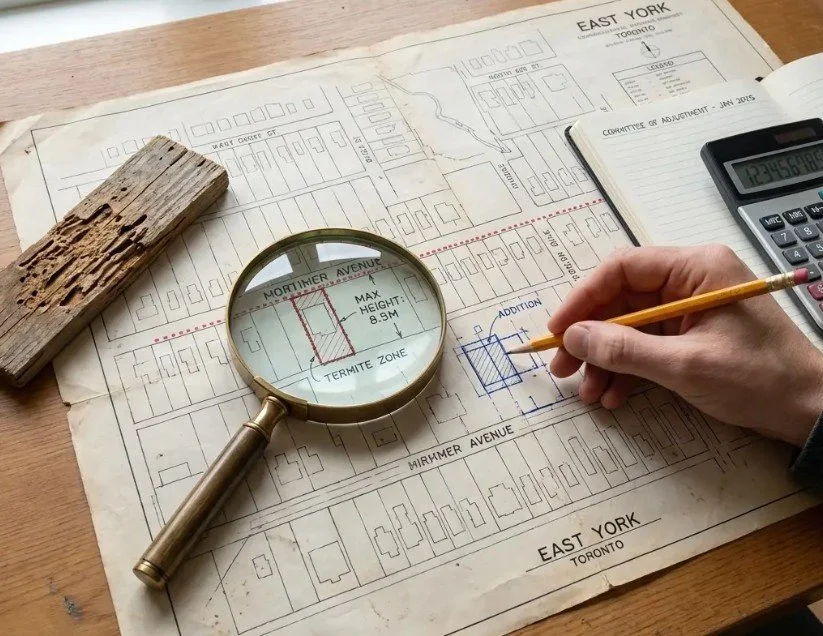
A preliminary zoning review takes 10 minutes for contractors with local expertise. They can tell you immediately whether your second-story addition faces setback restrictions, whether your lot qualifies for a garden suite or laneway suite, or whether your renovation requires Committee of Adjustment approval.
Contractors without this knowledge won't discover zoning problems until you're deep into design and permit applications.
7. Review Commitment Pressure and Consultation Value
What to look for: Contractors who provide value during consultation, regardless of whether you hire them.
What this reveals: Whether they're optimizing for your decision quality or their close rate.
The test: Pay attention to the consultation experience:
Do they provide specific information (budget ranges, timeline estimates, zoning constraints)?
Do they explain trade-offs and alternatives?
Do they pressure you to commit quickly?
Do they withhold information until you sign a contract?
Contractors confident in their value give away information freely. They know that educated clients make better decisions and become better clients.
Contractors who create urgency ("we're booking up fast") or withhold guidance ("we can discuss that once you're under contract") are optimizing for conversion, not fit.
The filtering effect: No-obligation consultations that provide real value attract clients who value transparency and education. They repel clients who are just price shopping or looking for the fastest option.
This filtering mechanism protects both parties. You work with a contractor whose process matches your priorities. They work with clients who understand why their approach costs what it does.
Key Findings
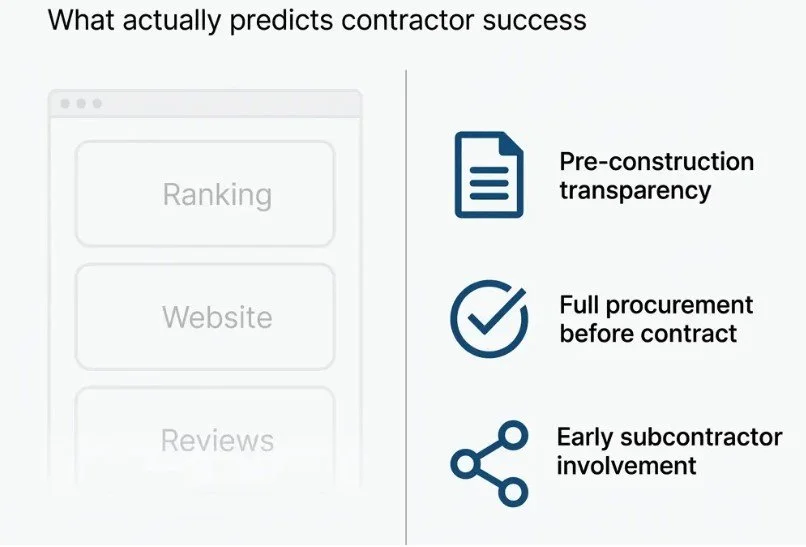
The evaluation criteria that matter most aren't about credentials—they're about process:
Contractors with comprehensive project databases provide accurate cost guidance before design work starts, preventing the $150,000 budget gaps that happen when builders price completed drawings
Design-phase integration prevents budget blowouts by catching cost drivers before they're locked into architectural plans
Structured pre-construction reduces change orders from 18 to 6 on average, saving time and money during construction
Transparent change order protocols and project management systems prevent the budget creep and disputes that destroy project trust
Toronto-specific zoning expertise identifies feasibility issues in 10 minutes that generic contractors discover months into design
No-pressure consultations that provide value regardless of hiring decision filter for clients who value process over speed
The pattern: Contractors who invest in transparency infrastructure (databases, pre-construction services, communication systems) create certainty before you commit. Contractors who skip these steps move faster initially but create the conditions for budget surprises and project delays.
FAQ
Q: Should I get multiple quotes before choosing a contractor?
A: Yes, but understand what you're comparing. Three contractors pricing the same completed design will give you cost variance data. Three contractors involved during design will give you different project approaches. The second comparison is more valuable because it reveals how they think about scope, not just how they price it.
Q: How much should pre-construction services cost?
A: Typically $5,000 to $7,000 + HST for comprehensive pre-construction that includes zoning analysis, preliminary budgets, scope documentation, and design coordination. Many contractors credit this toward construction if you proceed. The investment prevents problems that cost multiples more to fix during construction.
Q: What if my architect doesn't want builder involvement during design?
A: This signals a process problem. Architects and architectural designers who resist builder input during design often produce drawings that exceed budgets. You're paying for both services. Insist they collaborate, or find an architect who values constructibility alongside design. This problem is exactly why we created The Constructible Design Collective, which helps bridge the gap between design and construction costs.
Q: How do I know if a contractor's database-backed estimates are accurate?
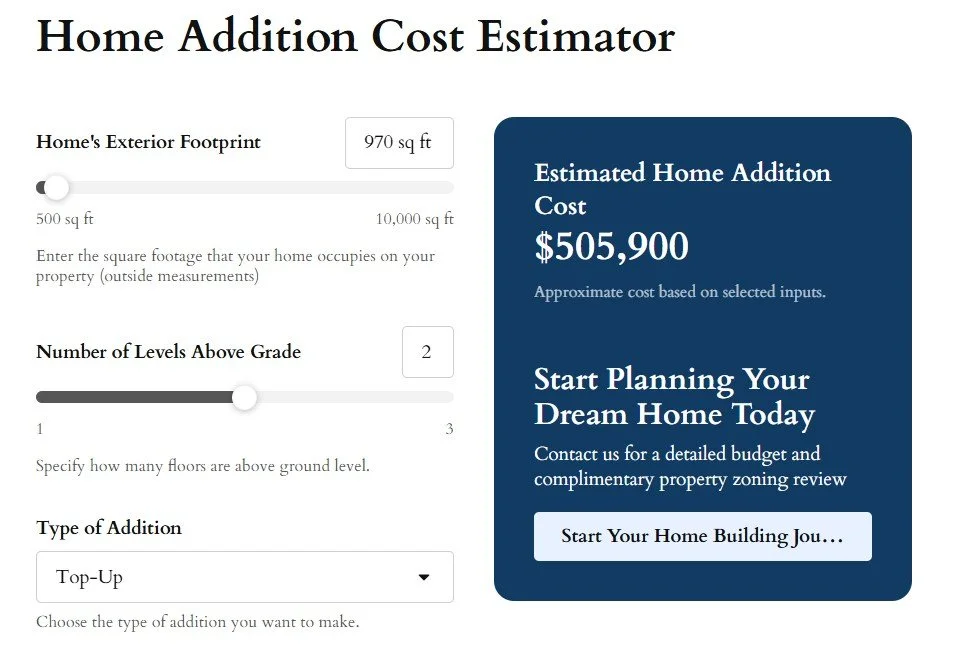
A: Ask for examples of past projects similar to yours. Contractors with real databases can show you completed project budgets (with client permission) that demonstrate their estimating accuracy. Cost calculators backed by real project data are another indicator of database infrastructure. Contractors who can't provide examples are guessing, not estimating.
Q: What's a reasonable timeline for a home addition in Toronto?
A: Design and permits typically take 5 to 7 months. Construction depends on scope, but expect 4 to 8 months for most additions. Contractors who promise faster timelines are either cutting corners on pre-construction or setting unrealistic expectations. A safe budget requires adequate planning time before breaking ground.
Q: Should I hire the contractor who gives the lowest quote?
A: Low quotes signal one of three things: the contractor missed scope items, they're using lower-quality materials or trades, or they're underpricing to win work and will recover margin through change orders. Focus on process transparency and scope clarity, not lowest price.
Q: How can I verify a contractor's Toronto-specific experience?
A: Ask for addresses of completed projects in your neighborhood. Drive by them. Ask about specific zoning challenges they've navigated. Contractors with real Toronto experience can discuss Committee of Adjustment processes, building examiner preferences, and neighborhood-specific constraints in detail.
Q: What should I do if I've already started design without a contractor?
A: Bring a contractor in now, before designs are finalized. Even mid-design involvement prevents problems. The worst scenario is pricing completed permit-ready drawings and discovering you're $100,000+ over budget with no flexibility to adjust.
More Informative Home Addition Content






About BVM COntracting
BVM Contracting is a full-service General Contractor or Home Builder located in Toronto. We provide home renovation and building services for major home renovations and custom home builds (full interior renovations, home additions, lot severances, new home construction, garden suites, and laneway suites). Our goal is to help guide our clients through the process of building their home, from concept to completion.
Further than providing General Contracting and Project Management for major home renovations, we also offer value-added services such as renovation financing, renovation rebate consultations and services, building permit and design services, smart home installation services, and real estate investor services.
To learn more about our offering by visiting our services page. Learn more about our vision, mission, and values here.