TLDR: The Ontario Home Renovation Savings Program covers a range of energy efficiency upgrades for retrofit renovations — windows, insulation, heat pumps, and more. But here's what most contractors won't tell you: the way the program is structured, you often end up paying the same amount (or more) than if the rebate didn't exist. Here's the honest picture.
The Promise vs. The Reality
Every few weeks, we hear from a Toronto homeowner who's already done the math — in their head, before talking to anyone. They've found the Ontario Home Renovation Savings Program online, seen the numbers, and started building a renovation budget that assumes $8,000 or $10,000 is coming back to them. The scope grows. The expectations lock in. And then we have to have a conversation about what the program actually does before any of that momentum becomes a problem.
We've seen this exact scenario play out dozens of times. And our job — before we talk about timelines, materials, or anything else — is to give you the honest version of this story.
The Ontario Home Renovation Savings Program is real. The rebates are real. But the way the program actually works in practice is meaningfully different from how it reads on paper. If you're counting on it to make your project pencil out, keep reading.
What the Program Actually Covers
The Ontario Home Renovation Savings Program focuses on energy efficiency upgrades — the kind of improvements that reduce your home's energy consumption and environmental footprint. It applies to retrofit work only. If you're building new, you're not eligible.
The program operates on two tiers:
Tier 1 — No pre-inspection required. Some upgrades can be started without an energy assessment. You install the upgrade, apply for the rebate, and receive your savings.
Tier 2 — Energy assessment required first. A licensed energy assessor must evaluate your home before any work begins. The assessment establishes a baseline, you complete the upgrades, and then a follow-up assessment confirms the improvement.
Eligible upgrades include things like:
Upgrading to triple-pane windows
Installing a cold climate heat pump
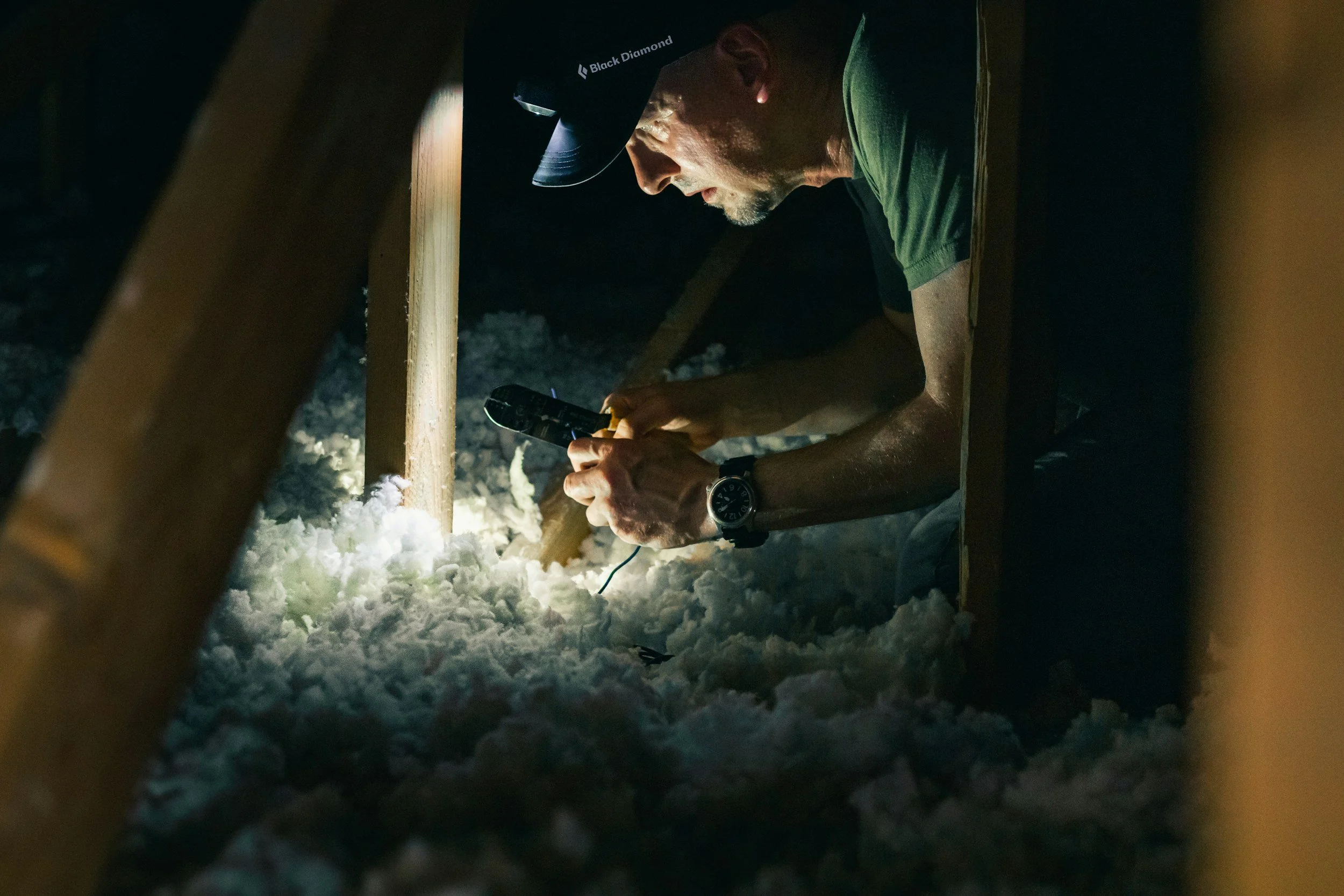
Adding attic or wall insulation
Air sealing improvements
Smart thermostats (in some cases)
The list isn't short. And on paper, the savings look meaningful. So what's the catch?
The Problem Nobody Talks About
Here's where it gets uncomfortable — and where we think there aren't nearly enough honest voices in the industry.
When the government designates a list of approved providers for specific upgrades, they unintentionally create a captive market. If you want the rebate on your attic insulation, you have to use one of a limited number of approved insulation providers. Those providers know you're getting a rebate. And they price accordingly.
We've seen this directly in conversations with our own subcontractors. The rebate amount you receive gets quietly absorbed back into the cost of the service. You don't save money — you just move money around. The contractor makes a better margin, the government checks a box, and you end up roughly where you started.
Take two common examples:
Triple-pane windows run approximately 20–30% more than comparable double-pane units. The rebate might cover a portion of that premium — but often not all of it. You're investing in a better product, not actually "saving" money in the traditional sense.
Cold climate heat pumps typically cost $3,000–$5,000 more upfront than a standard air conditioning system. Again, the rebate is real — but the math often results in break-even at best, not a windfall.
We're not saying the program is a scam. We're saying the gap between what homeowners expect and what actually happens is significant — and nobody in the industry is being straight with them about it.
What Most Homeowners Get Wrong
The biggest mistake isn't misunderstanding the eligibility requirements. It's treating the rebate as a starting point for the budget instead of a potential bonus at the end.
We see it constantly: a homeowner builds their renovation plan around an assumed $8,000–$10,000 in rebates, uses that number to justify a bigger scope of work, and then discovers mid-project that the eligible upgrades only qualify for a fraction of that — or that the pre-inspection requirement means they missed the window entirely because work already started.
A few things homeowners consistently get wrong:
They assume the rebate applies to the whole renovation. It doesn't. Only specific, approved energy efficiency upgrades qualify. Your new kitchen, bathroom, or home addition doesn't trigger a cent.
They try to enroll mid-construction. For Tier 2 upgrades especially, the pre-inspection has to happen before any work begins. If you've already started, you've already disqualified yourself.
They expect a straightforward process. You're coordinating with approved providers from a limited list, booking a licensed energy assessor on their schedule, and keeping documentation in order from the day work begins. If you're already mid-renovation, that window is typically already closed.
They compare the rebate to the total project cost. If you're spending $150,000 on a home addition and the rebate covers $2,000 of attic insulation, it doesn't meaningfully shift the financial picture on the project. Worth capturing? Absolutely. Worth building your budget around? No.
The BVM Approach: Honest, Upfront, Every Time
Our honest take: the Ontario Home Renovation Savings Program works best for homeowners who were going to make these energy efficiency upgrades regardless of the rebate. If you're replacing windows because your current ones are 30 years old and leaking heat, the rebate is a welcome bonus. If you're only replacing windows because of the rebate, the math often doesn't hold up.
That said, we don't write these programs off entirely. We have a dedicated pre-construction planning team, and part of their job is to evaluate which — if any — subsidy programs make sense for your specific project. That conversation happens before you sign anything, not during construction when it's too late to qualify.
The key is integration. These programs demand upfront planning — the kind that has to happen before any work begins. A licensed energy assessor has to evaluate the home first, which means booking them early. Approved providers have to be identified, quoted, and compared against the open market so you actually know whether the approved route makes financial sense. The documentation doesn't sort itself. When all of that is built into your pre-construction phase — before your budget is locked, before trades are scheduled — you have a real shot at capturing meaningful value. We've walked homeowners through this in Leslieville, East York, Scarborough, and North York, and the outcome almost always comes down to how early the conversation started.
When it gets bolted on as an afterthought, you're usually out of luck.
Our pre-construction team will tell you honestly whether a program is worth pursuing for your project — or whether chasing a rebate will cost you more in time, complexity, and inflated provider costs than the rebate is worth. That's the kind of straight talk we think every Toronto homeowner deserves.
Key Takeaways
The Ontario Home Renovation Savings Program covers energy efficiency upgrades on retrofit renovations — not new construction
Some upgrades require an energy assessment before work begins; skipping this step disqualifies you
Approved provider lists create captive markets where costs are often inflated to absorb the rebate — leaving you no better off
Triple-pane windows run 20–30% more than double-pane; cold climate heat pumps add $3,000–$5,000 over a standard AC system
The program works best for homeowners committed to energy upgrades regardless of the rebate — not as a justification to do more work
Enrollment must be built into your pre-construction planning — you cannot apply retroactively
Frequently Asked Questions
Q: Does the Ontario Home Renovation Savings Program apply to new home construction?
A: No. The program is designed for retrofit work on existing homes. If you're building new, these rebates don't apply. For renovation and addition projects, you're in the right territory — as long as the specific upgrades are eligible.
Q: Can I use any contractor for the eligible upgrades, or does it have to be from an approved list?
A: For many covered upgrades, you'll need to use an approved provider from the program's designated list. This is one of the key friction points — and why costs often don't come down as much as expected. Your contractor options become limited, which limits your ability to shop on price.
Q: How do I know if the rebate is worth pursuing for my renovation?
A: The honest answer is: it depends on what you're already planning. If energy efficiency upgrades are already part of your scope for other reasons, capturing a rebate makes sense. If you're adding upgrades purely to qualify, run the math carefully — and involve your contractor in pre-construction planning before you commit. The cost of being routed through an approved provider — instead of sourcing competitively — often erodes more of the savings than most people expect.
Ready to Talk About Your Project?
If you're planning a renovation in Toronto and wondering whether government rebate programs actually fit your project, let's have that conversation early. Our pre-construction team doesn't just manage timelines and budgets — we evaluate the full financial picture, including whether programs like the Ontario Home Renovation Savings Program make sense for your specific scope. No spin. Just the honest numbers.
Book a call with the BVM team directly at bvmcontracting.com
Related Reading: