TLDR: A garden suite on your parents' lot is one of the most practical responses to Toronto's housing market — but the permit process takes longer, the full cost runs higher, and the family alignment required is more important than most families expect. Here's what we've learned from every ADU project we've completed in the city.
The Housing Conversation Nobody Wants to Have First
There are two types of adults navigating Toronto's housing market right now: those who bought before 2015, and everyone else trying to figure out what they're supposed to do.
Renting burns money with nothing to show for it. Condos come loaded with maintenance fees that don't build equity. Co-purchasing sounds logical until someone maps out the land transfer taxes and legal complexity. Detached homes in Scarborough, East York, or the Beaches are sitting at prices that require two above-average incomes just to qualify.
So the backyard conversation comes up. Not as a metaphor — the actual backyard.
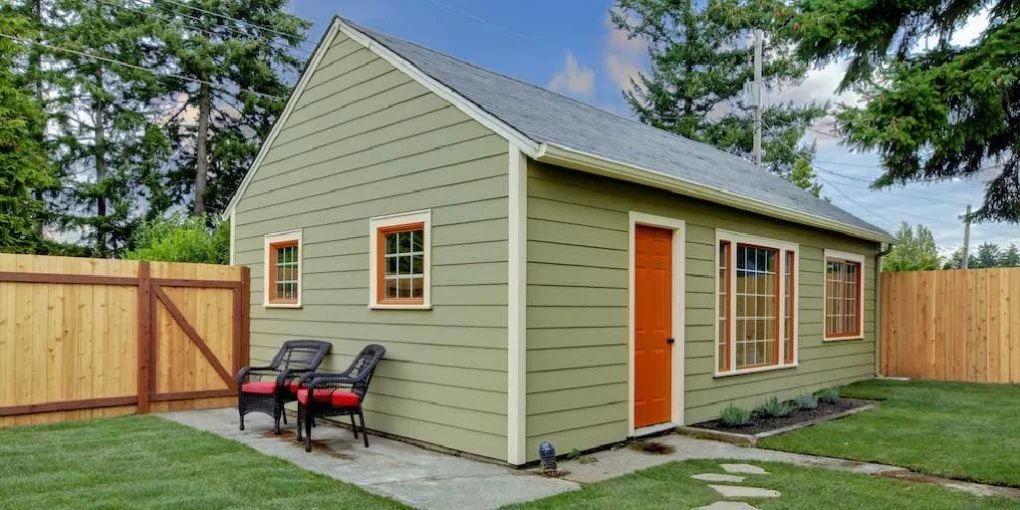
Every garden suite and laneway suite we've completed in Toronto and Durham has been for a multi-generational family. Every single one. A son who wants to stay in the city but can't afford to. A daughter who needs her own space and her own front door, but also needs proximity to her parents as her own kids get older. Aging parents who want to cash out of their property but aren't ready for a retirement home. The scenarios vary. The math keeps working out.
Before we even look at a site plan, we want to understand one thing: how much of this decision is financial, and how much is emotional? Some families genuinely love being close. Others would prefer more distance if the economics allowed it. Both are valid. But the answer shapes everything that comes after.
What a Garden Suite Actually Costs to Build Right Now
Let's get this out of the way: garden suites and laneway suites are among some of the most expensive types of builds to complete in Toronto right now. That's not a knock on the project type — it's a function of how construction costs work.
Here's the core issue. When you build a 2,000 sq ft home, you're spreading fixed costs — the kitchen, bathroom, HVAC, electrical panel, utility connections — across a large footprint. A garden suite runs somewhere between 500 and 1,200 square feet. You're paying for all the same systems. The cost just concentrates differently.
Three variables move the number from the low end to the high end:
Size. A larger suite costs more in total, but it often brings the cost per square foot down. A 700 sq ft suite and a 1,100 sq ft suite don't have a 57% cost gap — construction math doesn't work that linearly.
Utility connections and upgrades. This is the one that surprises almost every family. Depending on what the main home's existing infrastructure actually looks like, getting adequate water pressure and electrical capacity to a new standalone unit may require significant upgrades to the main home's systems. No builder can give you a real number on this without looking at your specific property.
Finish level. Are you putting in an $80,000 kitchen or an IKEA kitchen? ACM panel cladding or vinyl siding? A standard shower or steam? These choices can swing total project cost by $100,000 or more. We always surface this conversation early — no point anchoring to a number that assumes builder-grade finishes if what you actually want is something else.
The Permit and Zoning Process (Plan for 6 to 12 Months Before Construction Starts)
This is where reality lands hardest. The permit process for a garden suite in Toronto runs virtually identical to a major addition or new home build.
The sequence: site survey (a new one — the one from when your parents bought the house in 1988 won't work), architectural drawings, zoning review submission, zoning certificate or Committee of Adjustment if variances are needed, structural and mechanical consultants, finalized construction budget, then permit submission. Each step depends on the one before it.
That process takes six months on the fast end. Closer to twelve months for properties in areas with trickier zoning — heritage-adjacent streets in Riverdale, narrow infill lots near the Junction, or anything that triggers a Committee of Adjustment hearing. Then add five to seven months for construction. Start-to-keys, you're looking at 18 months to two years.
That timeline surprises families almost universally. The response we always give: start the process before you feel ready. The cost of starting early is just time. The cost of starting late is living somewhere you don't want to be while the clock runs.
Not every property can support a garden suite. Lot size, property line setbacks, existing tree coverage, construction access, and specific neighbourhood overlays all affect feasibility. The first thing we do is assess the actual property. Not drawings. The property.
The Honest Comparison: Garden Suite vs. Renting, Condo, Co-Purchasing
A garden suite doesn't make sense for every family. Here's how the options stack up honestly:
Renting gives you geographic flexibility. If your work, your social life, or your five-year plan isn't anchored to one Toronto neighbourhood, renting may still be the right call.
Buying a condo gives you ownership, but maintenance fees are a real leak. In buildings with high monthly fees, the actual cost of ownership looks worse than most mortgage calculators show — especially if fees continue climbing.
Co-purchasing can work, but if either generation is selling their existing property to fund it, the land transfer taxes and transaction fees are brutal. We've seen families run the numbers on co-purchasing and realize the math doesn't hold up once all the transaction costs are factored in.
The garden suite works best when the family relationship is genuinely strong, the parents' property is in a neighbourhood the adult child actually wants to live in long-term, and the all-in cost — build, utility upgrades, landscaping — still pencils out better than the alternatives.
There's one hard rule: if you're doing this because it's your only option and the family dynamics are strained, don't do it. Living forty feet from someone you have a complicated relationship with isn't a cheaper version of independence — it's a more expensive version of tension. Proximity without genuine buy-in doesn't work. We've seen it.
What Most Homeowners Get Wrong
The single biggest mistake is treating the builder's quoted build cost as the total project cost.
Pricing out the construction of a garden suite is straightforward enough. What gets missed are the ancillary costs: how the build affects the main home, how much landscaping will be required after construction finishes, what utility upgrades are needed to ensure adequate water pressure and power for the new unit. Someone can get a number on the structure itself and feel like they have a budget — then the full picture comes into focus and the number looks different.
There are prefab companies and ADU-focused builders out there marketing cost-effective builds that, frankly, don't work on Toronto properties. The marketing is compelling. The pricing looks even better. Then the property assessment happens and none of those numbers apply to a narrow lot in the east end with an aging service lateral.
We're a Toronto builder. We understand Toronto properties — urban infill constraints, aging infrastructure in mature neighbourhoods like the Beaches or Danforth Village, laneway access challenges that determine whether a project is straightforward or complex. That context is what lets us give you real cost projections, not optimistic ones.
The other mistake: not getting everyone in the room before design starts. If one person — a parent who's only half-committed to the idea, a sibling who wasn't consulted — isn't genuinely bought in, that's all it takes to derail a project that's months deep in drawings and permit submissions.
The BVM Approach to Garden Suite Projects
Pre-construction is where we spend the most time — not because the process is slow, but because the decisions made here determine everything downstream.
Before design begins, we want to understand who the real stakeholders are. Who's paying? Who controls the interior design decisions? Who manages day-to-day coordination during construction? We clarify this early because a project with ambiguous decision-making is a project waiting for conflict.
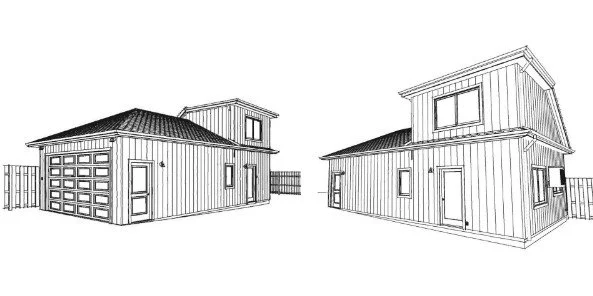
For design: a garden suite that genuinely works for both households needs multiple levels to give the adult child real living space rather than a large studio. The backyard needs to be planned around both families — not just whatever footprint is left after the building envelope is staked out. Shared areas and private areas need to be considered deliberately.
One practical advantage that often goes underappreciated: in most cases, the occupants of the main home can stay in the house during construction of the garden suite. That's a meaningful difference from a major renovation to the main home, which typically requires a relocation for part or all of the build. It reduces the disruption significantly.
We've seen the model work. Families come through the other side with something genuinely valuable — independence and proximity at the same time. Instead of planning a full day to cross Toronto to see parents, the commute becomes forty feet. That changes the texture of how families live, especially as people start having their own children and the calculus of being close to family shifts from optional to meaningful.
Key Takeaways
Every garden suite we've completed has been for a multi-generational family — the model works, but the family relationship has to be solid going in
Budget for the full project, not just the build: utility upgrades, landscaping, design, and permit fees all add to the number
Permit and design in Toronto can take 6 to 12 months before construction starts — beginning early is the best move available to you
The cost per square foot is high, but so is renting indefinitely in a market that has not gotten easier to enter
Get every stakeholder aligned before a builder is engaged — one person who isn't convinced is all it takes to derail a project well into the planning phase
Frequently Asked Questions
Q: How much does a garden suite cost to build in Toronto?
A: There's no single number that applies across all properties. Size, finish level, and the specific infrastructure situation on the property all move the total significantly. What we can say is that garden suites and laneway suites are among the more expensive build types per square foot in the city — because fixed costs (kitchen, HVAC, electrical, plumbing) don't scale down the way square footage does. The most useful thing we can do is walk your property and give you a realistic range based on what's actually there.
Q: How long does the full process take, start to move-in?
A: Realistically, 18 months to two years for the full process. Design and permitting alone run 6 to 12 months in Toronto. Construction typically takes 5 to 7 months after the permit is issued. If you're frustrated with your current housing situation, the best time to start was six months ago. The second best time is now.
Q: Do all Toronto properties qualify for a garden suite?
A: Not all of them. Lot dimensions, setbacks from property lines, existing mature trees, construction access from a laneway or side yard, and neighbourhood-specific zoning conditions all affect feasibility. Some areas also have heritage overlays that add another layer to the approval process. The starting point is always a proper site assessment — before drawings, before permit conversations, before budgets.
Ready to Talk About Your Project?
If your family is navigating this decision — weighing the housing market against what's sitting in the backyard — we'd like to have a real conversation. We're not going to push you toward a build before we understand whether it's genuinely the right move. That's not how we work. Book a call with our team directly at bvmcontracting.com and let's look at the numbers together.
Related Reading:







Learn about the key utility-upgrade considerations you will want to know about before planning your garden suite in Toronto.