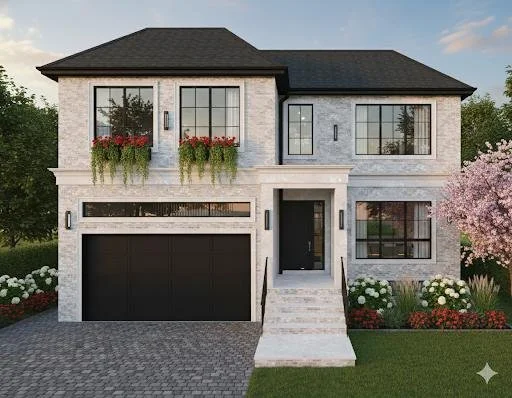
How a Scarborough bungalow became a forever home: $15,000 in engineered savings, zero structural unknowns, and the patience to do it right.
⚡ TLDR
Brenda and Sean own a bungalow with an integral garage on Scarcliff Gardens in Scarborough. They didn't want to move — they wanted to transform. With a second storey addition targeted for a July 2026 build start, BVM Contracting engineered out $15,000 in steel costs, confirmed the existing footings can handle the full structural load, and helped the clients keep their project alive through a genuinely difficult personal stretch. This is a project still in pre-construction — but the story of how it got here is one every Scarborough homeowner should read before deciding what to do with their forever home.
Project Information
Project Type: Second storey addition over an existing bungalow with integral garage
Location: Scarcliff Gardens, Scarborough
Scope: Full second storey — three bedrooms, two full bathrooms, and a dedicated laundry room — plus a main floor reconfiguration
Design: Durham Drafting & Design
Build Start: Targeted for July 2026
Status: Pre-construction
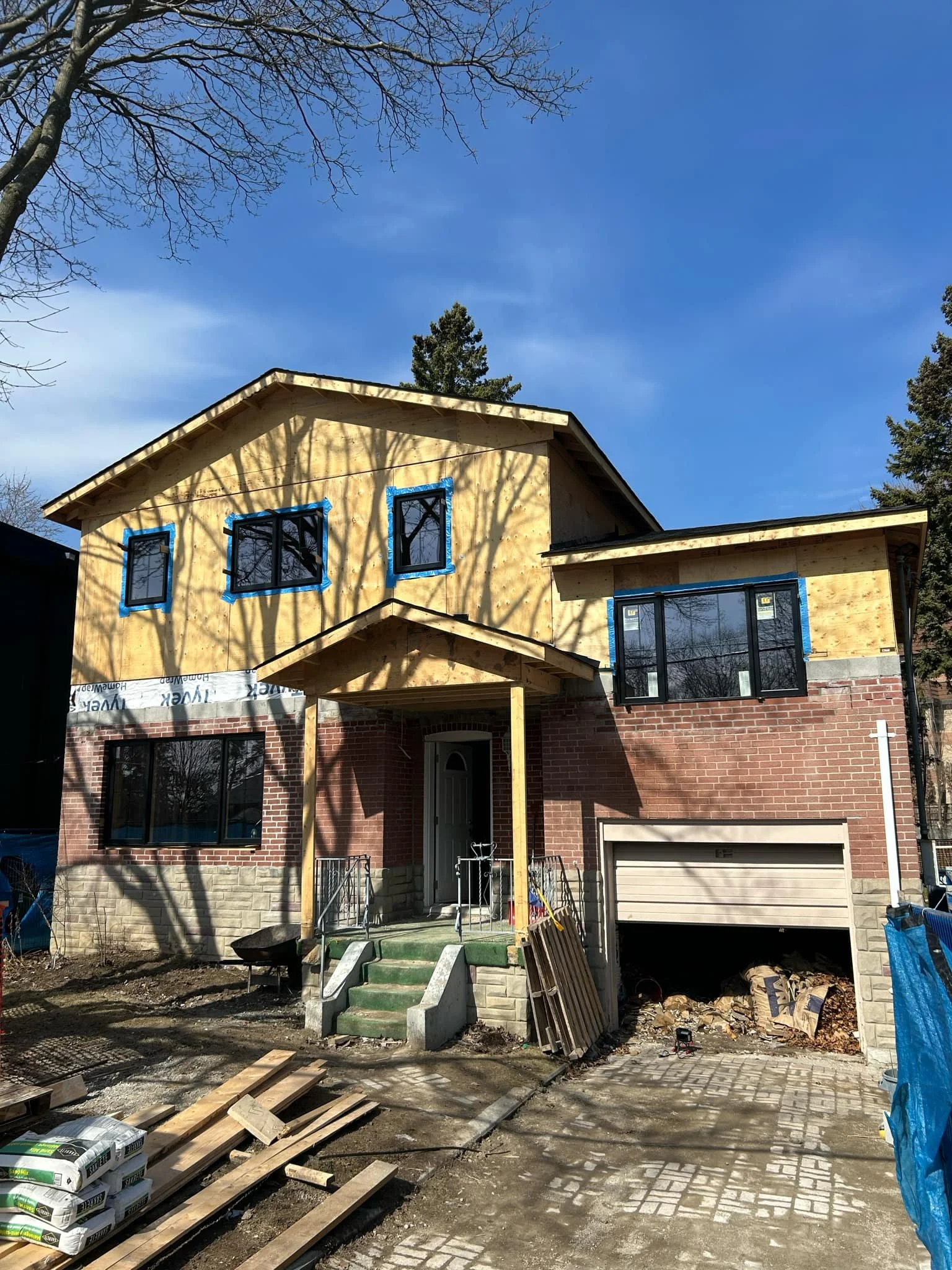
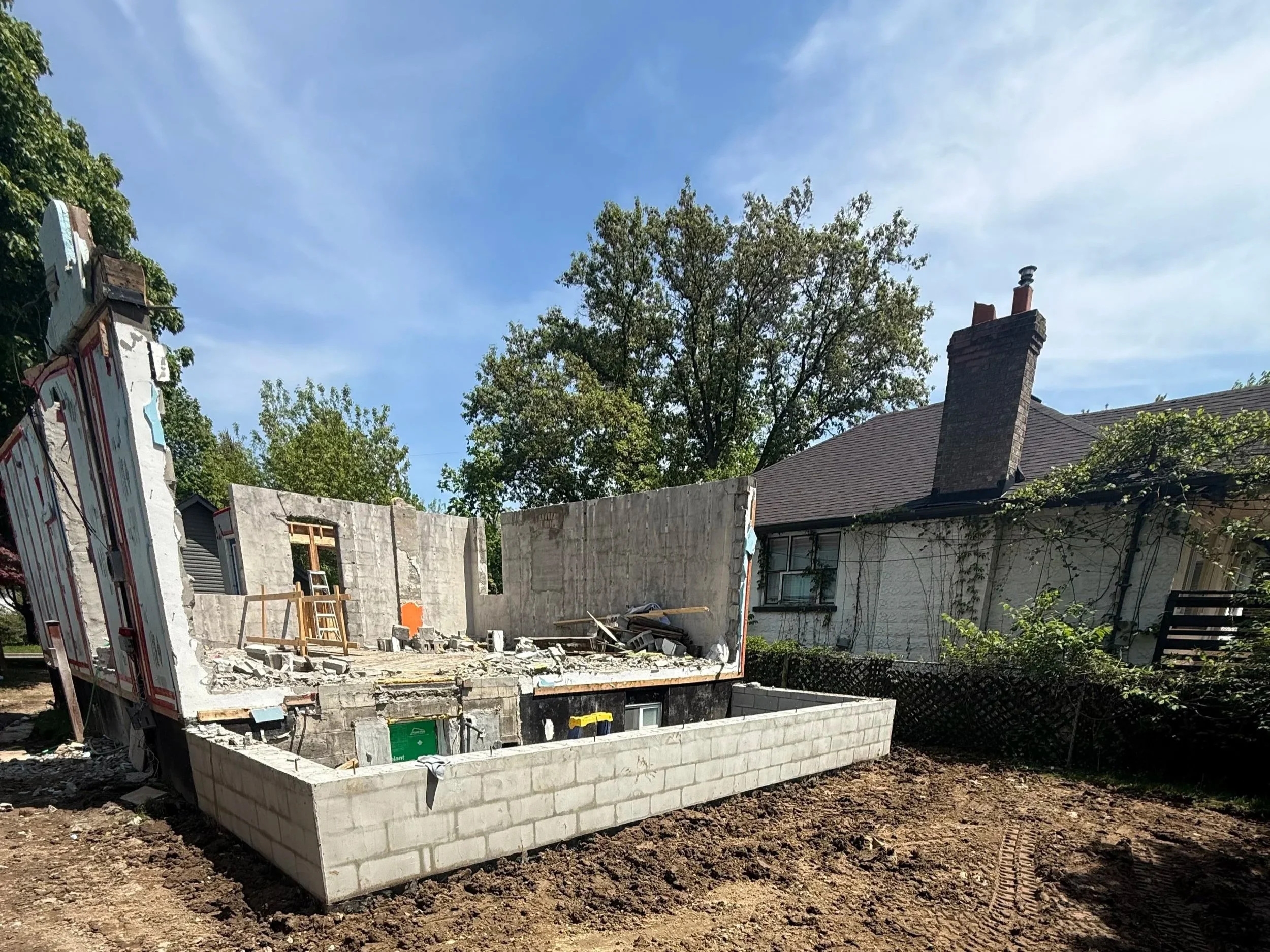
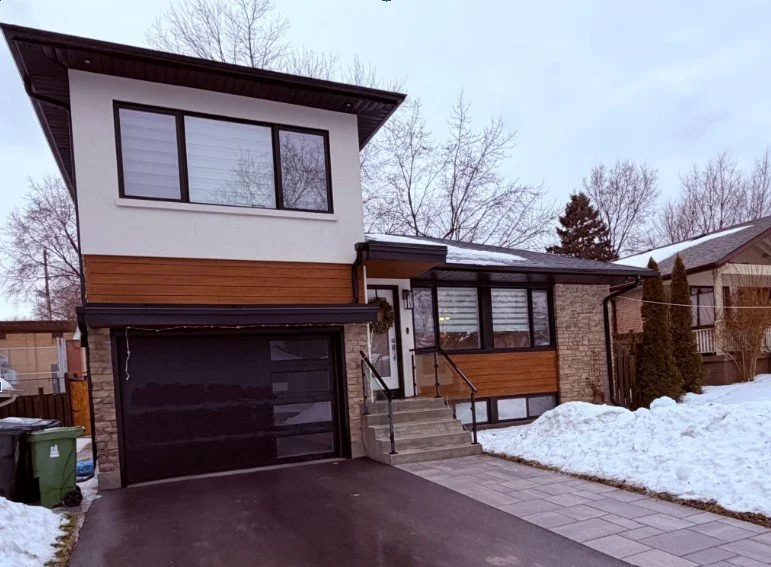
The bungalow at 24 Scarcliff Gardens. Everything you're looking at is about to get a second floor.
The Neighbour's House Started the Whole Conversation
A house a few streets away had the same layout — same bungalow, same integral garage. Someone added a second storey. Brenda and Sean noticed. That observation became a question, and that question became a project.
Not every renovation starts with a mood board. This one started with a walk past the right house at the right moment.
When they reached out to BVM Contracting, we weren't starting from scratch. Our team had just wrapped a nearly identical second-storey addition at 104 Midland Avenue in Scarborough. We pulled the actual budget from that project — real numbers, line by line — and walked Brenda and Sean through what a project like theirs actually costs. That's a different conversation than a ballpark estimate dressed up as a quote. It gave them the footing to move into the design process without second-guessing themselves.
They worked with Durham Drafting & Design, our preferred design team, and used the neighbour's completed addition as a design reference. The homeowners down the road even shared design information to help guide the decisions for this specific house. That kind of community knowledge — what works for this layout, this lot, this part of Scarborough — is hard to manufacture from scratch.
"They realized that this is their forever property and they wanted to invest some money into it and create a space they can truly call their own." That's how our pre-construction team summarized it. No flipping, no upsizing to impress anyone. A real investment in a home they already loved.
Bottom line: When you've already done the exact project, you can show a client the real numbers — and that changes everything about how fast they can move with confidence.
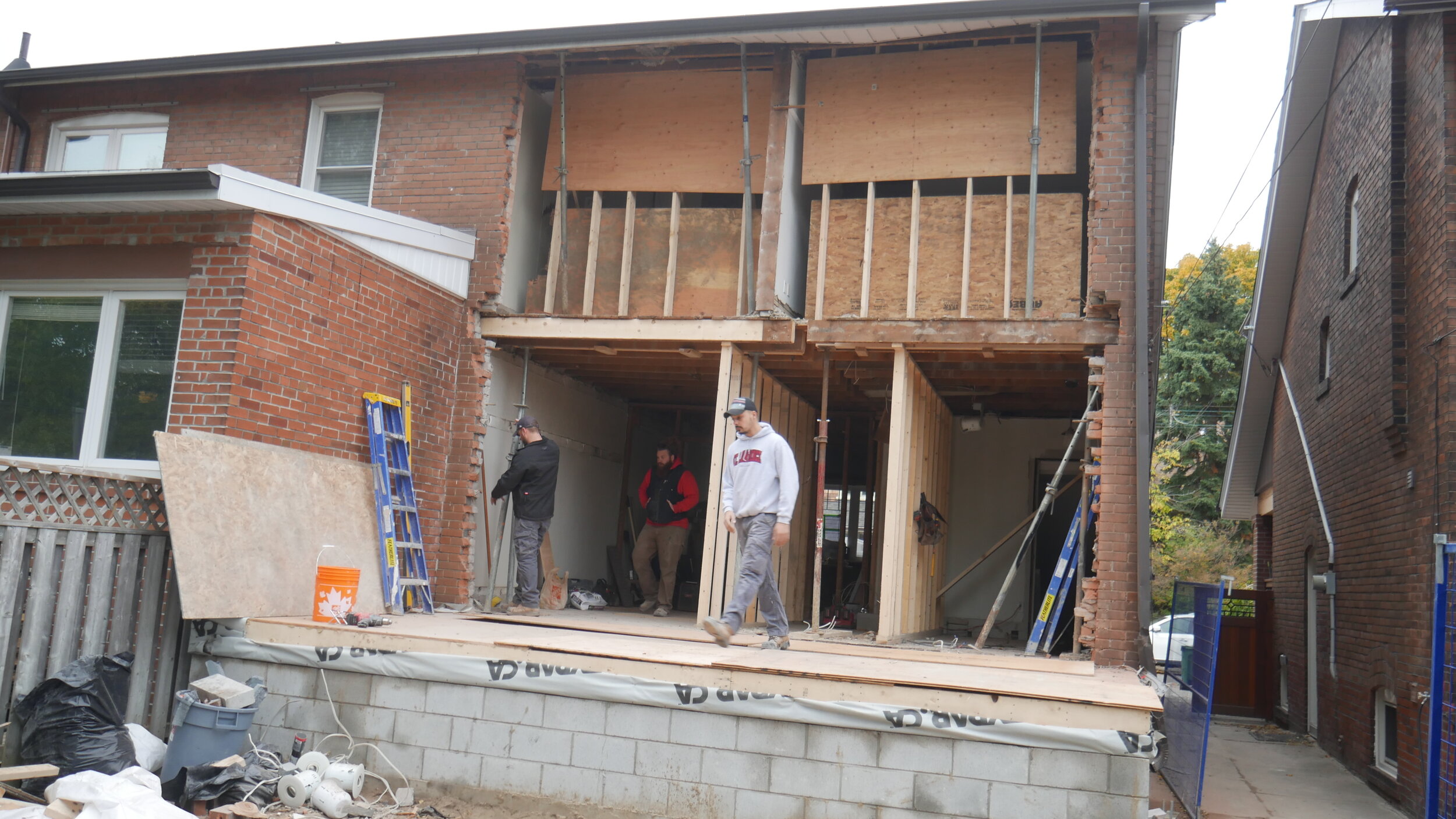
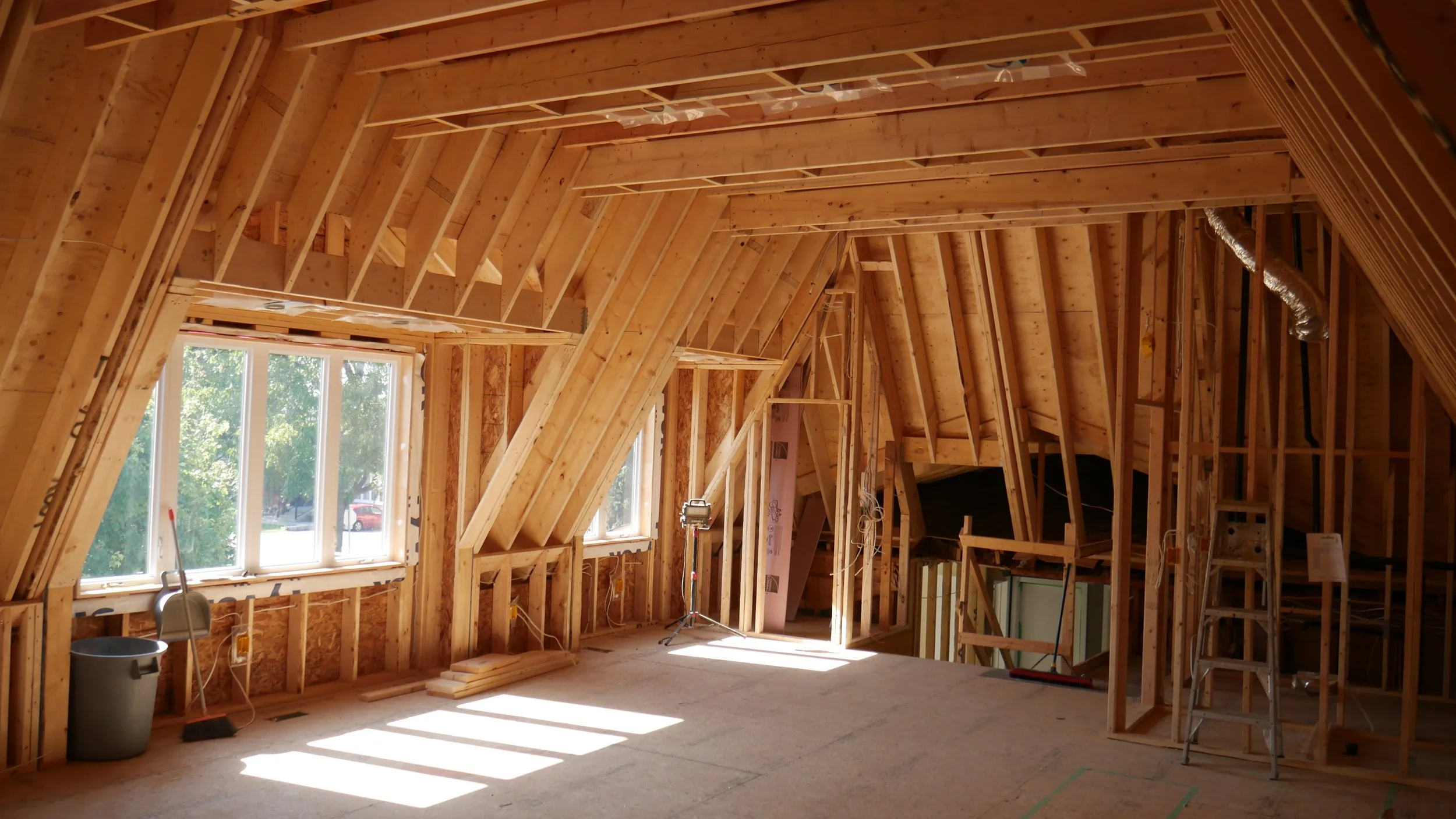
In November 2025, Brenda and Sean visited two active BVM addition sites — 62 Birchmount and 66 Inwood. They still reference specific finishes they saw that day.
Seeing a Real BVM Project Changed What They Were Asking For
Most builders show clients a 3D render. We put them in a hard hat.
In November 2025, we arranged visits to two active BVM addition sites — 62 Birchmount and 66 Inwood, both in Scarborough. Different stages of completion, same purpose: let the clients stand inside what they were planning to build.
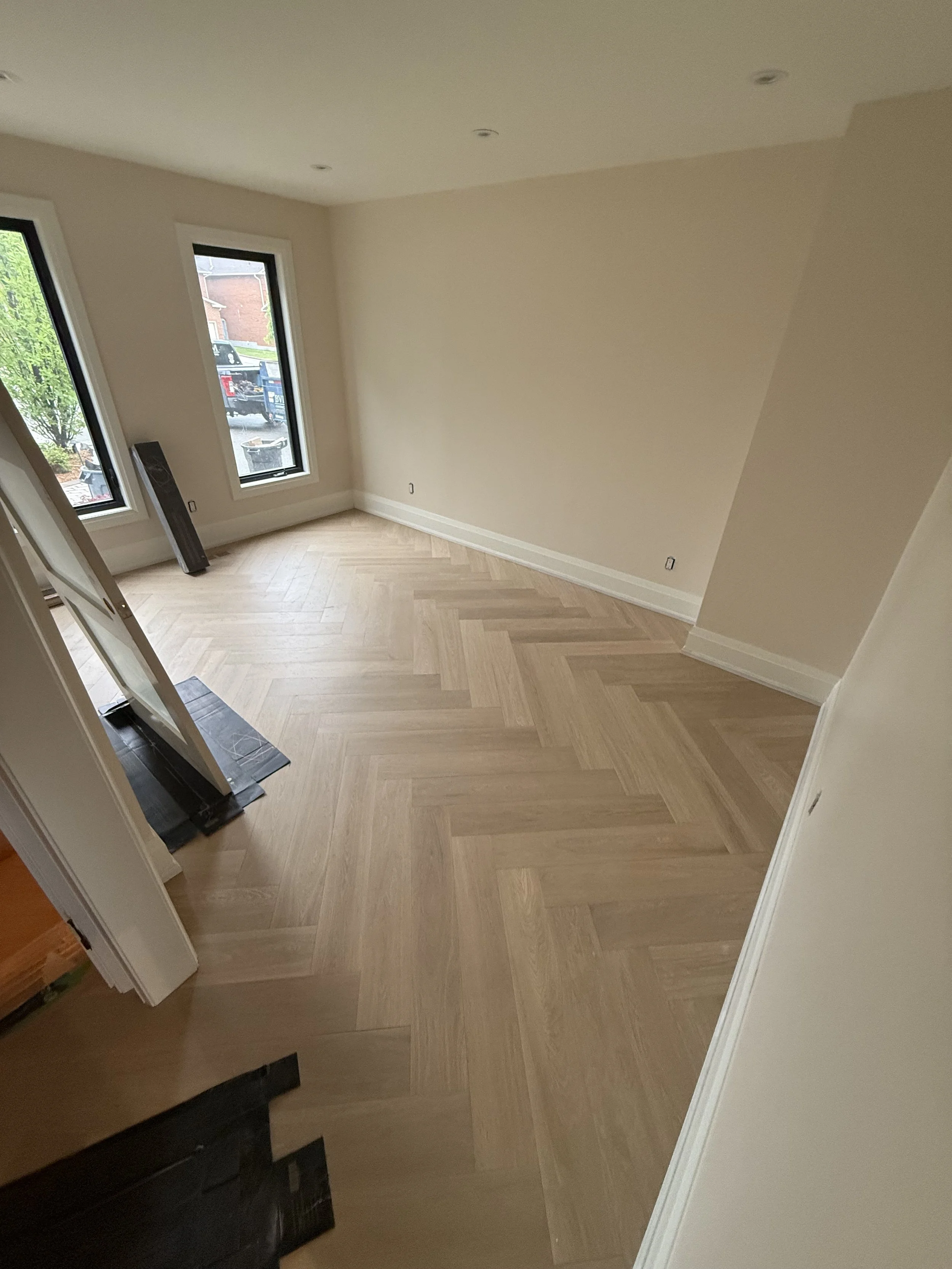
It worked. Months later, Brenda and Sean still reference specific finishes they saw on those visits. Details from conversations on an active job site that shaped actual decisions on their own project — ceiling heights, window proportions, how a hallway feels at second-floor level. None of that translates from a PDF.
When clients can see a real project, they ask better questions. They stop worrying about abstract risks and start thinking about real choices. And when something comes up mid-build, clients who've walked an active site don't panic — they've seen how construction actually moves.
Bottom line: We bring clients to active job sites on purpose. A real project, in person, does more for confidence than any sales presentation ever will.
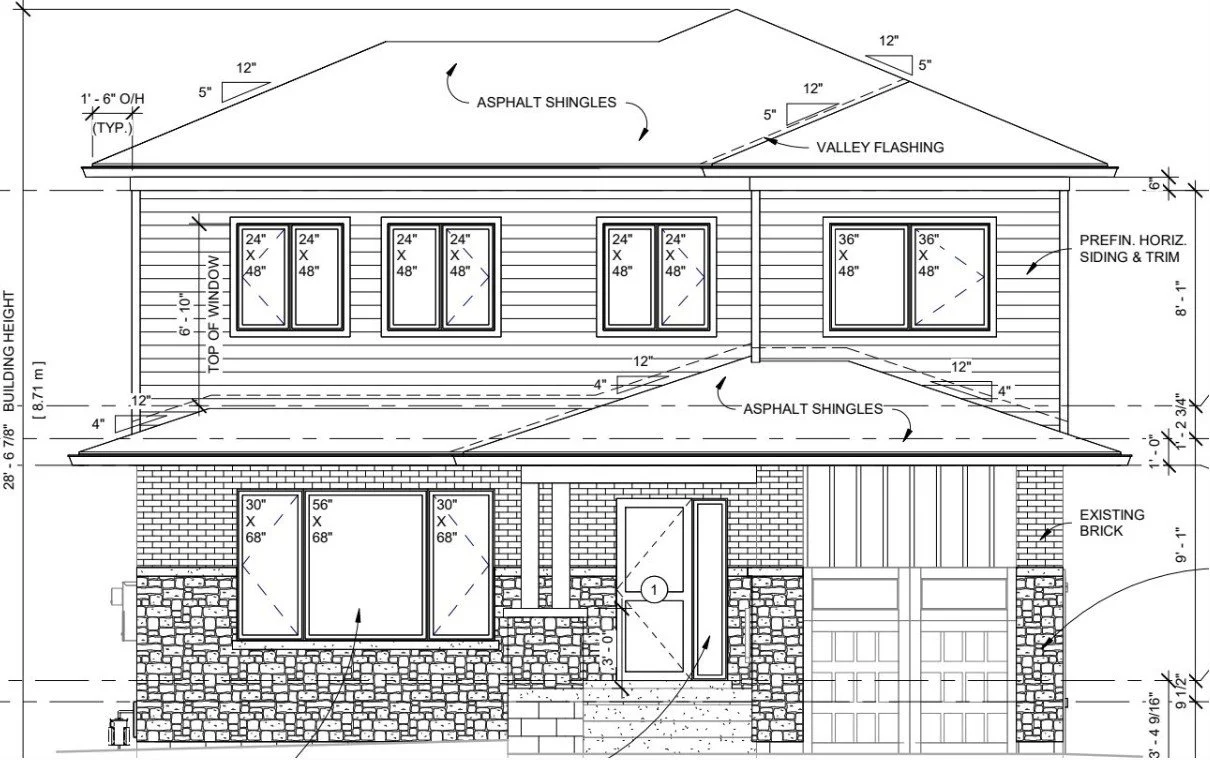
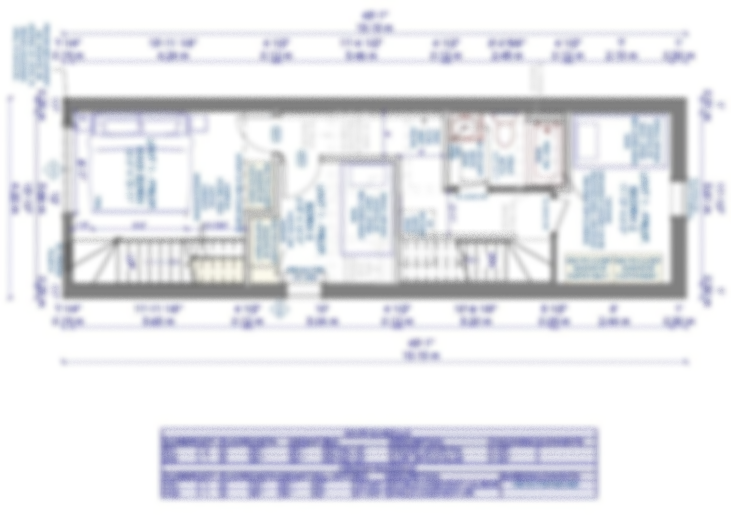
Full permit drawings from Durham Drafting & Design. The second level: three generous bedrooms, two full bathrooms, a dedicated laundry room.
How We Engineered $15,000 Out of the Structural Budget
Steel is expensive. And in second-storey additions, it's also not always the right answer.
The structural question is straightforward: what does it take to carry a whole new floor over an existing bungalow? The conventional move is steel beams, columns, and connections. It works — but it adds cost, installation complexity, and specialized trades.
Our team flagged the steel requirement early and found a path around it. By increasing the floor system depth from 12 inches to 14 inches, the structural loads could be carried entirely by engineered lumber. No steel required. That change took coordination between the architectural team, the structural engineer, BVM, and the clients. It wasn't a quiet internal adjustment — everyone was at the table, understood the tradeoff, and agreed on the solution together.
The result: approximately $15,000 removed from the structural scope. On a residential addition, that's not a rounding error. It also simplified the build sequence — engineered lumber is faster to install and doesn't require the same specialized trades as structural steel.
Bottom line: Catching expensive structural decisions at the design stage — not after permits are issued — is where the real savings live.
The soil and footing review cleared the last major unknown: existing footings can support a full second storey. No remediation. No surprises.
Clearing the Last Unknown Before Breaking Ground
When the Letter of Intent was signed, it included a soil and footing testing clause. That kind of protection belongs in every LOI for an addition of this scope — it's not a red flag, it's standard due diligence for a project where a second level will sit on decades-old foundations.
The review came back clean. Existing footings confirmed capable of supporting the full second storey load. No remediation required, no unexpected scope changes, no difficult mid-project conversations.
"There were no longer any unknowns or obstacles to encounter that would cause the budget to explode out of proportion." That's a direct quote from our pre-construction team — and it nails exactly why this review matters. A budget built on confirmed structural data is one you can actually count on. An estimate built on assumptions is something else.
With footing confirmation in hand, permit drawings locked, and the steel question resolved, the path to the July 2026 start is clear.
Bottom line: The footing test isn't bureaucratic paperwork — it's what turns an estimate into a number you can stake your project on.
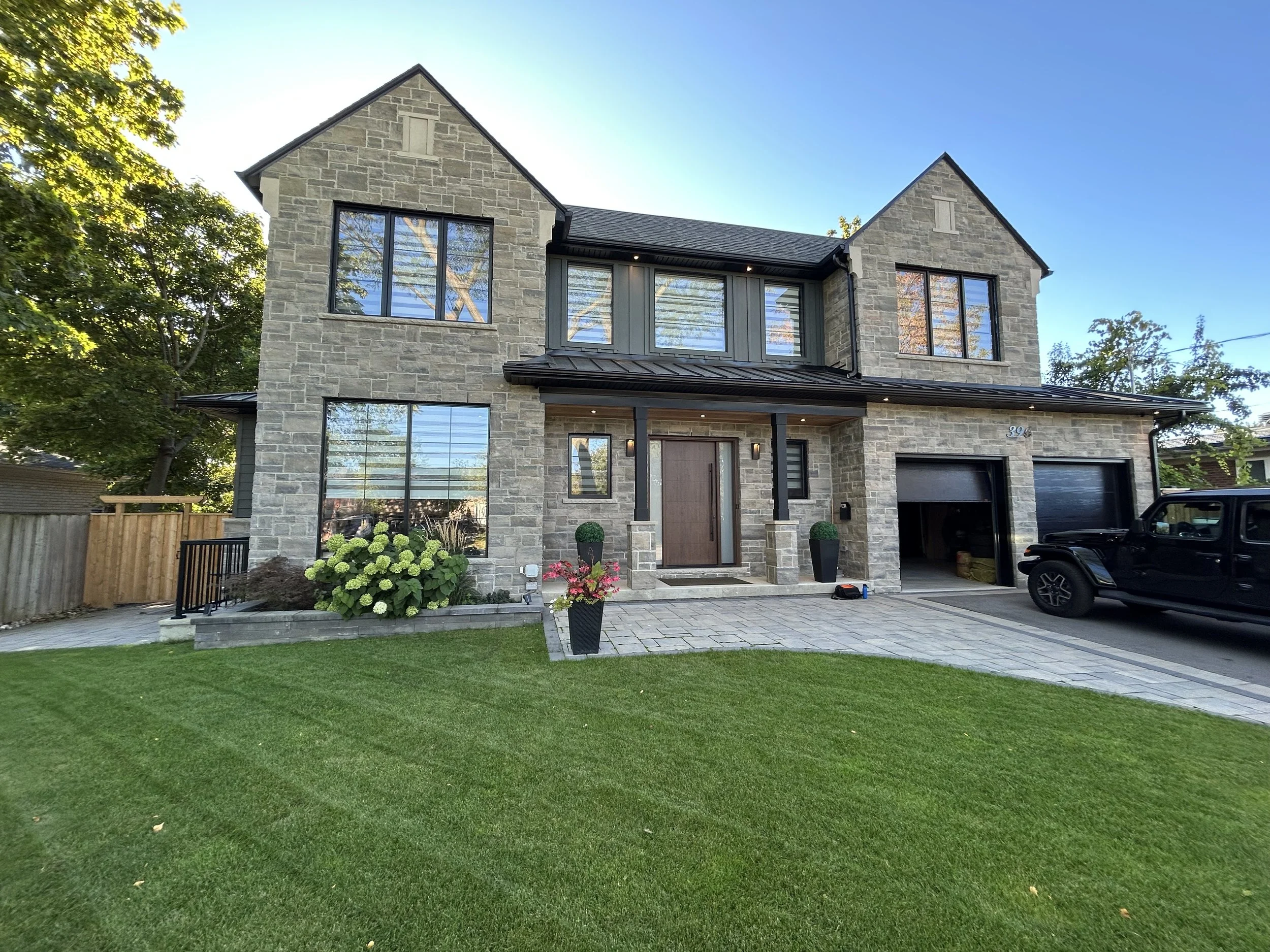
What's coming: Hardie board siding, stone facade, expanded deck with hot tub, and Sean's 12×22 insulated accessory structure.
When Life Got in the Way — and the Right Response Was Space
There was a stretch in the middle of this project where things went quiet. Not because of a design problem, a permit delay, or a budget conversation gone sideways. Brenda and Sean were dealing with serious family health challenges. The project slowed down.
A lot of contractors would have kept pushing. Regular check-ins. "Just following up." Turning a hard personal situation into a transaction problem.
We gave them space instead — which, as our pre-construction manager put it, is "counterintuitive, but it worked." When we did reach out, it wasn't to ask if they were ready to move forward. It was just to ask how they were doing. That's it.
They came back when they were ready. The project is on. July 2026 is the target.
There are builders across Scarborough and Etobicoke who'd have moved on the moment the timeline softened. We don't operate that way — because the right clients are worth waiting for, and because that kind of patience tends to build the kind of trust that makes a long construction project actually work.
Bottom line: How a contractor handles a pause that has nothing to do with construction tells you more about them than anything that happens on site.
What 24 Scarcliff Becomes
When the build wraps, this house will be unrecognizable from the street — and completely transformed on the inside.
Second floor: three generously-sized bedrooms, two full bathrooms, a dedicated laundry room. Everything a growing household needs on a single level without crowding the main floor to do it.
Main floor: a proper living room at the front of the house. A powder room and den/office creating a real transition zone between the front entry and the back of the home. At the rear: a kitchen designed for living — dining that fits 16 people comfortably, a side entrance, and direct access to an expansive deck connecting both rear exits. Eventually a hot tub. And off the back of the property, Sean's 12×22 insulated accessory structure — built for workouts, for downtime, for the kind of personal space most homes just don't have.
That's not just more square footage. That's a home reconfigured around how Brenda and Sean actually want to live in it.
"Reaching out is the hardest part sometimes," our team tells prospective clients. "With the right team, they'll make the process as seamless as possible and have your best interests in mind to turn your dream home and property into a reality." The Scarcliff Gardens story isn't finished yet — but everything leading to the start line has gone exactly as it should.
Bottom line: A well-planned addition doesn't just add rooms — it reinvents how a home works, and it stays that way permanently.
Ready to Start Planning Your Addition?
The Scarcliff Gardens project is what pre-construction looks like when it's done properly: real budget comparisons from completed projects, structural review before a single permit is filed, site visits to active job sites, and the patience to stay beside clients through anything life throws at the timeline.
If you own a Scarborough or East Toronto bungalow and you're deciding between adding on and moving out, let's pull the actual numbers. The answer is almost always more interesting than people expect.