The Cliffcrest Drive Custom Home Build
How a meticulous Scarborough couple evaluated every option, visited the evidence, and built the most thoughtfully planned custom home we've ever taken on.
⚡ TLDR
Rafal and Oksana came to BVM Contracting in February 2023 with a property at 84 Cliffcrest Drive, three possible directions forward, and more detailed questions than most builders ever get asked. After two-plus years of pre-construction planning — two reference home visits, a Committee of Adjustment process, an OBC Package A2 insulation upgrade, a dual-zone HVAC system, and a legal basement apartment added to the program — they're breaking ground in August 2026 on a ~5,100 sq ft forever home in Scarborough's Cliffcrest neighbourhood, budgeted at approximately $1.85M. When the planning is this thorough, the build almost takes care of itself.
Home Build Project Information
Project Type: Full tear-down and custom new home build
Location: Cliffcrest, Scarborough, Toronto
Scope: ~3,800 sq ft above grade (inclusive of garage) + ~1,300 sq ft basement (legal apartment + mechanical/gym/wine cellar) — ~5,100 sq ft total
Pre-Construction Timeline: February 2023 – present (2+ years of planning and design)
Construction Start: Target August 2026
Clients: Rafal Gorz & Oksana Stukalina
Architectural Designer: David Smith
Interior Design: Michelle Bellissimo, Bell Design Studio
Project Budget: ~$1.85M (procurement and value engineering underway)
Three Options, One Right Answer
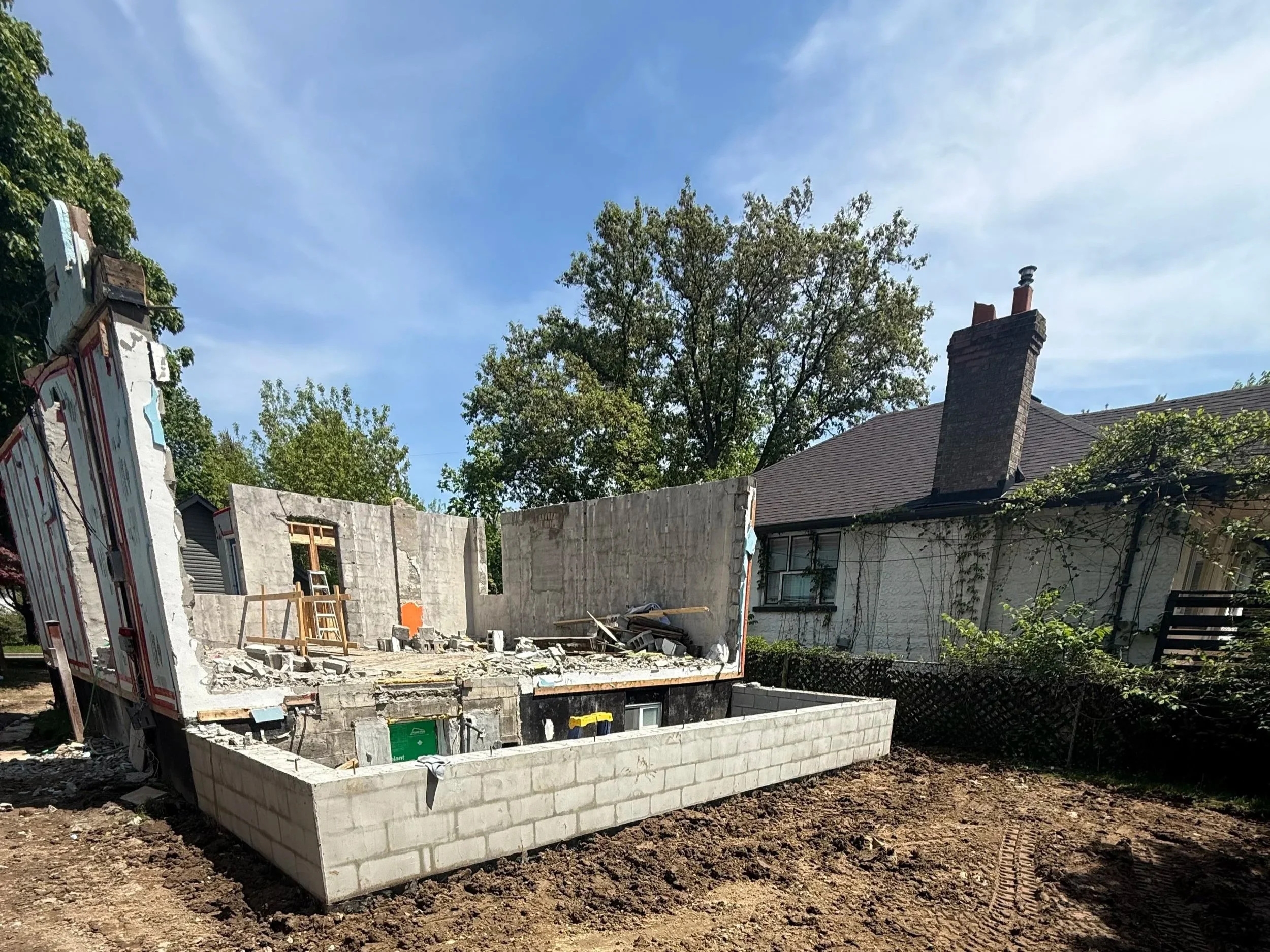
When Rafal and Oksana first came to BVM in early 2023, they weren't arriving with a blank cheque and a simple ask. They had a property at 84 Cliffcrest Drive, a vision for how they wanted to live, and three legitimate paths forward: a home addition, a second-storey top-up, or a full tear-down and new build.
Our team worked through each option with them honestly. What became clear quickly was this: a new build wasn't just the best option — it was the only one that actually matched what they were trying to achieve. They wanted to start fresh and create a layout that worked for their family without the constraints of working around an existing structure. They also wanted to incorporate a legal basement apartment — a space to house relatives now, and eventually generate rental income when the time was right. An addition or a top-up would have cost a similar amount of money while still requiring them to work within the limitations of a foundation and layout that were never designed for their life.
The new build route won not because it was the most expensive option, but because spending a very similar amount of money and still being locked into someone else's decisions wasn't a trade-off worth making.
Bottom line: When the cost of the right solution and the wrong solution are close, you build right.
They Didn't Just Ask Questions. They Visited the Evidence.
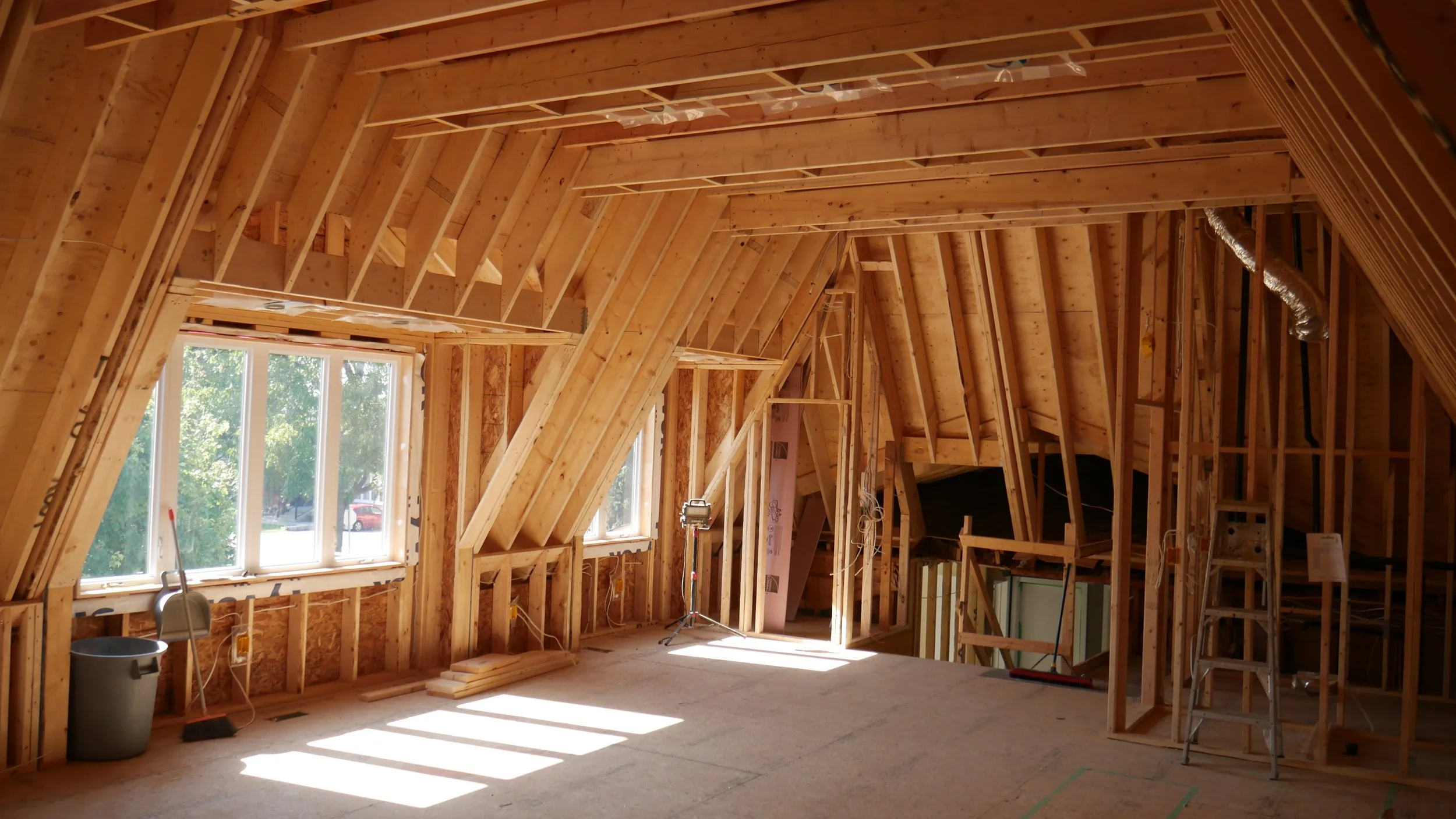
Before Rafal and Oksana committed to anything, they asked to see our work. So we arranged two site visits — and the two couldn't have been more different.
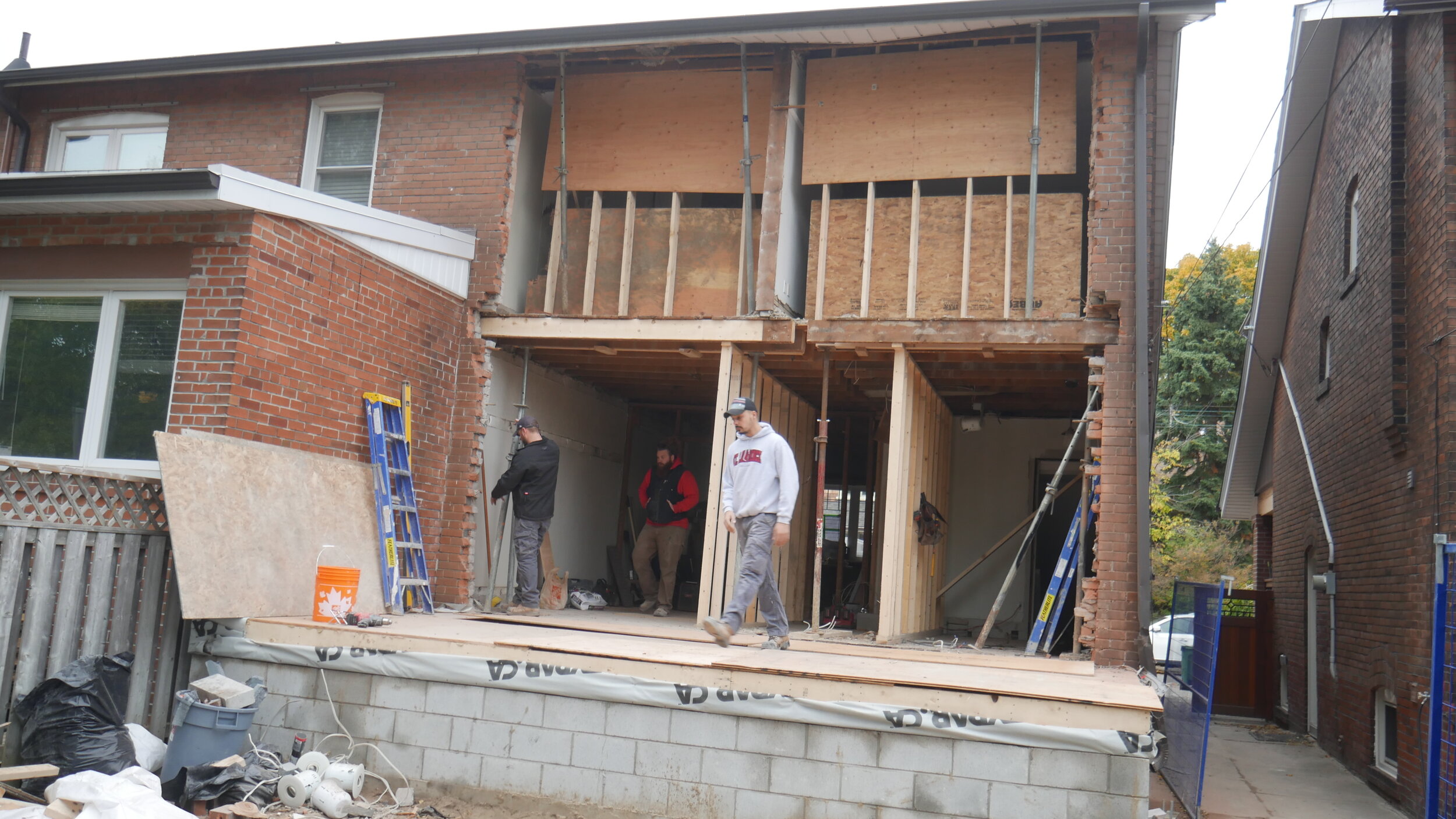
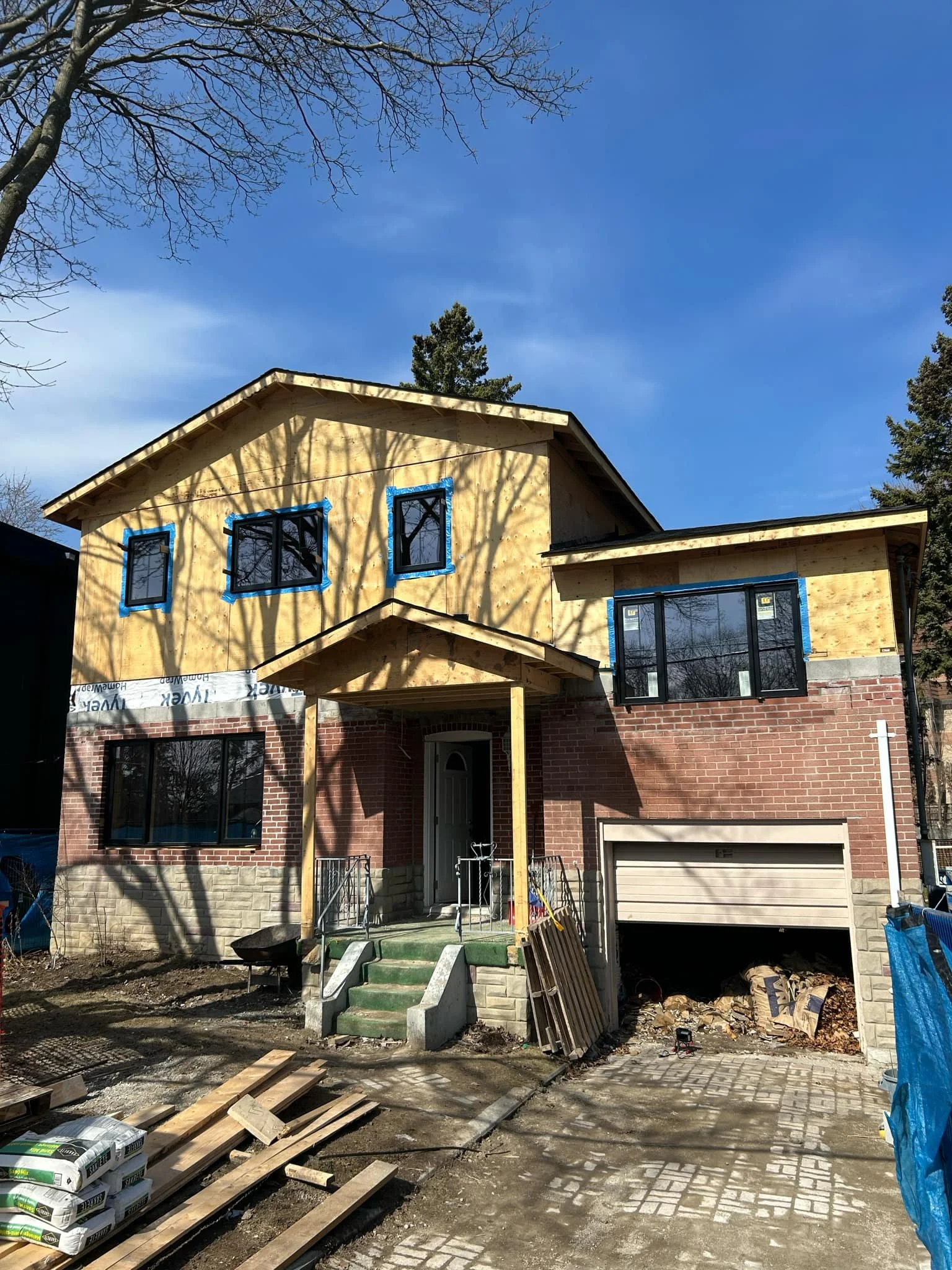
The first was 87 Lorraine Drive — a BVM new build still in its finishing stages. Most prospective clients only ever see a completed, staged home. Rafal and Oksana walked through while work was still underway, which meant they could see the behind-the-scenes areas — an unfinished basement, the mechanical rough-ins, what's inside the walls before they close. They weren't aligned with that home's overall design direction or finish level, but that wasn't the point. They came to see the quality of construction, and they asked the questions that mattered to their project: sewage ejector, in-floor heating, HVAC configuration, flooring, windows.
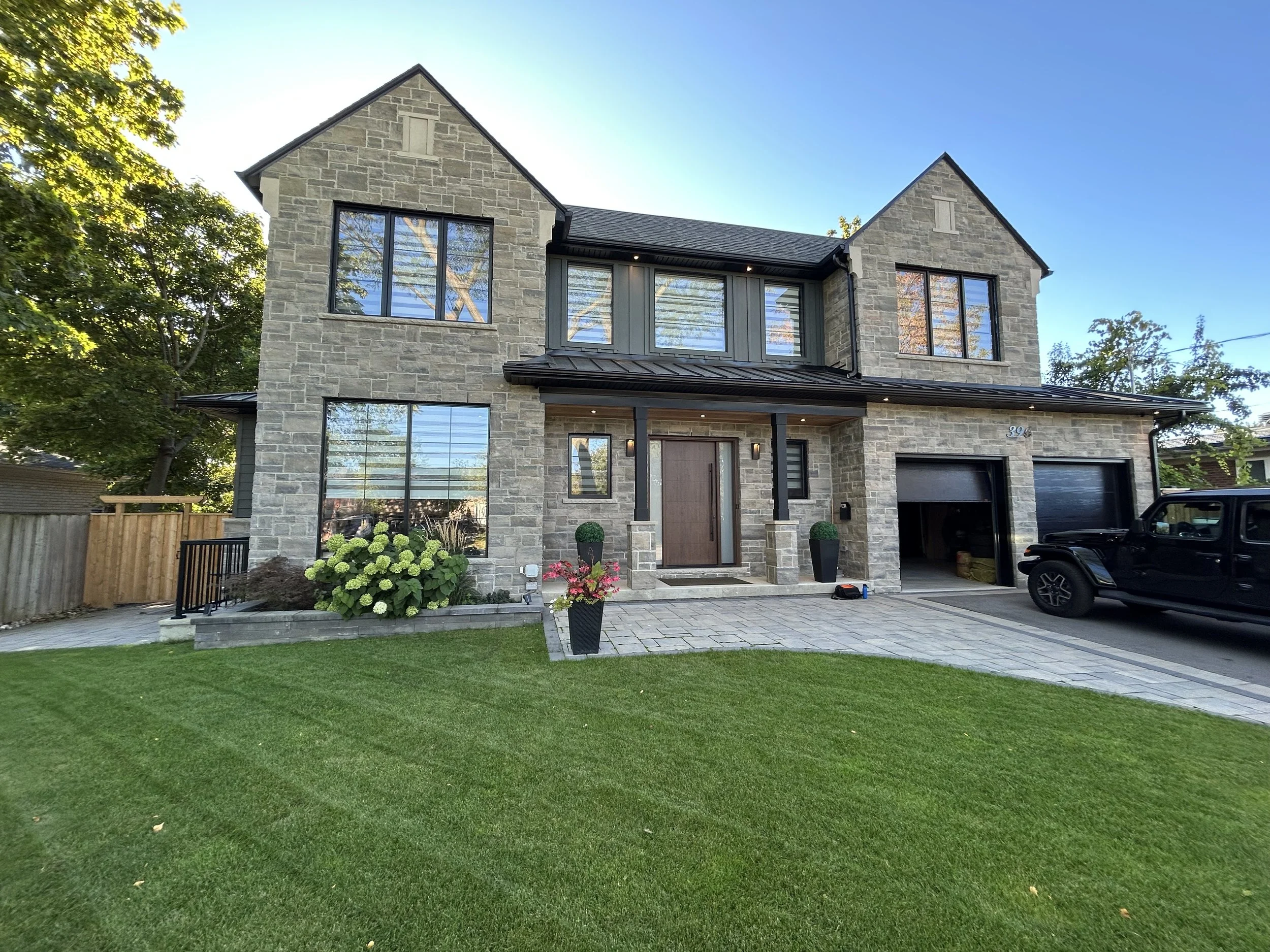
The second visit was the one that sealed it. We asked our clients at 396 Rouge Highlands Drive — a BVM home three years after completion, fully lived-in — if they'd open their home to a family they'd never met. They didn't hesitate. For Rafal and Oksana, it was an entirely different experience: a finished home, real people living in it, and a candid conversation about what working with BVM was actually like. When they walked out of that visit, they'd heard directly from homeowners who had nothing to gain from saying something kind — and said it anyway.
What happened between Rafal and Oksana and our past clients, we actually heard about after the fact. But what we heard confirmed everything: that was the visit that removed the last remaining doubt. That kind of organic trust — built without any coaching from us — is the clearest measure of success we know.
Bottom line: The best sales tool we have is a client who's proud enough to open their front door.
Two Years of Pre-Construction — Here's What That Actually Looks Like
For a project this complex, pre-construction isn't a waiting room between signing and breaking ground. It's where the build is won or lost.
Our team worked through what we call "sprints" with Rafal and Oksana — intensive periods of several weeks where significant ground got covered: budget build-outs, design reviews, scope adjustments, engineering consultations. These were followed by quieter stretches while the clients worked through their own decisions, navigated the Committee of Adjustment process, and sorted out financing. Keeping momentum through those quieter periods took effort — we made a point of checking in regularly, not with status updates for their own sake, but with high-value touchpoints: site visits, budget comparisons, scope conversations that actually moved the needle.
We also transitioned to new project management software during this period and migrated Rafal and Oksana's full budget into the new system. There was a learning curve — there always is — but the outcome for them is unmatched transparency and real-time visibility into every line of the project. They can see exactly where their money is going, when it's going, and what's coming next. For clients this detail-oriented, that level of access isn't a nice-to-have. It's the baseline they expect.
Two years of pre-construction on a project of this scope and ambition is what doing it properly looks like. Every month of deliberate planning translates to fewer surprises when the crew is on site.
Bottom line: The longer and more thorough the pre-construction process, the smoother — and better — the build.
The Insulation Decision That Will Pay Off for 30 Years
Most homeowners never think about insulation compliance packages. Rafal and Oksana did — and they made the right call.
When the question of insulation strategy came up during the design phase, there were two clear paths under the Ontario Building Code. OBC Package A1 is the baseline: R-22 cavity insulation, simpler to build, lower upfront cost. OBC Package A2 goes further — continuous exterior insulation across the full building envelope, higher performance, more complexity, and in this case, a 12-inch foundation wall required to accommodate the assembly.
The decision came down to a simple principle: they're only doing this once. They wanted to invest in a better thermal envelope — a home that performs, not just a home that looks good. The added cost was real. The tradeoffs were real. They understood both and chose Package A2 anyway, because the long-term payoff — better energy efficiency, lower operating costs, improved year-round comfort for the life of the building — justified every dollar of the premium.
This is the kind of decision that never shows up in a listing description or a photo gallery. But it's exactly the kind of decision that separates a home that performs from one that merely appears to.
Bottom line: The right insulation strategy isn't a line item — it's a 30-year decision.
"Way Nicer." — The Facade and What's Inside
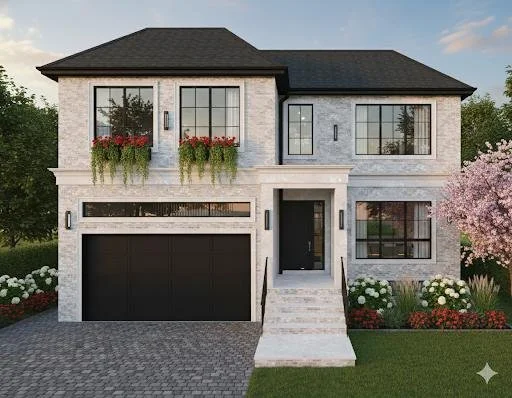
When Oksana built her own facade concept using Google's Gemini AI — generating a front elevation that captured the design direction she had in mind — and sent it to our team, the response was two words: "Way nicer."
That moment captures who these clients are. They don't wait to be inspired by what's put in front of them. They bring their own vision and ask us to build it.
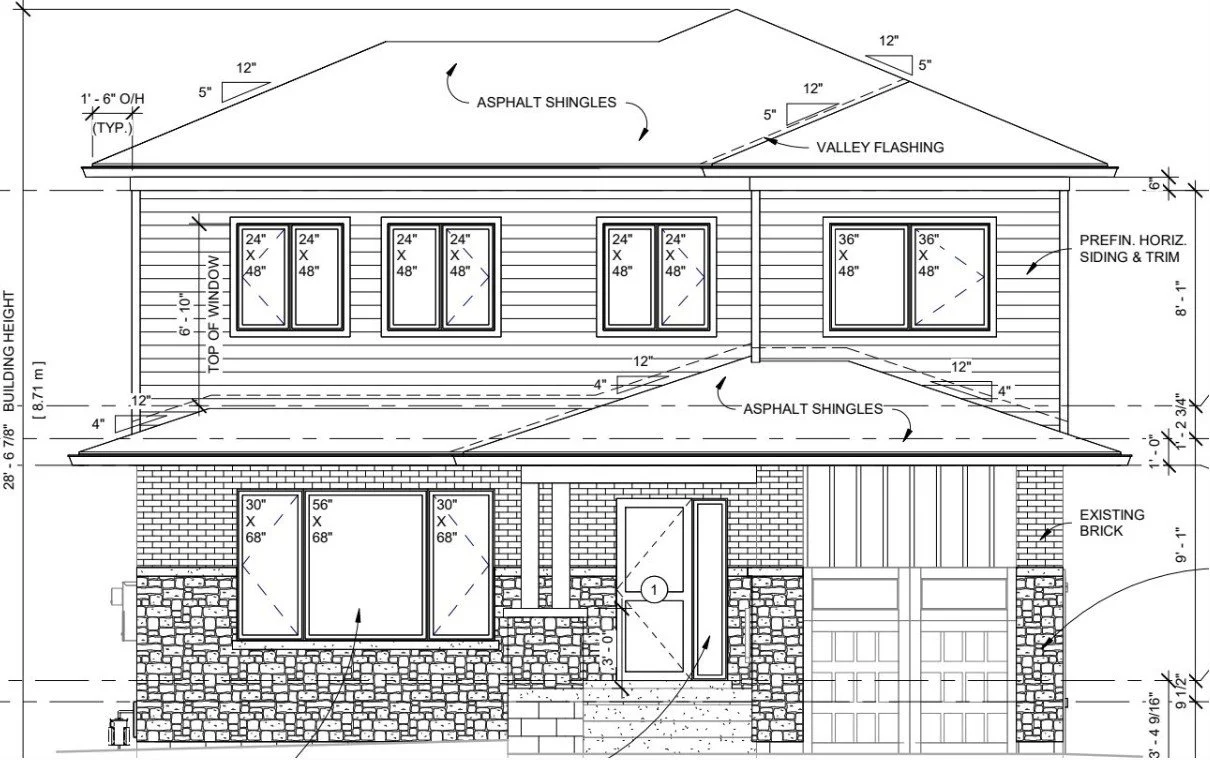
The exterior vision is classic and confident: quality brick complemented by precast limestone accents — traditional bones, modern presence. The couple initially considered using more expensive limestone across the full front elevation. Choosing brick and redirecting those savings into standout precast accents was exactly the right call: more character per dollar spent, and a more durable, lower-maintenance envelope over time.
Inside, the program reflects the same level of intention. The main floor anchors around a great room with roughly 18-foot ceilings and double-level windows — a space that immediately signals this is not a production home. A large kitchen with a servery and pantry, a formal office, a library, and a mudroom-powder room combo at the entry round out the main floor. The second level holds four bedrooms, three full bathrooms, generous closet space, and a centralized laundry room. Below grade, the basement splits between a purpose-built legal apartment and a combination mechanical room, home gym, and wine cellar.
Interior finishes are being developed with Michelle Bellissimo at Bell Design Studio — and value engineering is underway to find the right balance between investing where it matters most and trimming where it doesn't.
Bottom line: When every decision is intentional from the start, the finished home doesn't just look right — it works right for the family living in it.
What Meticulous Clients Actually Tell You About a Builder
Rafal and Oksana asked specific, technical questions at every stage. HVAC duct routing. Foundation wall thickness. Window brand comparisons. Insulation R-values and compliance pathways. These aren't casual conversations — and they're not meant to be.
Clients who ask at this level serve an important function: they filter out the builders who aren't prepared to educate, explain, and engage honestly with the details. The ones who give vague answers, deflect, or talk clients out of asking — they don't survive this kind of scrutiny. Our team met every question with a real answer. And there were moments where the most honest thing we could say was: "We don't have that answer right now, but we'll find it." That kind of humility — admitting a gap and committing to close it — is a powerful signal to the right kind of client. It shows a team that cares more about getting it right than appearing to already know everything.
Rafal and Oksana are the exact type of clients BVM Contracting is built to serve. Their meticulousness is matched by our process. When the client cares deeply about every detail, and the builder has a system built to handle it, the outcome is almost always exceptional.
Bottom line: The clients who ask the hardest questions tend to get the best homes.
Coming August 2026: The Home That Was Worth Waiting For
As of spring 2026, 84 Cliffcrest Drive is in permit coordination with financing in progress and a firm target of August 2026 to break ground. Procurement is about to begin — locking in subtrades, finalizing budget details, and completing value engineering to find the right places to tighten without compromising what matters.
When this home is finished — an ~18-foot great room overhead, a legal basement apartment ready for family or rental income, a high-performance insulated envelope, a dual-zone HVAC system designed from first principles — Rafal and Oksana are going to feel something most homeowners never fully experience: the satisfaction of knowing every decision was made deliberately, with full information, and with time to get it right.
Of all the decisions made during this pre-construction process, the one our team is most proud of guiding is the dual HVAC system. They were the ones steering the ship — but our team gave them the information they needed to arrive at the best decision for their specific home and use case. That's how it should work: we bring the expertise, the clients bring the commitment, and the outcome belongs to both.
The more planning completed before construction starts, the better the outcome. Two years of evidence proves it.
Bottom line: The best custom homes aren't built fast — they're built right. And right starts years before the foundation is poured.
Ready to Start Planning Your Custom Build?
The 84 Cliffcrest Drive project is proof that the pre-construction phase isn't overhead — it's the work. The decisions made before a single wall goes up determine whether the finished home matches the vision or falls short of it. For Rafal and Oksana, two years of deliberate planning means no regrets when the dust settles.
If you're thinking about a custom new build, tear-down rebuild, or major home addition in Scarborough, the Bluffs, East Toronto, or anywhere in the GTA — our pre-construction process gives you the clarity and confidence to build right.