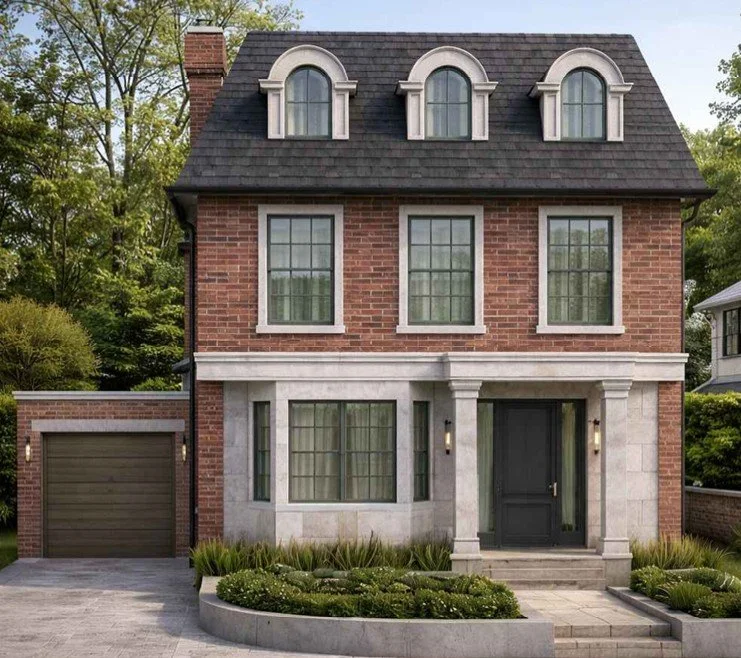
TL;DR: Before breaking ground on a Rosedale home addition, our client invested $40,000 + HST and 14 months on design and planning. This upfront investment included an interior demolition, full structural analysis, zoning review, heritage approvals, building design, committee of adjustment, and structural and mechanical coordination. The result: certainty about costs, timeline, and feasibility before the client committed to architectural design.
Core Insights:
$13,500 structural analysis revealed the existing foundation could support a second story, saving over $200,000 versus new construction and a better layout for the home
Rosedale zoning bylaws (Exception RD 1281) made home addition more viable than new build due to setback restrictions and garage preservation
Heritage district and Committee of Adjustment approvals took 14 months (versus typical 8-12 months)
Two-phase construction strategy prevents rushed finish decisions for international client
A design & planning investment between $40,000-$60,000 + HST eliminates six-figure mistakes during construction
Why We Reversed the Typical Process
Most Toronto builders tell Rosedale homeowners to hire an architect first. We did the opposite.
Our client purchased a neglected bungalow in one of Toronto's most prestigious neighborhoods in 2024. The estate sale property had been poorly maintained for years, sticking out for all the wrong reasons. The client bought at a discount with one goal: bring it up to neighborhood standards.
The first question: demolish and build new, or add onto the existing structure?
This case study documents the 14-month planning process that answered that question before we connected the client with an architect. You'll see the exact sequence of decisions, the upfront investments required, and the discoveries that would have caused major problems if we'd followed the typical architect-first approach.
Step 1: The $13,500 Structural Analysis
Before our client spoke to an architect, we needed to answer one fundamental question: could the existing structure support a home addition?
The property presented specific challenges. The bungalow was structurally degraded from years of neglect. The garage sat over the property line. The lot measured 11.43 metres wide by 21.18 metres deep.
Two paths forward:
Option 1: Demolish everything and build new
Option 2: Use the existing foundation and footprint, building up to create additional space
The cost difference was going to be over $200,000. The real determining factor turned out to be zoning.
We brought in our demolition team first. They stripped the interior completely, creating a blank slate for our engineering team to conduct a comprehensive structural review. This wasn't a visual inspection or limited assessment. We evaluated every aspect of the home's structural integrity because no one was living on site.
Investment breakdown:
Full interior demolition: $12,000 + HST
Engineering and geotechnical review: $1,500 + HST
Total upfront cost: $13,500 + HST
The engineering review revealed that the footings, foundation, and existing joists were more than suitable for a second-story addition. This discovery changed the entire trajectory of the project.
Bottom line: Spending $13,500 before design work began gave us structural certainty that prevented six-figure mistakes later.
Step 2: Why Zoning Bylaws Determined the Decision
The structural assessment confirmed a home addition was physically possible. Rosedale operates under site-specific zoning bylaws that most contractors don't understand until they're deep into design.
This property fell under Exception RD 1281, which includes specific provisions for home additions to houses built before October 15, 1953.
The critical restriction: if we demolished the existing home to build new, current setbacks would be tightened. The house would become narrower than it already was. The garage sitting over the property line was grandfathered in under the existing structure. A new build would force us to eliminate it entirely.
Homes in this neighborhood aren't allowed to have integral garages within the main structure. Losing the detached garage meant losing an amenity that neighboring properties maintained.
We created an updated survey of the property through our surveying partner. This survey, combined with our zoning review, showed that existing conditions favored the home addition approach over new construction.
The preliminary budget gap of over $200,000 became less important than the zoning reality.
A new build would have resulted in:
Narrower home with less interior floor space
No garage on the property
More restrictive setback requirements
Longer Committee of Adjustment process with less favorable precedents
The home addition route preserved the existing footprint, maintained the garage, and worked within zoning provisions designed for additions to pre-1953 homes.
Bottom line: Zoning analysis completed before architectural design prevented us from pursuing a new build that would have resulted in a smaller, less functional home.
Step 3: Connecting With an Architect From a Position of Certainty
When we connected our client with an architect, we had certainty.
The $13,500 structural investment meant the client and our team were 100% confident to move forward with planning for the home addition. No stress or concerns about whether the project would work.
This reverses how most residential projects unfold. Typically, homeowners hire an architect first, spend months in design, commit to the process emotionally and financially, then discover during contractor bidding that the project costs more than expected or faces structural constraints that weren't identified upfront.
We handed the architect specific parameters from day one:
Confirmed structural capacity for a second story
Defined zoning constraints under Exception RD 1281
Established that the home addition approach was optimal
Provided realistic budget ranges from our construction costing database
Identified the garage preservation requirement
The architect could design with confidence because the foundational questions were already answered.
Bottom line: Design and planning reversed the typical chicken-and-egg problem where clients hire designers before knowing if their project is financially viable or structurally possible.
Step 4: Navigating Heritage District and NRRA Approvals
Rosedale projects don't require only standard building permits. This property sits within the North Rosedale Heritage Conservation District, which adds approval layers that most Toronto neighborhoods don't face.
We iterated on the design multiple times during planning. The initial design concept had to be modified to satisfy both Toronto Heritage and the North Rosedale Residents' Association (NRRA).
Major design changes required:
Switched from the original roof system to a mansard roof design
Updated the front facade to align with heritage character guidelines
Identified the most cost-effective approach to meet heritage and NRRA standards
The heritage and NRRA review process took approximately 2 months. This was on top of the Committee of Adjustment process required for zoning variances.
When we first sat down with this client and ran our preliminary timeline analysis, our database showed that Rosedale projects typically take 8 to 12 months for approvals. This specific project took 14 months from initial conversation to permit in hand.
The extended timeline created carrying costs for the client. Every month the project doesn't start is another month of property taxes, insurance, and financing costs without the ability to occupy or generate value from the property.
We knew this going in. We communicated the realistic timeline based on our experience with heritage district approvals and Committee of Adjustment processes in this specific neighborhood.
Bottom line: Heritage district projects in Rosedale take 8-14 months for approvals. Planning for this timeline prevents surprise carrying costs.
Step 5: Designing a Two-Phase Construction Strategy
Our client lives in a different country. Managing a construction project remotely requires a different approach than typical owner-occupied renovations.
We developed a two-phase construction strategy:
Phase 1: Construction to Drywall
This phase includes all structural work, mechanical systems, electrical rough-in, plumbing, insulation, and drywall installation. Getting to this stage allows the property to be reassessed for value, which enables the client to extract additional capital to fund Phase 2.
Phase 2: Finishes and Interior Design
This phase covers all finish selections, interior design elements, fixtures, flooring, cabinetry, and final details.
The goal isn't to stop after drywall. We're actively procuring the Phase 2 budget while executing Phase 1. With a tight start date for construction, we needed to get moving without forcing the client into rushed decisions about finishes and interior design elements.
This approach prevents the common problem where homeowners make expensive finish selections under time pressure, later regretting choices they felt forced to make quickly.
Our construction management platform gives this client transparency into what's happening every week on the project. Living in another country doesn't mean being disconnected from the process. The platform keeps communication tight and keeps the client accountable for decisions that need to be made on schedule.
Bottom line: Phased budgeting prevents rushed finish decisions while allowing the client to access additional capital after Phase 1 completion.
The Discovery That Changed the Project Direction
Looking back at this 14-month planning process, the structural integrity of the existing home was the biggest discovery.
Many builders would have recommended demolition without conducting comprehensive structural review. The property looked rough. The neglect was visible. The default assumption would be to start fresh.
We took a methodical approach to prove which direction made the most sense for this client's needs.
The $13,500 investment in demolition and engineering analysis revealed that the bones of the house were well-suited for a home addition. The footings were solid. The foundation was sound. The existing joists could support the additional load.
This discovery, combined with the zoning analysis showing that a new build would result in a smaller, less functional home without a garage, made the decision clear.
Bottom line: Methodical structural analysis prevented a demolition decision that would have cost $150,000-$200,000 more and resulted in an inferior outcome.
What Does Design & Planning Cost For A home Addition?
This Rosedale project required multiple consultants and analyses to get the project properly set-up:
Updated property survey
Full interior demolition for structural access
Comprehensive engineering review
Geotechnical analysis
Zoning analysis and bylaw interpretation
Drafting and submission of multiple iterations of plans to the NRRA, heritage, and C of A.
Preliminary budget modeling from our construction database
Heritage district consultation
Committee of Adjustment application preparation
For a homeowner considering a similar project in a heritage neighborhood, the realistic total investment for design and planning ranges from $40,000 to $60,000 + HST, but could be more if you decide to engage with interior design planning services.
That's a significant number before permit drawings exist.
This investment provides certainty. It eliminates the chicken-and-egg problem where you need to hire a designer before knowing if your project is financially viable or physically possible. At the end of the day proper planning is not a cost, it is a strategic investment that gives you the certainty to get your project constructed.
The alternative is spending months in design, becoming emotionally committed to a vision, then discovering during contractor bidding that the project costs 30% to 50% more than expected or faces structural constraints that require major redesigns.
We've seen that scenario repeatedly. Design teams create drawings without understanding true construction costs or structural realities of the existing building. Clients fall in love with the design. Then reality hits during contractor selection.
The upfront planning investment turns what most people view as a cost into a strategic investment. You're buying information that prevents six-figure mistakes during construction.
Bottom line: $40,000-$60,000 + HST spent on design and planning eliminates the risk of discovering deal-breaking problems after you're emotionally and financially committed to a design direction.
What This Means for Heritage Neighborhood Projects
If you're considering a home addition or new build in Rosedale, Forest Hill, or any Toronto heritage conservation district, the joint construction budgeting and zoning analysis needs to happen before you commit to design.
You need a deliberate direction before contacting a design team. Without that foundation, you're having conversations based on assumptions rather than data.
The typical process puts the cart before the horse. Hire an architect, spend months designing, then find out what it costs and whether it's possible given your property's constraints.
We enable our clients to enter the design phase with enough information to make informed decisions.
For this Rosedale project, that meant:
Knowing the existing structure could support a home addition
Understanding the zoning bylaws that made the addition approach superior to new construction
Having realistic budget parameters from our database before design began
Anticipating the 14-month timeline for heritage and Committee of Adjustment approvals
Planning the two-phase construction approach to manage financing and decision-making
We're breaking ground in 2026 with a client who understands exactly what they're building, what it will cost, and how long it will take.
That certainty came from investing in planning before committing to design.
Frequently Asked Questions
How long does design & planning take for a Rosedale home addition?
Design and planning for heritage district projects in Rosedale typically takes 8 to 12 months. This specific project took 14 months from initial conversation to permit in hand because of extended Committee of Adjustment and heritage review processes.
Why demolish the interior before getting an architectural design?
Full interior demolition allows comprehensive engineering review of the existing structure's footings, foundation, and joists. This $12,000 investment provides certainty about whether the existing structure supports a home addition before spending months in architectural design.
What is Exception RD 1281 in Rosedale?
Exception RD 1281 is a site-specific zoning bylaw that includes provisions for home additions to houses built before October 15, 1953. These provisions allow additions under less restrictive setback requirements compared to new builds, making additions more favorable than demolition and new construction on some properties.
How does a two-phase construction approach work?
Phase 1 takes the project to drywall (structural work, mechanical systems, electrical, plumbing, insulation). This allows property reassessment and capital extraction. Phase 2 covers finishes and interior design. The approach prevents rushed finish decisions while maintaining construction momentum.
What consultants are needed before architectural design in a heritage district?
Proper design and planning in heritage districts requires surveyors (updated property survey), structural engineers (foundation and load capacity review), geotechnical engineers (soil analysis), zoning specialists (bylaw interpretation), and heritage consultants (district compliance review).
Why did the garage location affect the new build versus addition decision?
The existing garage sat over the property line, grandfathered in under the current structure. A new build would have forced elimination of the garage entirely because Rosedale doesn't allow integral garages within the main home structure, and new setback requirements wouldn't accommodate a detached garage on this lot size.
How does Proper design & planning prevent budget overruns?
Design and planning identifies structural constraints, zoning limitations, and realistic construction costs before architectural commitment. This prevents the common scenario where clients spend months in design, fall in love with a vision, then discover during contractor bidding that the project costs 30% to 50% more than expected.
What carrying costs should heritage district homeowners plan for during approvals?
During the 8-14 month approval process for heritage district projects, homeowners pay property taxes, insurance, and financing costs without ability to occupy or generate value from the property. Planning for this extended timeline prevents surprise carrying costs.
Key Takeaways
Pre-design structural analysis ($13,500) revealed the existing Rosedale bungalow could support a second-story addition, saving over $200,000 versus new construction
Rosedale zoning bylaws (Exception RD 1281) made home addition more viable than new build because new construction would have resulted in tighter setbacks, narrower home, and loss of grandfathered garage
Heritage district and Committee of Adjustment approvals took 14 months (versus typical 8-12 months), creating carrying costs that need to be planned for upfront
Complete design and planning investment ranges from $40,000-$60,000 + HST for heritage neighborhood projects, covering survey, demolition, engineering, zoning analysis, and heritage consultation
Two-phase construction strategy (Phase 1 to drywall, Phase 2 finishes) prevents rushed decisions while allowing property reassessment and capital extraction between phases
Reversing the typical architect-first process eliminates the chicken-and-egg problem where clients commit to design before knowing if their project is financially viable or structurally possible
Upfront planning investment prevents six-figure mistakes during construction by identifying structural constraints, zoning limitations, and realistic costs before architectural commitment