A Guildwood Home Addition Story
They pivoted the plan to save money. Then built everything anyway. Here's what that decision — and the right contractor — actually delivered.
⚡ TLDR
10 Wooster Wood started as a plan to add a second storey to an existing Guildwood bungalow. When the budget couldn't support it, the team pivoted to a two-level side extension instead — and Morgan and Nazorio ended up with a four-level home, an attached garage, vaulted ceilings, a complete exterior redesign, and a fully renovated main floor and basement. Total budget: approximately $850,000 including finishes and landscaping. Demo started September 2023. Permit closed 2025. One more thing: BVM Contracting was outbid for this job. Morgan and Nazorio reviewed the other contractor's contract, came back to us, and the rest is this case study.
Before & After Home Addition Toronto
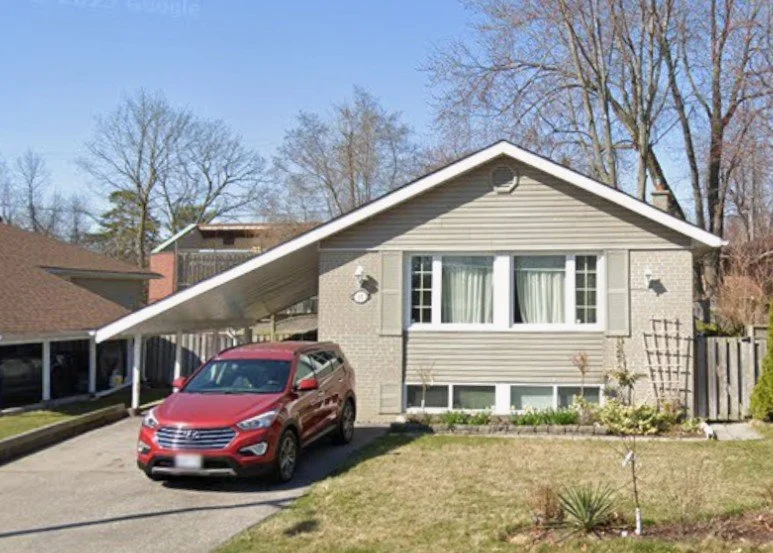
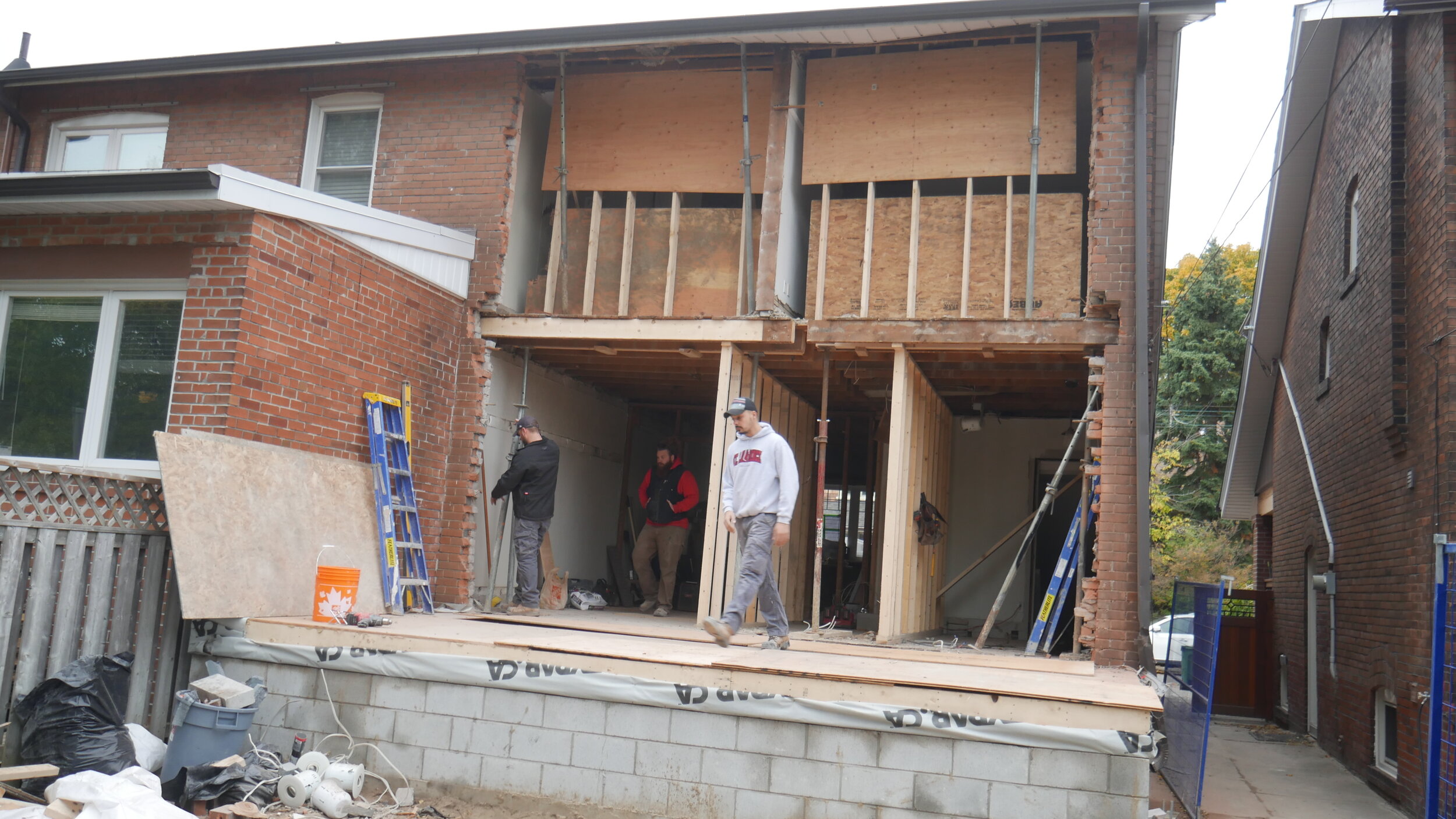
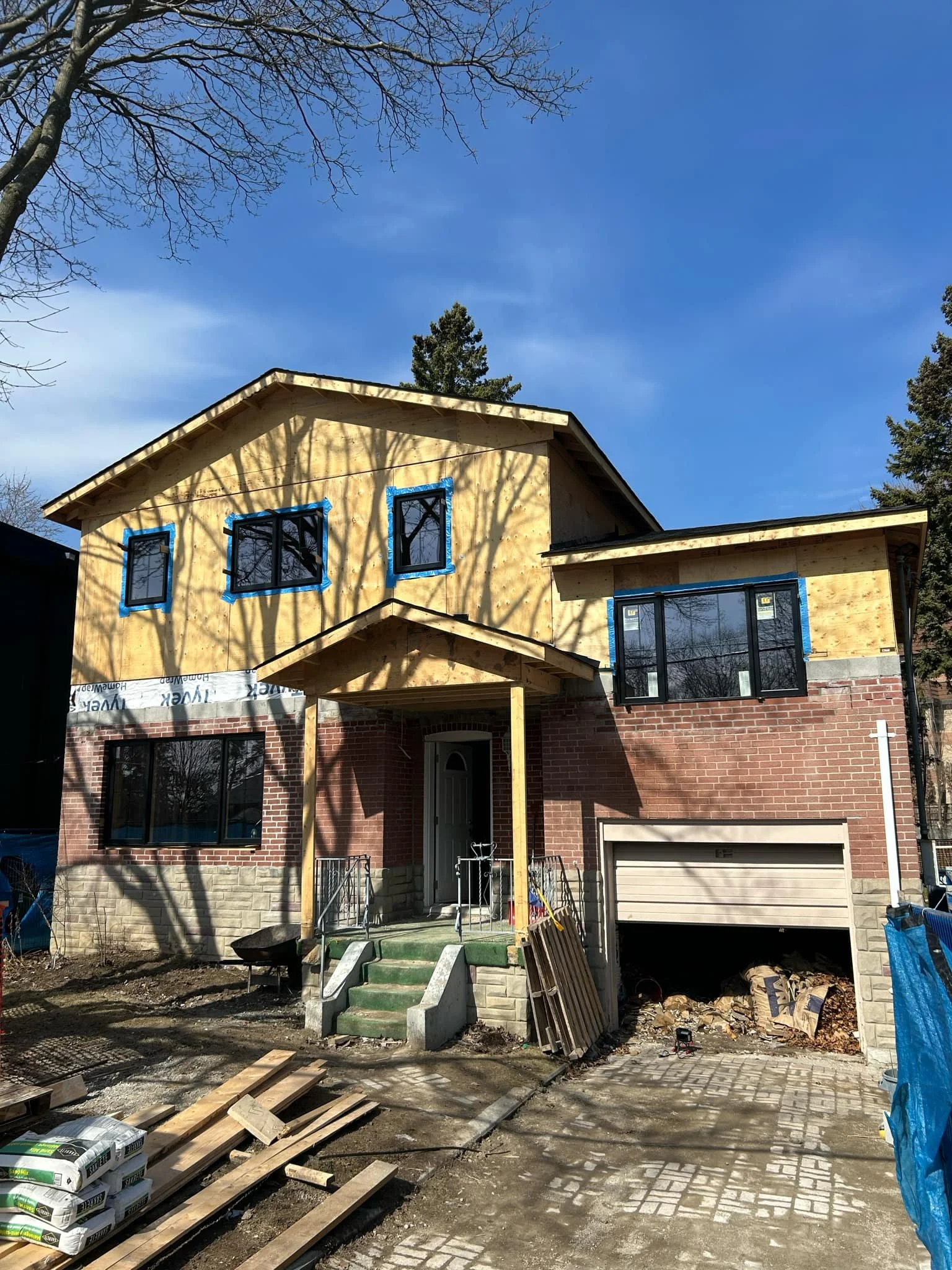
Before photo of our guildwood side extension project. The home now looks like a completely new home now, nearly unrecognizable from it’s past form.
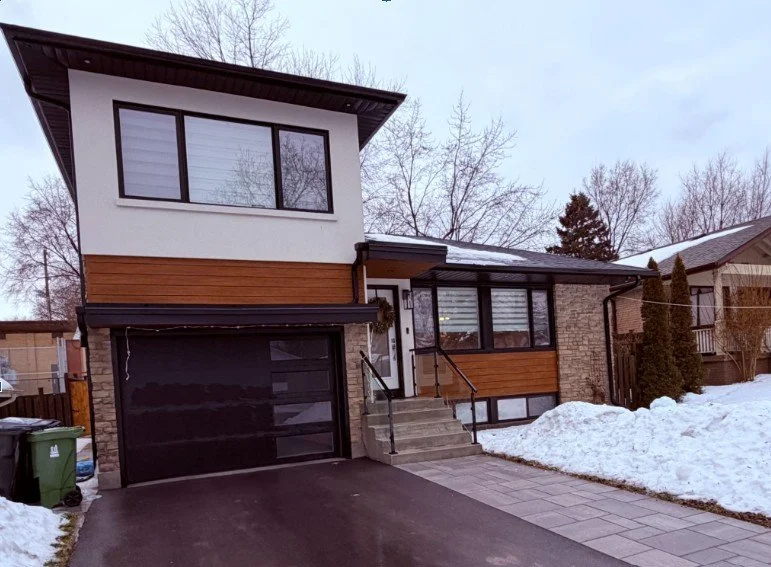
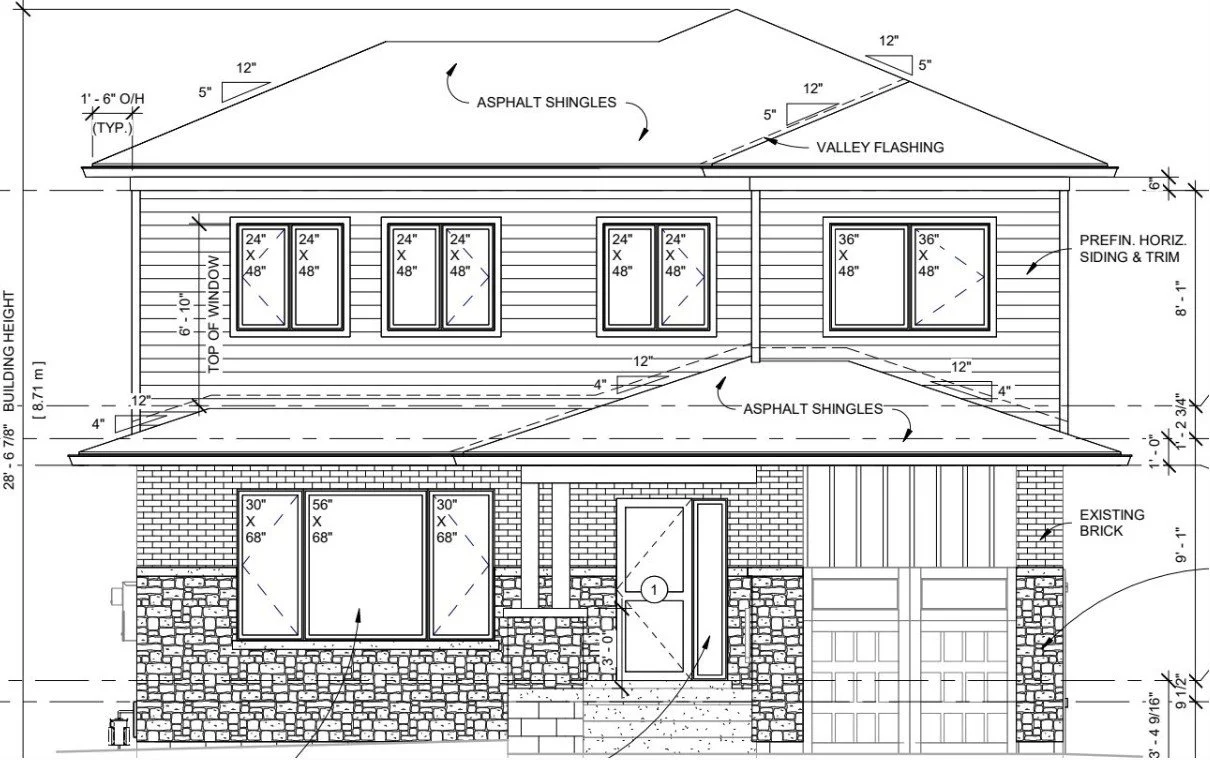
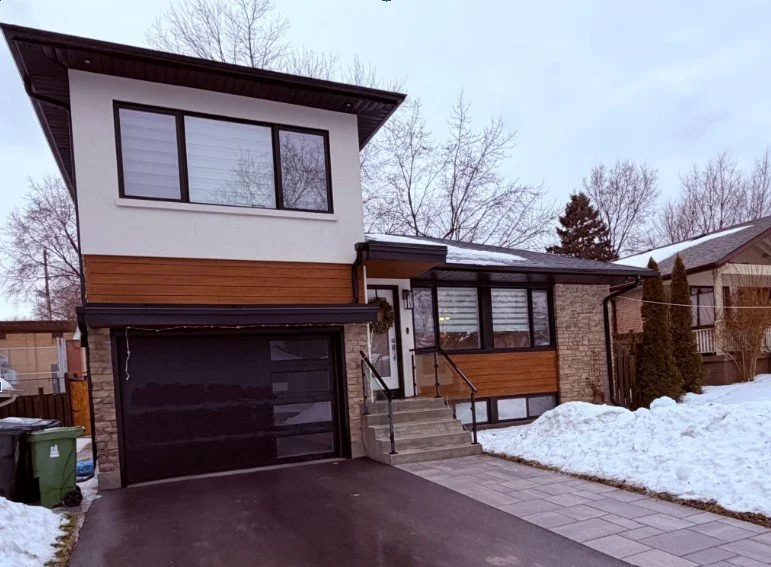
The finished exterior of 10 Wooster Wood — stone, longboard siding, stucco, and a custom garage canopy that required engineering revisions mid-construction to get exactly right
They Almost Hired Someone Else. Then They Read the Contract.
Before a single piece of drywall came down at 10 Wooster Wood, this project was headed to a different builder.
BVM Contracting submitted a proposal for 10 Wooster Wood. So did another company. The other company came in lower. Morgan and Nazorio were prepared to move forward with them — until they sat down with both contracts.
The competing builder's contract was written in the builder's favour. Broad language that allowed extras to be charged with minimal client recourse. Terms that gave the builder significant billing flexibility without meaningful accountability to the homeowner. Morgan Sim is a founding partner at Parker Sim LLP. She knew exactly what she was reading. She and Nazorio came back to BVM.
Our contract is built to be fair to both parties. It defines what constitutes a change order and what doesn't. It protects the client's budget from arbitrary extras. It creates accountability in both directions. That's not a selling point — it's the reason this project ended up in our hands, and the foundation that every subsequent decision on this project was built on.
Bottom line: Before you compare construction quotes, compare the contracts. A lower number tied to an unfair contract will cost you more in the end.
Before the Walls Came Down, the Surprises Began
BVM Contracting ordered DSS (Designated Substances Survey) testing before demo kicked off. What came back changed the scope of the demolition phase before a single tool hit drywall.
Asbestos. In the drywall compound and caulking on the main floor. In the basement. In the air registers throughout the home — eight of them at $200 per register.
Finding it before demo started is what matters. A contractor who skips pre-demo hazardous materials testing is a contractor who discovers asbestos mid-demolition — stops work, scrambles for abatement quotes, and charges the client for the delay on top of the abatement cost. We found it first, so we could plan properly: certified abatement company brought in immediately, multiple quotes obtained to ensure the clients' money was being spent as efficiently as possible, and every phase of work staged around the abatement schedule.
Every discovery was communicated to Morgan and Nazorio immediately — in writing, with pricing attached, before any abatement work was authorized. The basement abatement came in at $3,800 + tax. The eight air registers added $1,600. Each cost was itemized as a formal change order on the project budget — visible, documented, and approved.
Morgan's response after the first round of pricing: "Hopefully that is the last of the surprise asbestos. We appreciate you letting us know."
That kind of calm, trusting response doesn't happen by accident. It happens when clients know from day one that bad news won't be buried — it will be surfaced, priced, and solved.
Bottom line: Pre-demo hazardous materials testing isn't optional on older homes — it's how a responsible builder protects the project schedule and the client's budget from day-one surprises.
The Pivot That Expanded the Project
The original plan for 10 Wooster Wood was a full second-storey addition on top of the existing Guildwood bungalow. More living space, more bedrooms, same footprint. It was a logical concept — until the budget numbers came back and confirmed it wasn't achievable within the financial parameters the clients had set.
Going up on an existing bungalow compounds quickly: structural reinforcement of the existing floor system, roof removal, temporary weatherproofing, re-engineering of load paths. The costs add up fast. The budget couldn't support it at the level Morgan and Nazorio wanted.
The team proposed a different path: a two-level side extension built beside the home rather than on top of it. The logic was sound — build the new square footage adjacent to the existing structure, keep the construction footprint contained, and in theory limit how much the existing main floor and basement would need to be touched. Phase two could handle those spaces later, if needed.
That's not what happened. Once the side extension was confirmed and the clients could see what was possible, the decision was made to do everything: fully renovate the existing main floor, fully renovate the existing basement, and redo the front facade while they were at it. The savings the scope pivot was supposed to generate were reinvested directly back into the project.
It's one of the most consistent patterns we see in major renovations. Clients don't want to live in a half-finished home. They don't want to come back in three years and do the rest. So they stretch — and do it all at once. It's a completely rational decision. It just requires honest budget management and clear eyes about the financial commitment involved.
The result: four separate levels — main floor, two levels of the side extension, basement — plus an attached garage built within the extension footprint. A home that looks nothing like the bungalow it started as.
Bottom line: Scope decisions made during a renovation aren't surprises — they're choices. The right builder makes sure you understand the financial implications of every choice before you make it.
Vaulted Ceilings, Permit Revisions, and a Kitchen Worth the Wait
Three features defined how this project got built.
The vaulted ceilings. Main-level vaulted ceilings were on the wishlist from the beginning. Before the contract was signed, the team confirmed the structural viability. The catch: making it happen required a complete replacement of the existing roof — not a minor cost. Morgan and Nazorio understood the number and made the call. Given that budget expectations had been a point of friction throughout, it was a real win when the revised pricing landed. The finished ceiling transformed the main level — open, light-filled, and architecturally distinct from anything the original bungalow offered.
The exterior revision. Mid-construction, the exterior design went through a formal revision. The elevation — stone, longboard siding, stucco, and the garage canopy detail — was re-engineered and re-drawn, then submitted for a permit revision. BVM coordinated directly with the architect and the city inspector to keep framing moving while the paperwork was processed. Missing details in the original drawing set — including the garage overhang measurement needed by the framers — were flagged by the BVM team and pushed through on a tight timeline.
The steel savings. The structural steel scope was repriced during the build. Final cost: approximately $6,800 against an original estimate of $13,500. The $6,700 in savings was credited back to the project budget. Savings don't come from luck — they come from a builder who's actively looking for them and passing them through.
The kitchen was installed in late March 2024 — one of the last major milestones before the project moved toward permit close.
Bottom line: When a builder is actively managing every line item, savings show up the same way problems do — through attention and follow-through.
What the Design Process Actually Cost — And the Company We Built Because of It
One lesson from 10 Wooster Wood applies to every homeowner planning a major renovation: the design process is not a formality. It is the project.
10 Wooster Wood involved three organizations: BVM Contracting on construction, an architectural designer for permit drawings, and an interior designer for the kitchen. Throughout the project, the BVM team routinely identified gaps in the architectural drawing set — missing measurements, incomplete material specifications, and details that needed resolution before the framers could proceed. Every gap cost coordination time. Every clarification request added friction to the build. The team navigated it, the project got done, but the pattern was consistent: bare-bones design documentation transfers costs from the design phase directly into the construction budget.
It's one of the central reasons BVM Contracting created The Constructible Design Co. — our in-house design service built specifically to produce drawings that builders can actually build from. Detailed. Grounded in existing conditions. Field-ready. The kind of documentation that doesn't require daily phone calls to the architect because the drawings don't answer basic construction questions.
If you're planning a renovation or addition, treat the design process as a strategic investment. A detailed, constructible set of drawings is among the best dollars you can spend before construction begins. The most expensive drawings you'll ever have are the vague ones you thought were saving you money.
Bottom line: In projects of this scale, the quality of the design documentation determines how much of your budget survives the construction phase intact.
Permit Closed. Family Moved Back In.
The permit for 10 Wooster Wood closed in 2025 — a process that stretched beyond the initial schedule due to a framing inspection that required a structural engineer's report and review before the city inspector would sign off. It was handled directly, coordinated professionally, and closed without drama.
Morgan and Nazorio moved back into a completely transformed home. What had been a single-level Guildwood bungalow became a four-level residence with an attached garage, vaulted ceilings, a fully renovated main floor and basement, and an exterior that's a different building in every visible way.
This project was big. It was more expensive than the original scope. It took longer to permit-close than planned. Morgan and Nazorio pushed for everything — and got it. The result is a home they won't need to revisit for a very long time, which is exactly what doing it all at once is supposed to deliver.
Bottom line: There's a cost to doing everything at once. There's also a cost to doing it halfway — and that bill tends to show up at exactly the wrong time.
Ready to Plan Your Home Extension or Renovation?
10 Wooster Wood shows what's possible when a major renovation or side extension is managed with honest budget conversations, proactive communication, and a contractor who treats the client's investment the same way they'd treat their own. Even when the scope grows, even when surprises show up, even when permit timelines stretch — the right team keeps the project on track.
If you're thinking about a home addition, a side extension, or a full renovation in Guildwood, Scarborough, or anywhere in the GTA, let's talk before you lock in a scope, a budget, or a contractor.