How a Growing Upper Beach family skipped the addition — and got exactly what they needed inside the walls they already owned
⚡ TLDR
Daniel and Liz came to BVM Contracting wanting to add a third bedroom before their newborn arrived. When our team discovered that 79 Kimberley was already sitting at approximately 69% site coverage — with no room to build out under current zoning — we could have told them to file for a Committee of Adjustment hearing and wait 12 to 18 months for an answer. Instead, we found the bedroom they needed inside the space they already had. No addition. No committee hearings. No delays. Construction started May 1, 2026, exactly as planned.
That's the difference between a builder who sells scopes and one who solves problems.
Home Renovation Project Information
Project Type: Second-floor interior reconfiguration + full bathroom renovation + exterior cladding refresh
Location: The Upper Beaches, East Toronto
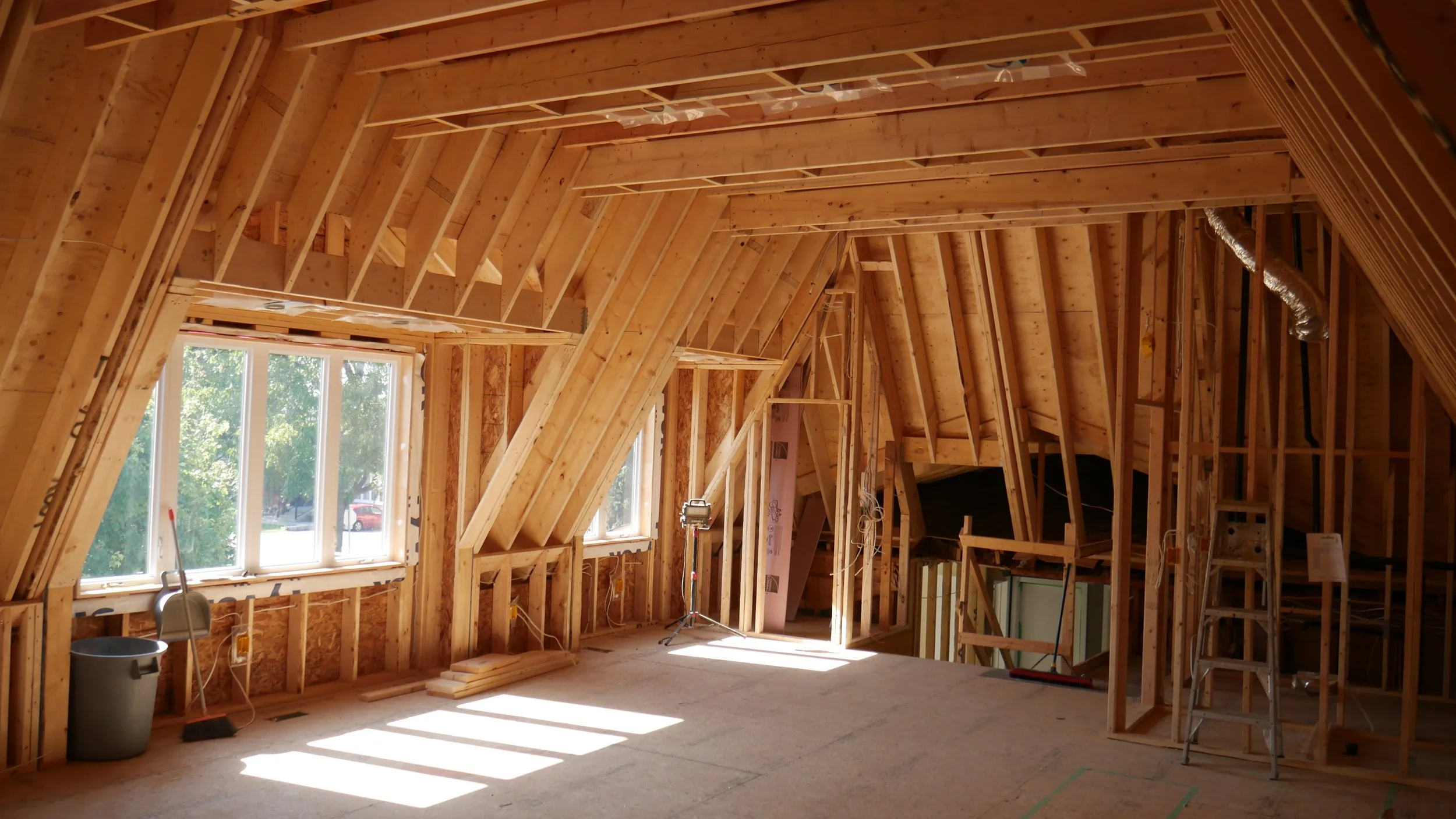
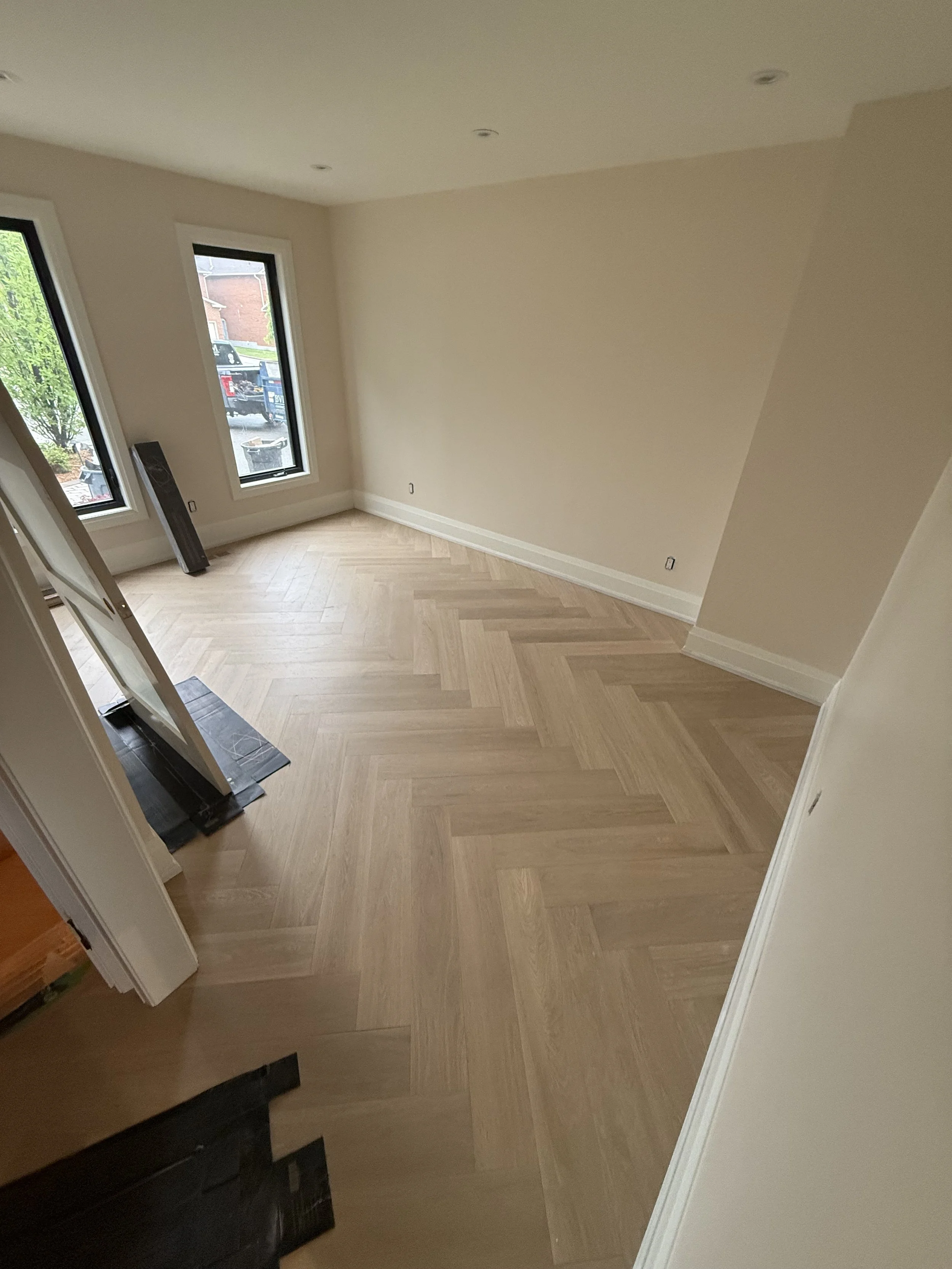
Scope: New third bedroom carved from existing second-floor space; complete bathroom renovation; primary bedroom layout redesign; laundry relocation to stacked unit; Kaycan white lap siding replacement + black window installation
Duration of Construction: Spring – Summer 2026 (in progress)
Timeline of our services: Pre-construction through to construction
Clients: Young growing family, The Beach
Architectal Partner: Mark Smith — markhsmith.ca
Project Cost: Inquire here
Before and After
To be added once the project is completed.
The Addition That Couldn't Happen — And the Solution That Could
Daniel and Liz reached out to BVM Contracting in September 2025 with a clear goal: they needed a third bedroom before their baby arrived. Their home at 79 Kimberley in The Beach was already the right house in the right neighbourhood — they just needed it to grow with them. They came in assuming the answer was a side cantilever or a small addition.
Our team ran the FSI and density numbers alongside architectural partner Mark Smith. The result was unambiguous: 79 Kimberley was already at approximately 69% site coverage under Toronto's zoning rules. Any addition — no matter how modest — would have triggered a mandatory Committee of Adjustment hearing. That process adds between 4-6 months to a project planning timeline and delivers no guaranteed outcome at the end of it. With a newborn on the way in March 2026 and a May 2026 construction start locked in as the target, that path simply didn't work for this family.
So we pivoted. And we did it fast.
Working through the existing second-floor footprint with Mark Smith, our team identified an opportunity that a less experienced eye would have missed: the space beneath the mezzanine and the existing laundry room could be reconfigured to produce a fully functioning third bedroom — complete with a stacked laundry unit relocated to the adjacent space, a completely redesigned bathroom, and a reimagined primary bedroom layout. All of it inside the existing building envelope. Not a square foot added to the outside. And the clients were genuinely relieved — not disappointed — when the reconfiguration plan came together. They were keeping the project on track, keeping their timeline, and getting exactly the outcome they needed.
Bottom line: When a zoning path is closed, a good builder finds another door — and opens it faster than anyone expected.
PHOTOS TO BE ADDED HERE
No Surprises in Demo — Because We Asked the Right Questions First
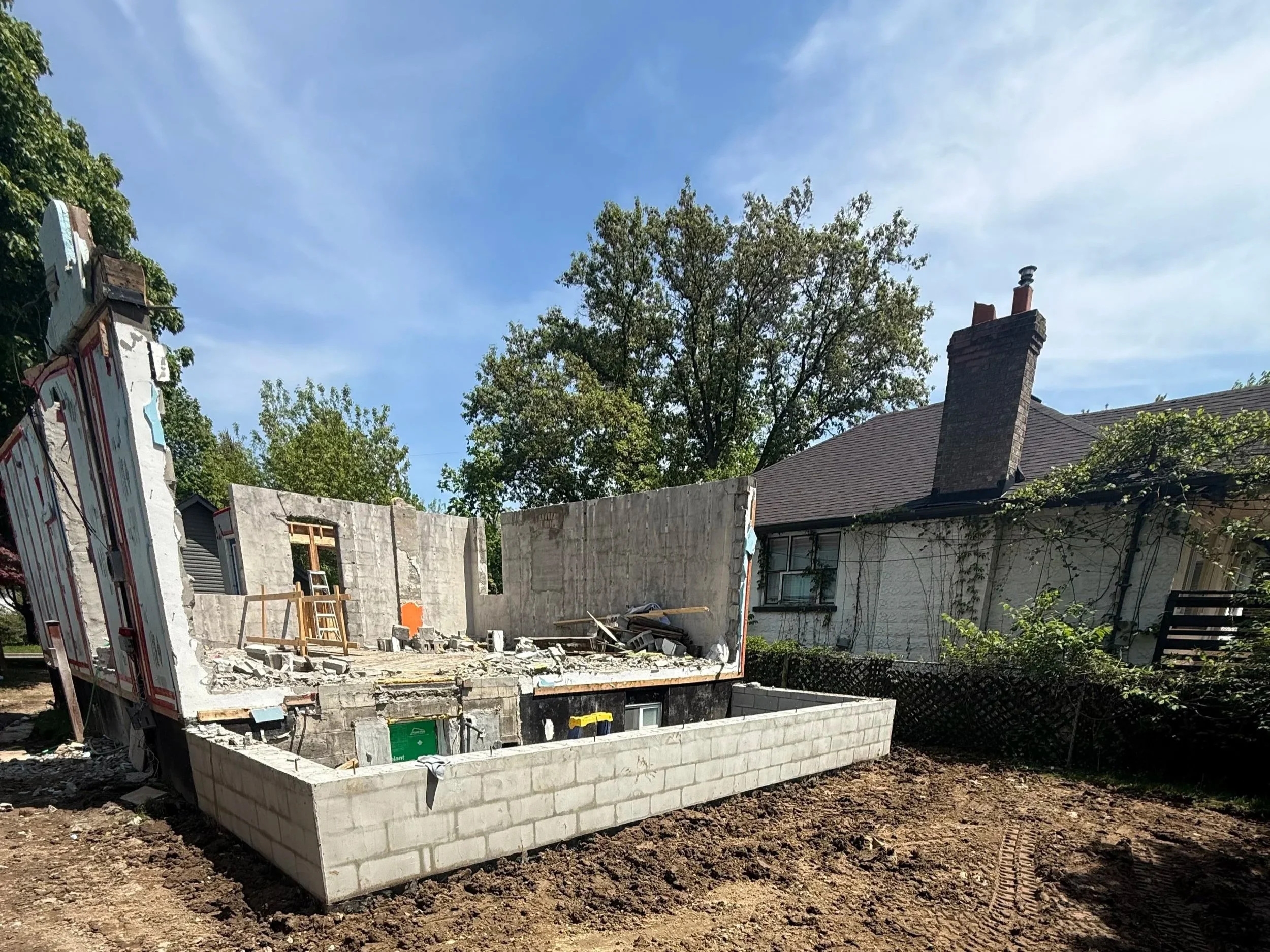
Older Toronto homes carry history in their walls. 79 Kimberley was no exception. The pre-demo conditions included a decommissioned Jacuzzi with its own electrical subpanel and dedicated drain, an unused gas fireplace line, drainage roughed into the mezzanine, and a digital bath controller that hadn't seen active use in years. In the wrong hands, that's a list that becomes an extras invoice — delivered to a client who didn't see it coming.
That's not how BVM operates.
During the pre-construction planning process, our team worked directly with Liz and Dan to document every known condition in the home before a single wall came down. The Jacuzzi panel, the gas line, the mezzanine drainage, the old bath controller — every item was identified, walked through, and included in the scope of work before we signed a contract. No surprises. No add-ons tied to conditions we already knew existed.
This is a pattern in the industry that frustrates homeowners, and rightly so: some contractors treat pre-existing conditions as "unknowns" because it's easier to add them to the bill mid-project than to do the homework upfront. Our approach is the opposite. If it's going to need to be dealt with, it gets priced before we start — because that's what honest contracting looks like.
Bottom line: Pre-construction due diligence isn't overhead — it's the reason your renovation doesn't come with a surprise invoice halfway through demo.
Four Proposals, One Right Answer
Getting the layout right for 79 Kimberley wasn't a straight line. It never is when you're reconfiguring a second floor that needs to simultaneously create a new bedroom, improve the primary bedroom, relocate laundry, and fully renovate a bathroom — all without adding space. Our team and Mark Smith worked through four distinct design proposals before landing on Option 2A: the configuration that solved for everything the family needed without compromising the rest of the home.
The pivotal decision in Option 2A was the laundry. Relocating the washer and dryer off the main second-floor circulation and stacking them in a purpose-built alcove near the new bedroom and bathroom freed up the primary bedroom completely. Bedroom 1 could be fully redesigned — better flow, more usable square footage within the same walls, a layout that felt intentional rather than inherited. Because Liz and Dan had underused space in the mezzanine level, the stacked unit fit without eating into any liveable area they were actually using.
The second floor that came out of Option 2A works like a proper family home: three bedrooms, a completely renovated bathroom, laundry that's accessible but not in the way, and a primary bedroom that feels like it was designed for the family living there — not retrofitted around whatever the original plan had allowed.
Four rounds of proposals isn't a sign of indecision. It's the design process doing exactly what it's supposed to do.
Bottom line: The right layout takes iteration. The clients who commit to working through the options always end up with a home that works better.

Layout of existing second floor before layout change to add the third bedroom
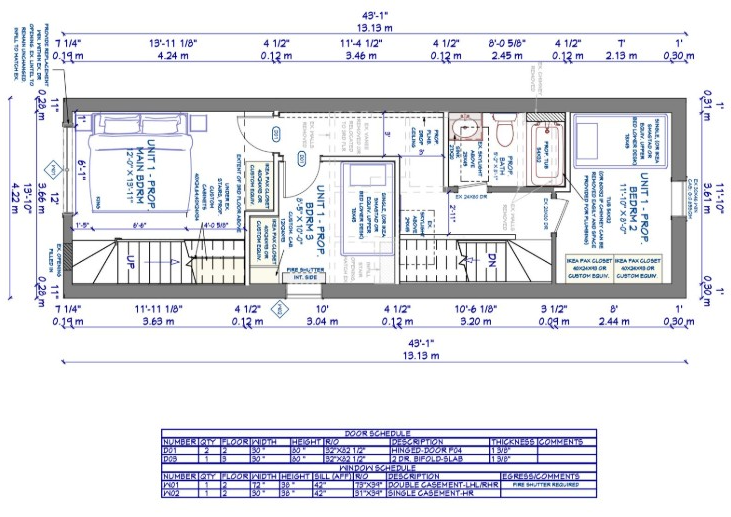
Proposed layout for the second level at 79 Kimberley Avenue, which features an adjusted bathroom and new 3rd level bedroom
Building Around a Baby — And Getting the Timing Right
When Dan and Liz signed with BVM, their baby was due in March 2026 — right in the middle of what would become a critical stretch for design finalization and permit approval. Building and plumbing permits were issued in January 2026. That left roughly two months to lock all pre-construction details before a newborn arrived and the pace of every decision in the household changed.
Our team didn't wait to see how that played out.
Subcontractors were brought to site earlier than the standard schedule required so they could assess the scope firsthand. The full scope of work was documented and finalized before the baby arrived. When Daniel and Liz needed time to focus on their new family — and they absolutely got it — the project file was already in a ready state. Once the new parents found their footing, construction started on schedule: May 1, 2026, exactly when we'd planned.
That's what proactive project management looks like in practice. Not chasing clients for decisions at the last minute. Getting ahead of the timeline so the client doesn't have to choose between their family and their renovation.
Bottom line: A construction timeline can't stop for life — but a good builder plans so that life doesn't have to stop for construction either.
The Exterior Refresh: White Siding, Black Windows, and a Reason to Come Home
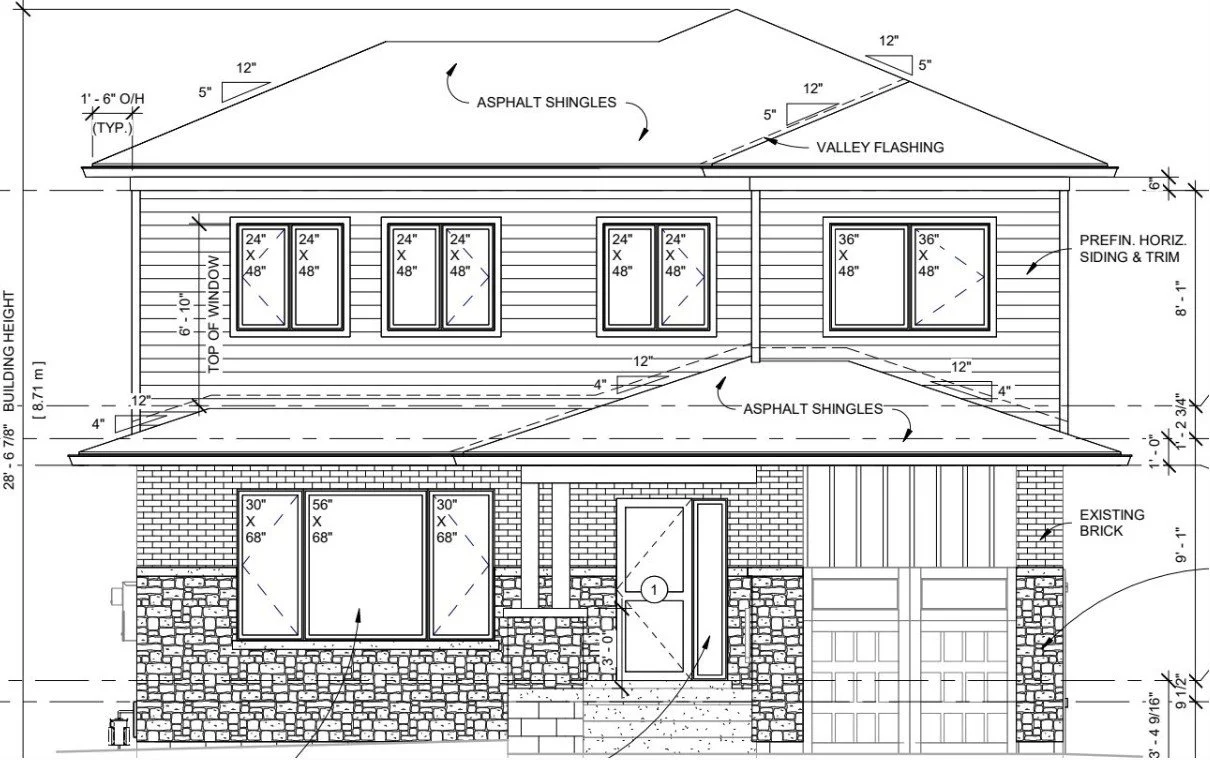
The scope at 79 Kimberley isn't limited to what's happening inside. The original painted exterior siding was due for a full replacement, and Daniel and Liz had a specific vision for the front of the house: clean, bright, and modern — a facade that would match the refreshed home behind it.
After reviewing options, the final exterior spec landed on Kaycan white lap siding replacing the existing boards, with new black-framed windows being installed in the same sequence. It's a combination that works in this neighbourhood: the bright white field against bold black windows reads as updated and intentional without chasing trends that won't age well. The contrast is clean. The result is a front elevation that earns a second look.
Getting that exterior work done came with a coordination layer most Toronto renovations don't involve: a Toronto Hydro service isolation. Where utility lines run close to the siding and window work area, the installation can't proceed until the line is temporarily taken down. Our team initiated that process proactively — filed the isolation request with Toronto Hydro, coordinated the signed submission with Liz, and is now sequencing the siding and window installations to happen in a single mobilization once the isolation date is confirmed. One coordinated effort, not a multi-stage scramble that adds time and cost.
Bottom line: When city utilities are part of the construction puzzle, the answer is to get ahead of the coordination — not react to it after it holds up your schedule.
What This Project Is Really About
Beyond the permit numbers, the layout options, and the square footage math, 79 Kimberley comes down to something simple: a family choosing to stay in the community they love.
Daniel and Liz didn't want to upsize, sell, and start over somewhere else. They wanted to make the home they had work for the family they were building. The Beach is where they want to raise their children. This renovation — a third bedroom, a better bathroom, a fresh exterior — is what makes that possible.
We're not in the business of selling the most expensive project on the table. We're in the business of finding the right solution. Sometimes that's a full custom build. Sometimes it's understanding that the space your clients need is already there — it just needs someone willing to find it.
“We were able to carve out space for that third bedroom within the existing space on the second level — they weren’t upset about not getting the addition they originally pictured, because the reconfigured interior gave them exactly what they needed.”
Ready to Find Out What Your Home Can Become?
The 79 Kimberley project proves that the right answer isn't always the obvious one. Before you commit to an addition — or assume your current home can't accommodate your family's next chapter — talk to our team. We'll run the FSI numbers, walk your space, and tell you honestly what's achievable and what the fastest path to it looks like.